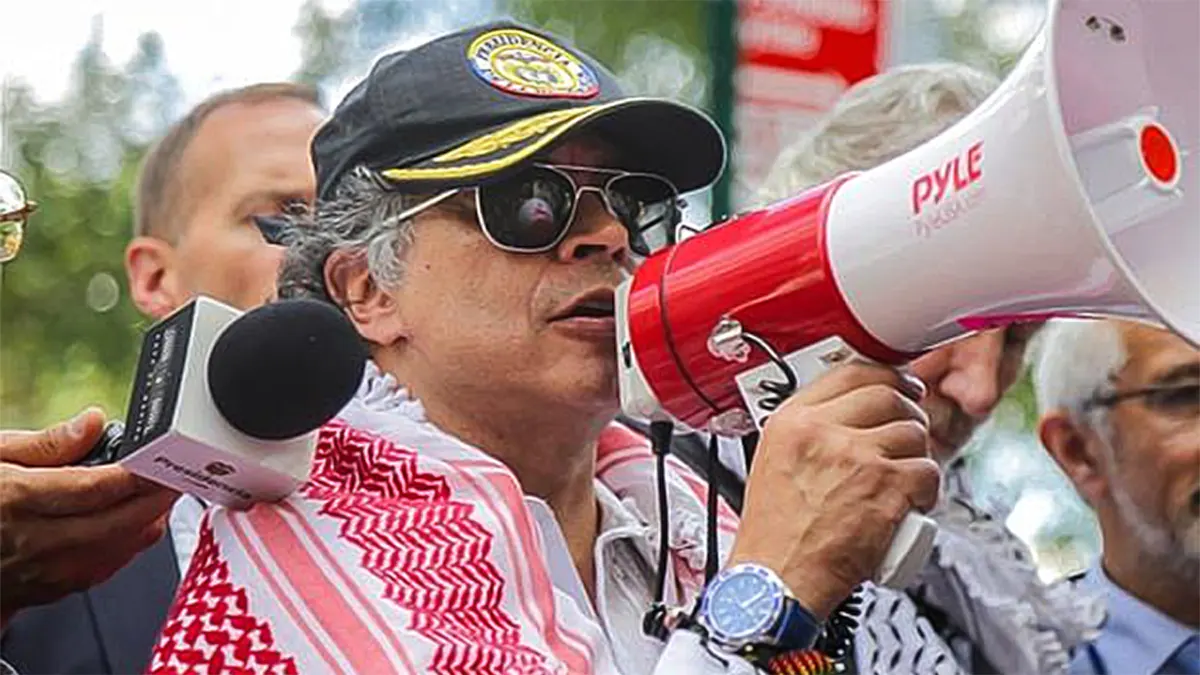
Relations between the United States and Colombia have entered a turbulent new phase after Washington revoked the visa of Colombian President Gustavo Petro, a move that has sparked political debate and raised questions about the future of one of Latin America’s most important diplomatic partnerships.
The decision follows controversial remarks made by Petro during a pro-Palestinian rally in New York, turning what had been a period of growing tension into a full-scale diplomatic dispute.
While disagreements between the two countries have surfaced before, the visa revocation represents one of the strongest public rebukes Washington has directed at a sitting Colombian leader in recent history.
Remarks in New York Trigger Diplomatic Fallout
The controversy began during events surrounding the 80th United Nations General Assembly in New York.
Speaking at a pro-Palestinian demonstration, Petro urged American military personnel to reject what he described as political directives and instead follow what he called the “orders of humanity.”
Those comments quickly drew criticism from U.S. officials.
In response, the U.S. State Department described the remarks as “reckless and incendiary” and announced the revocation of Petro’s visa.
Although Petro remains protected by diplomatic status as Colombia’s head of state, the decision carries significant symbolic importance. The move sends a clear message that Washington strongly disapproves of both the comments and the broader direction of Petro’s foreign policy positions.
A Sign of Growing Friction Between Allies
The visa controversy did not emerge in isolation.
Over recent months, relations between Washington and Bogotá have become increasingly strained over several key issues, including migration policies, deportation disputes, and differing approaches to combating drug trafficking.
For decades, Colombia has been one of the United States’ closest strategic partners in Latin America, particularly in areas such as security cooperation and counternarcotics operations.
However, recent disagreements have exposed growing divisions between the two governments.
Many analysts view the visa revocation as evidence that trust between the two administrations has significantly deteriorated, making diplomatic cooperation more difficult moving forward.
Petro’s Foreign Policy Draws Scrutiny
Another factor contributing to the tension is Petro’s increasingly outspoken criticism of U.S. foreign policy.
The Colombian president has frequently challenged Washington’s positions on international issues and has sought stronger ties with governments and political movements that do not traditionally align with U.S. interests.
Supporters argue that Petro is pursuing a more independent foreign policy designed to strengthen Colombia’s global influence.
Critics, however, contend that his approach risks damaging relationships that have long benefited Colombia economically and strategically.
As a result, the latest dispute is being viewed by many observers as part of a broader struggle over Colombia’s place in regional and global politics.
Colombia Divided Over the US Decision
The diplomatic clash has quickly become a domestic political issue inside Colombia.
Supporters of Petro have framed the visa revocation as an example of foreign pressure against a leader willing to challenge powerful governments. For many within his political base, the move reinforces long-standing arguments about national sovereignty and resistance to outside influence.
Meanwhile, opposition figures have sharply criticized Petro’s comments and their consequences.
They argue that damaging relations with Washington could jeopardize important cooperation on security, trade, investment, and efforts to combat organized crime and drug trafficking.
The incident has therefore intensified political divisions already present within the country.
What Could Happen Next?
Attention is now turning to how both governments respond in the coming weeks.
One possibility is a diplomatic countermeasure from Colombia, such as recalling senior diplomats for consultations or reducing certain forms of bilateral engagement.
Another scenario involves additional actions from Washington, including broader restrictions targeting members of Petro’s administration. Such moves could trigger further retaliation and deepen the dispute.
At the same time, many experts believe both countries have strong incentives to avoid a prolonged confrontation.
The United States and Colombia share significant interests in regional security, migration management, economic cooperation, and anti-drug operations. A complete breakdown in relations would create challenges for both sides.
A Critical Moment for US-Colombia Relations
The visa revocation highlights how quickly diplomatic tensions can escalate when political rhetoric intersects with international relations.
What began as a controversial speech has evolved into a dispute with potential consequences for trade, security cooperation, and regional stability.
Whether this episode leads to a deeper rupture or eventually gives way to renewed dialogue remains uncertain.
For now, the controversy surrounding President Gustavo Petro has placed one of the Western Hemisphere’s most important partnerships under intense scrutiny, with both governments facing difficult decisions about the future of their relationship.