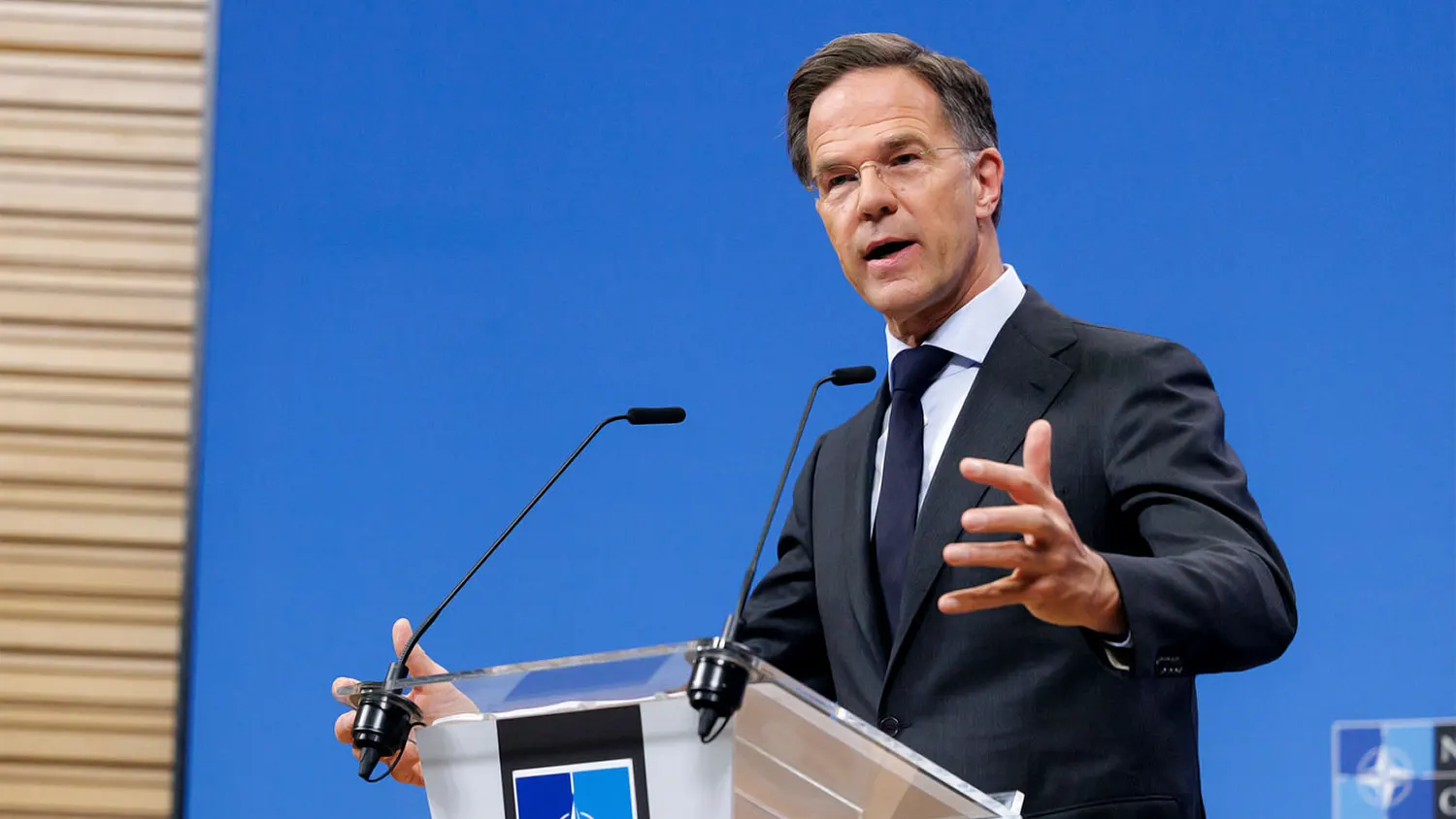
Mark Rutte has been called a lot of things in his political career. A pragmatist. A survivor. “Teflon Mark.” But when the NATO Secretary General walked into the White House to meet President Trump ahead of the July summit in Ankara, he was playing a very specific role: salesman.
And the product he’s selling is NATO itself.
The Meeting That Had to Happen
The Trump-Rutte sit-down in Washington isn’t a routine diplomatic courtesy call. It’s damage control urgent, high-stakes, and timed carefully before the 36th official NATO Summit on July 7–8, 2026 in Ankara, Turkey, where Trump has confirmed he will attend.
At the center of these talks is what the Trump administration is branding “NATO 3.0”, a fundamental restructuring of the alliance’s expectations, with European members taking the primary lead on conventional defense and picking up a far greater share of the financial burden.
Trump has been pushing this line for years. But something shifted recently that gave his frustration a new, sharper edge.
“They Weren’t There for Us”
When the U.S.-Iran conflict escalated earlier this year, the Strait of Hormuz, one of the world’s most critical shipping lanes was effectively shut down. Global gas prices spiked. Trump demanded that NATO allies step in, secure the waterway, and provide concrete tactical support: airspace access, base usage for U.S. jets, and port access for naval ships.
Some allies, including the UK and Germany, cooperated. Several others hesitated or refused outright.
Trump was furious. He called it a “small potatoes” issue, a relatively contained ask by alliance standards and the refusal stung in a specific way. His argument: if the U.S. spends trillions defending Europe from Russia, and Europe can’t show up when the U.S. needs something modest in return, what exactly is this alliance for?
“We can say that to them if we want,” Trump warned, “and we might.” The implicit threat was clear if Europe won’t support American interests when asked, the U.S. might reconsider how vigorously it supports European interests when the tables are turned.
He wasn’t just venting. He backed it up with action.
The Pentagon Sends a Signal
Earlier this month, the Pentagon officially informed NATO that the United States is scaling back the military assets it automatically pledges to Europe’s defense. In a future crisis, the U.S. will no longer guarantee an aircraft carrier, support ships, refueling planes, and a full fighter jet complement for the European theater. Those resources are being redirected toward China and the Indo-Pacific where Washington increasingly sees the defining strategic competition of the coming decades.
A ceasefire with Iran has since been reached. But in Rutte’s own words, the damage to the U.S.-NATO relationship was already done. He arrived at the White House knowing that.
Who Is Mark Rutte, and Why Did NATO Pick Him for This?
Before entering politics, Rutte worked as a human resources manager at Unilever. That background tells you something about how he operates, he’s comfortable in rooms where the goal is managing difficult personalities toward a workable outcome, not winning ideological arguments.
In Dutch politics, he earned the nickname “Teflon Mark” because nothing seemed to stick to him politically. Scandals, coalition crises, policy reversals Rutte navigated them all through a combination of charm, flexibility, and an almost uncanny ability to reframe situations in terms his opponents could accept.
NATO picked him for exactly this moment. When the alliance’s most powerful member is openly threatening to walk away, you don’t send a hawk. You send someone who knows how to close a deal.
The Three-Part Sales Pitch
Rutte’s strategy in Washington comes down to three moves, each calibrated to what Trump actually responds to.
First: Give Trump a win he can claim. Rutte arrived carrying concrete numbers. European NATO allies increased their collective defense spending by nearly $90 billion over the past year alone close to a 20% jump in a single year. Rutte’s framing: Trump’s pressure tactics are working. Europe is paying up. That’s a headline the administration can use.
Second: Align with Trump’s vision rather than fight it. Instead of pushing back on “NATO 3.0” or the 5% GDP spending target, Rutte has publicly endorsed the framework. He’s also been deliberately flattering about Trump’s recent Iran diplomacy, calling it a “remarkable achievement” and thanking him for degrading Iran’s missile capabilities. It’s not subtle but with this particular client, subtlety isn’t the tool.
Third: Spin the military drawdown as Europe stepping up. The U.S. pulling back heavy assets from Europe’s defense commitments could have been framed as an alliance crisis. Rutte is reframing it as an opportunity telling reporters that European militaries are already purchasing equipment to fill the gaps, and that Europe is ready and able to backfill what the U.S. is redirecting elsewhere. He’s turning a retreat into a handoff.
The underlying message Rutte is selling: Europe is no longer a free rider. We’re a paying partner. And we’re worth keeping.
The 5% Problem
The old NATO spending benchmark was 2% of GDP, a target that many European nations only recently scrambled to meet. The Trump administration has now officially moved the goalposts.
Under “NATO 3.0,” Secretary of Defense Pete Hegseth has announced that U.S. dues and military commitments will be tied to allies hitting 5% of GDP in annual defense spending with a target year of 2035.
To put that in context: the United States itself currently spends around 3.5% of GDP on defense. Asking European economies, many of them running significant public debt, navigating energy transitions, and managing domestic political pressures to reach 5% is an enormous ask. For some member states, it would mean nearly doubling their current military budgets within a decade.
Rutte isn’t contesting the target publicly. He’s threading the needle acknowledging the ambition, pointing to the momentum, and buying time for European governments to develop realistic roadmaps before Ankara.
The Strait of Hormuz Offer
On the Middle East tension specifically, Rutte is offering something concrete: NATO assistance in securing the Strait of Hormuz to protect international freedom of navigation.
It’s a deliberate reframe. Rather than relitigating which European allies said no during the Iran conflict, Rutte is pivoting to what the alliance can do going forward. Securing the Strait is framed as a way for European members to demonstrate that the alliance can be a genuine two-way street supporting American strategic interests beyond Europe’s immediate borders, not just asking the U.S. to protect Europe from Russia.
Whether Trump accepts that reframe, or continues to press on the original refusal, will likely define the tone heading into Ankara.
What Rutte Is Actually Trying to Prevent
The summit in Ankara is just weeks away. Rutte’s goal in Washington isn’t to win the argument, it’s to buy time and preserve coherence.
The U.S. military drawdown from Europe is already in motion. Rutte isn’t trying to stop it; he knows he can’t. What he’s trying to do is ensure the transition is managed slowly enough that European militaries can absorb the gaps before a security hole opens up. A disorderly U.S. pullback driven by a blowup at Ankara rather than a coordinated handoff is the scenario everyone in Brussels is trying to avoid.
Rutte is essentially asking Trump for one thing: coordination over confrontation. Don’t pull the rug out at the summit. Let Europe build what it needs to stand on its own. And in return, here’s $90 billion in new spending, a 5% target we’ve publicly endorsed, and a commitment to show up in places like the Strait of Hormuz.
A Club With Overdue Dues
Trump has long described NATO in transactional terms, a club where members have to pay their dues or lose their membership benefits. Rutte, to his credit, has stopped arguing against that framing and started working within it.
That’s the smart move. Whether it’s enough to keep the world’s most powerful military fully committed to the world’s largest defense alliance heading into a summit where every ally will be watching is the question July 7th will begin to answer.