On Monday, June 22, 2026, Ukrainian forces struck deep into Russian territory with a precision missile attack that targeted something far more valuable than a fuel depot or airbase, they went after the factory that manufactures the electronic nervous system of Russia’s most feared weapons.
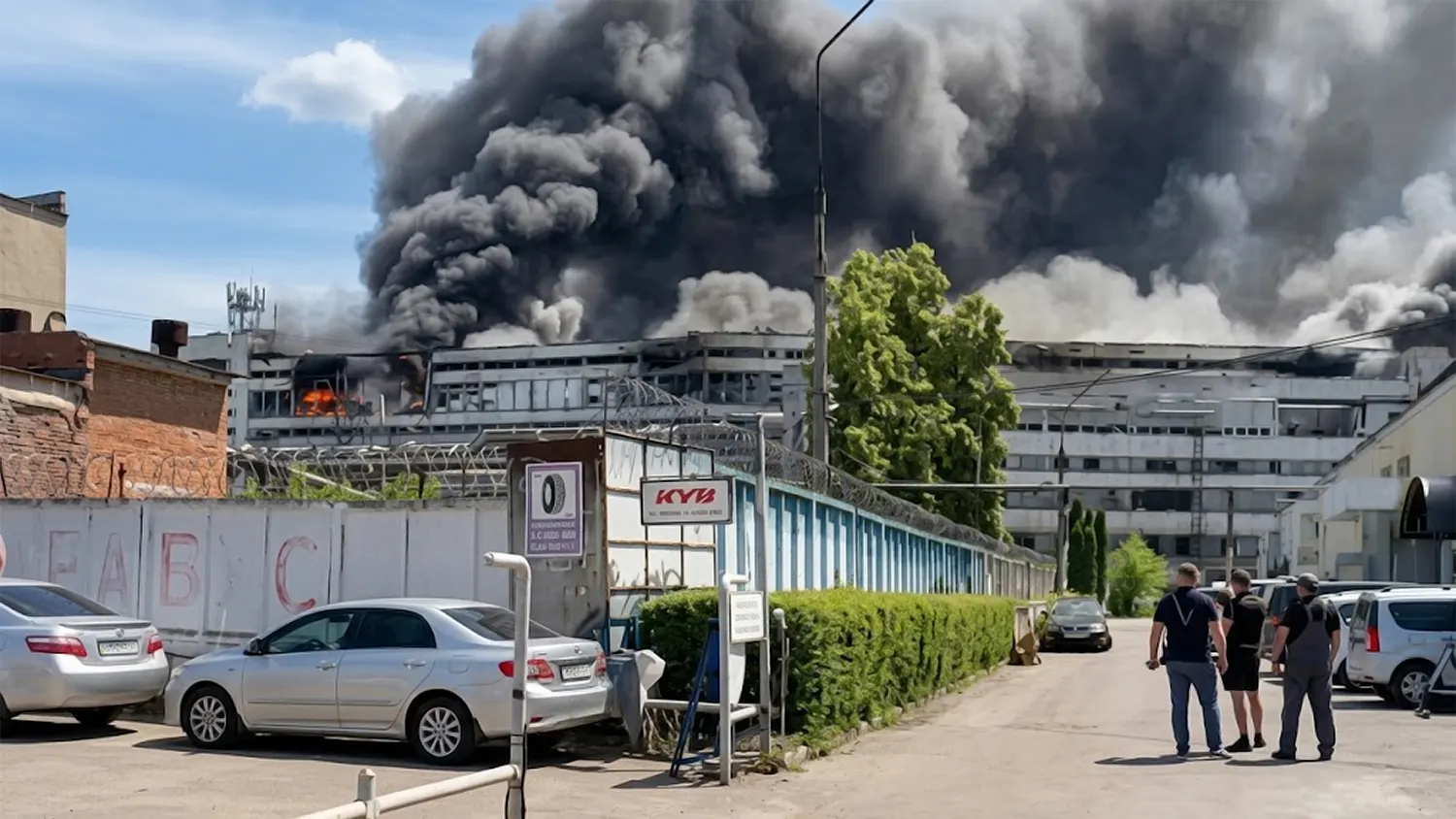
The target was the Voronezh Semiconductor Device Plant, located in the city of Voronezh, roughly 200 kilometres from the Ukrainian border. It is one of Russia’s largest silicon foundries, and according to the General Staff of the Ukrainian Armed Forces, the attack used high-precision air-launched cruise missiles suspected to be Storm Shadows to hit the facility’s main manufacturing building.
The columns of dark smoke visible on geolocated social media footage told the first part of the story. The second part is what was actually inside that building.
The Factory Floor That Kept Russia’s Missiles Flying
The Voronezh plant, known as VZPP-S, wasn’t producing consumer electronics. It was manufacturing the specialized microelectronics and power electronics components that guide Russia’s most advanced missile systems, the kind of precision-engineered parts that can’t simply be ordered from an overseas supplier under sanctions.
Its components fed directly into three weapons systems that Ukraine knows all too well.
The Kh-101 long-range cruise missile, Russia’s primary weapon for strategic bombardment relies on VZPP-S-produced transistor assemblies and semiconductor matrices to power the UVK-208 guidance unit. Without those components, the missile’s onboard computer can’t cleanly process the electrical signals needed to steer its tail fins or regulate power to its sensors. It loses the ability to dynamically alter its flight path, which is precisely what makes it so difficult to intercept.
The Iskander-K tactical cruise missile depends on the plant for the semiconductor matrices inside the Zarya-61M onboard computer, the literal brain of the weapon. This isn’t a generic chip that can be swapped out. It’s a custom-fabricated component built to extreme precision tolerances, and crippling its supply means newly assembled missile chassis simply cannot be completed.
Then there’s a third, less obvious casualty: the Pantsir-S1 air defence system, which protects Russian military sites including facilities like this one from Ukrainian drone attacks. VZPP-S supplied the high-frequency diodes and transistor assemblies for its electro-optical tracking channels, the backup system the Pantsir uses to lock onto targets when its radar is being actively jammed. Disrupting that supply chain leaves Russia’s air defences more exposed to the very drone and electronic warfare tactics Ukraine has been refining for years.
Why This Damage Is So Hard to Undo
Geolocated video analysis shows that multiple missiles struck the main manufacturing building sequentially along its entire length, triggering massive fires and structural collapse. Defence experts and open-source intelligence analysts quickly identified what that means in practical terms.
Semiconductor fabrication doesn’t happen on a regular factory floor. It requires highly specialized cleanrooms climate-controlled environments of extraordinary sensitivity, where even microscopic dust particles or vibrations can ruin a production batch. The impact of the strikes, combined with the smoke and fire that followed, has almost certainly destroyed the plant’s lithography and assembly equipment beyond quick repair.
That brings a second, compounding problem: sanctions. Russian semiconductor facilities rely heavily on precision foreign-made machinery, much of it acquired before the 2014 or 2022 sanctions rounds. Replacing that equipment today is not simply expensive in many cases, it’s close to impossible. The parts aren’t available to Russia through legitimate channels, and the specialised nature of military-grade fabrication equipment makes it far harder to source through third-party workarounds than a generic commercial microchip.
Russia does manage to smuggle basic Western-made chips through intermediary countries standard flash memory, generic microcontrollers. But the components VZPP-S produced are a different category entirely: custom transistor matrices and military-grade diodes hardwired into the specific circuit layouts of the UVK-208 and Zarya-61M guidance systems. Swapping them out with a foreign alternative wouldn’t just require sourcing a new part, it would require completely redesigning, testing, and recalibrating the weapon’s entire motherboard. That’s a process measured in months or years, not weeks.
Five Killed, and a Wider Strike Campaign
Russian regional governor Alexander Gusev confirmed five people were killed in the strike, with dozens more seeking medical attention. In a statement, Gusev acknowledged that most of the plant’s workforce had successfully reached safety, but said those killed or injured had allegedly ignored automated missile alerts. Local blood donation centres issued emergency appeals, and a victim hotline was established signs that the full human toll may be higher than initial figures suggested.
The Voronezh strike did not happen in isolation. It was part of a broader wave of Ukrainian long-range operations launched the same day, which also targeted the Dubna Space Communications Centre in the Moscow region and prompted temporary flight suspensions at all four major Moscow airports.
Taken together, the scale of Monday’s operations reflects a deliberate and widening Ukrainian campaign to attack Russia’s military-industrial complex at the source not just the weapons already in the field, but the production lines and supply chains that keep new ones coming.
Military analysts expect the Voronezh strike alone to create a measurable bottleneck in Russia’s near-term production of guidance systems for both the Kh-101 and Iskander missile lines. The question now isn’t whether the damage is real. It’s how long it takes Moscow to find any way around it.