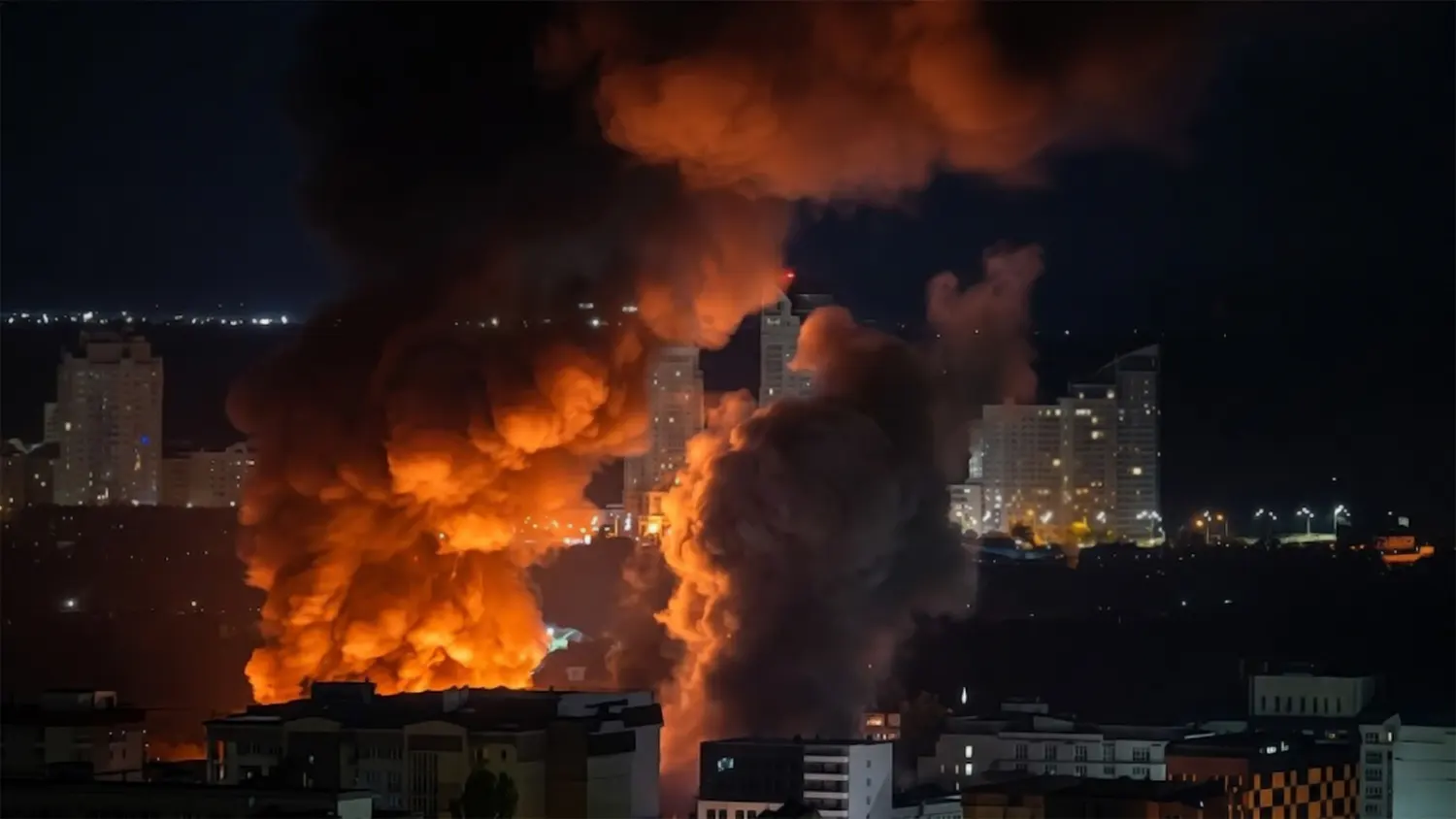
On the night of June 2, 2026, Russia fired 656 drones and 73 missiles into Ukraine in one of the largest coordinated air assaults of the entire war. By morning, at least 22 people were dead, more than 100 were injured, and over 140,000 households in the Kyiv region alone had lost power.
It wasn’t a random escalation. It was a strategic message and to understand why Russia is swinging this hard from the air, you have to look at what’s been happening on the ground.
Russia’s Ground Offensive Has Quietly Collapsed Into Near-Stalemate
Despite months of relentless pressure along the front line, Russia’s spring-summer ground campaign has barely moved. According to data from the Institute for the Study of War (ISW) and the Ukrainian monitoring group DeepState, Russian forces captured just 14 square kilometers of territory in May 2026, the lowest monthly gain since October 2023.
To put that in perspective: from December 2025 to May 2026, Russia managed to advance through only about 8% of the territory it had captured during the same period a year prior. The offensive isn’t just slowing, it’s cratering.
The main reason is Ukraine’s battlefield innovation. Drone-controlled “kill zones” now line the front, making it extraordinarily costly for Russian tanks and mechanized columns to push forward. Ukrainian forces also cleared several key Russian infiltration points near Pokrovsk and Kupyansk, further blunting Moscow’s momentum.
When the Ground Stalls, Russia Goes to the Sky
This is the critical context behind Tuesday’s massive bombardment. Unable to take territory on the ground, the Kremlin has shifted the theater of war to the air and it’s doing so with ruthless calculation.
Security analysts point to three distinct drivers behind this strategy:
1. Exploiting Ukraine’s “Interceptor Gap”
Russia knows Ukraine is running dangerously low on Patriot PAC-3 interceptors, the American-made missiles capable of taking down ballistic and hypersonic threats. The June 2 attack exposed just how bad the shortage has become.
Ukraine’s Air Force confirmed it failed to intercept any of the 8 hypersonic Zircon missiles in that night’s barrage, and only stopped 11 of 33 Iskander-M ballistic missiles launched. While Ukraine successfully downed a significant number of cheap Shahed-type drones, Russia’s strategy is precisely designed around that limitation.
By launching an overwhelming swarm of 656 low-cost drones alongside a salvo of ballistic missiles, Russia forces Ukraine into a brutal calculation: exhaust your precious interceptors shooting down cheap drones, or save them and let the drones tear into civilian neighborhoods. The ballistic missiles then exploit whichever window is left open.
2. Breaking Civilian Morale and Economic Capacity
Since Ukraine’s drone defenses have effectively paralyzed Russia’s front-line mechanized advances, Moscow is now targeting something it can still reach: Ukraine’s power grid, energy infrastructure, and civilian population centers.
The strikes on Kyiv, Dnipro, Kharkiv, and Zaporizhzhia were not primarily aimed at military targets. They were designed to knock out electricity, destroy residential buildings, and grind down Ukrainian civilian endurance in a war of attrition Moscow believes it can outlast.
3. Domestic Political Theater
There’s also a performance element to this. Using hyper-expensive systems like Iskander-M ballistic missiles and hypersonic Zircon missiles against apartment blocks is militarily absurd but it’s enormously useful for Kremlin propaganda at home.
As Ukraine’s long-range drones increasingly hammer Russian oil refineries and energy facilities deep inside Russian territory, Putin needs to show his domestic audience that Russia is hitting back harder. A 656-drone, 73-missile barrage on Ukrainian cities becomes the perfect broadcast projecting military dominance at home while covering up a stalled ground campaign.
Ukraine Is Hitting Back Deep Inside Russia
Ukraine isn’t sitting still. Faced with a frozen front line, it has dramatically escalated its own long-range drone campaign inside Russian territory targeting the economic infrastructure Moscow needs to fund and sustain the war.
Recent Ukrainian strikes successfully hit the Balakhonikhinskaya Oil Pumping Station in Nizhny Novgorod Oblast, causing severe disruptions to fuel supply chains that affect both Russian civilian markets and military logistics. Ukrainian mid-range drones are also actively targeting the key land corridor connecting mainland Russia to occupied Crimea, putting serious strain on Russian military supply lines in the south.
The message from Kyiv is clear: if Russia keeps bombing Ukrainian cities, the economic cost of this war will land on Russian soil too.
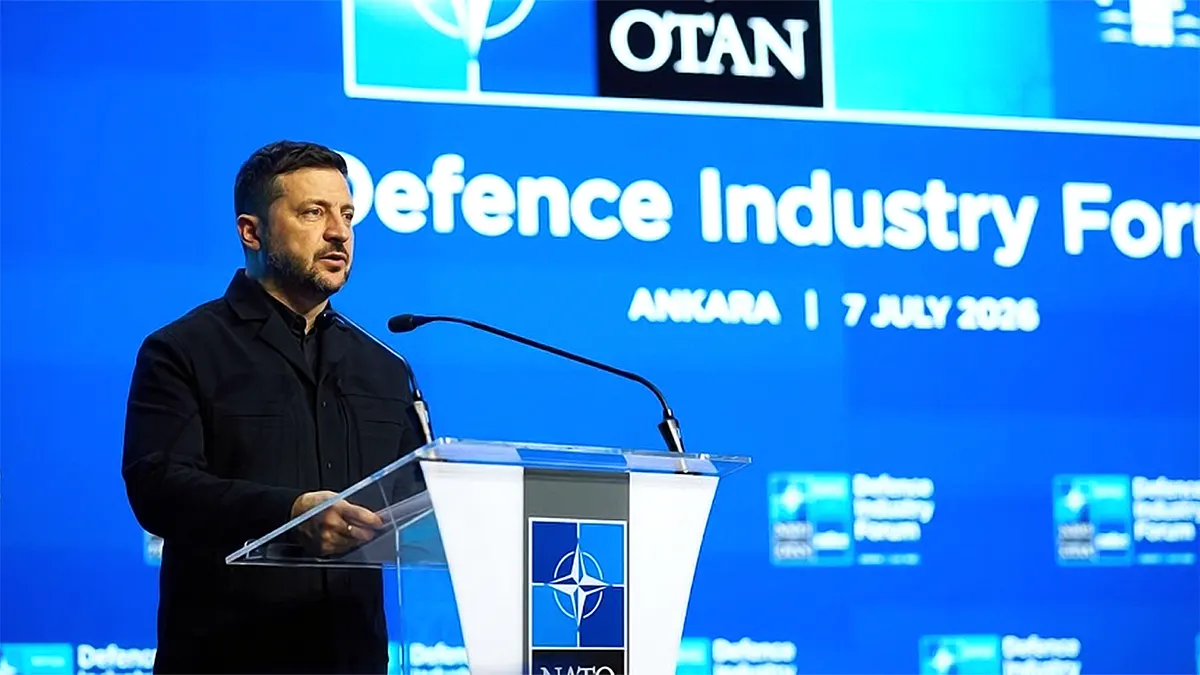
Zelenskyy’s Appeal: “Patriot Batteries With No Missiles Loaded”
All of this brings us to Ukraine’s most urgent diplomatic crisis, a critical shortage of anti-ballistic missile interceptors that no amount of Ukrainian ingenuity can solve domestically.
President Volodymyr Zelenskyy has sent a direct appeal to U.S. President Donald Trump and Congress, laying out the situation in stark terms. Ukraine has scaled up its own drone production dramatically deploying twice as many interceptor drones in early 2026 as in all of 2025. These cheap, fast drones are effective at knocking down Russia’s Shahed drones. But they are completely useless against hypersonic missiles.
For that threat, only Patriot PAC-3 interceptors work. And Ukraine is nearly out.
In his appeal to Washington, Zelenskyy wrote:
“For us, for a nation fighting for its survival, there is hardly anything more painful to see than Patriot batteries with no missiles loaded.”
The problem is compounded by a separate conflict. The war involving Iran has heavily diverted U.S. air defense stockpiles toward the Middle East, making Washington less willing or able to redirect interceptors to Ukraine. Zelenskyy is warning that Russia is fully aware of this dynamic and is deliberately exploiting the gap before Western production catches up.
Ukraine’s Strategic Offer: Drone Tech for Interceptors
Zelenskyy isn’t just asking for handouts. Recognizing the political reality in Washington, Ukraine is pitching a concrete technology-for-security exchange.
Ukraine has built what many analysts now consider the most advanced, battle-tested drone ecosystem in the world. Ukrainian specialists have already helped strengthen air defenses at Gulf Arab facilities and American military bases in the Middle East. Kyiv is now formally offering to share its cutting-edge drone and electronic warfare expertise with the U.S. in exchange for priority access to Patriot interceptors.
The message to Washington is direct: Ukraine’s innovation keeps your soldiers safer in the Middle East now help Ukraine’s cities survive Russia’s missiles.
The Hard Reality on Both Sides
The economic pressure on Russia is also building. Financial officials have reportedly warned Vladimir Putin that wartime spending is pushing toward a projected budget deficit of up to 1.5 trillion rubles roughly $16.5 to $21 billion for the second half of 2026. Putin’s response has been to demand cuts in non-defense spending rather than reduce the military budget. That approach has limits, and economists inside Russia know it.
On the international front, the French Navy, with UK support, intercepted and boarded a Russian-linked oil tanker off the coast of Brittany, a notable enforcement of maritime sanctions that signals Europe isn’t backing away from economic pressure on Moscow.
The Gap That Russia Is Racing to Exploit
The core problem Ukraine faces right now isn’t a lack of courage, innovation, or fighting capacity. It’s a timing gap in global manufacturing. Patriot interceptors take months sometimes years to produce in sufficient quantities. Ukraine’s Air Force has warned that this acute missile shortage will likely persist until the war ends, unless the U.S. fast-tracks a sustained supply commitment.
Until that commitment arrives, every night carries the risk of another June 2, a night when Russia fires everything it has, and Ukraine’s batteries sit empty against the missiles that matter most.