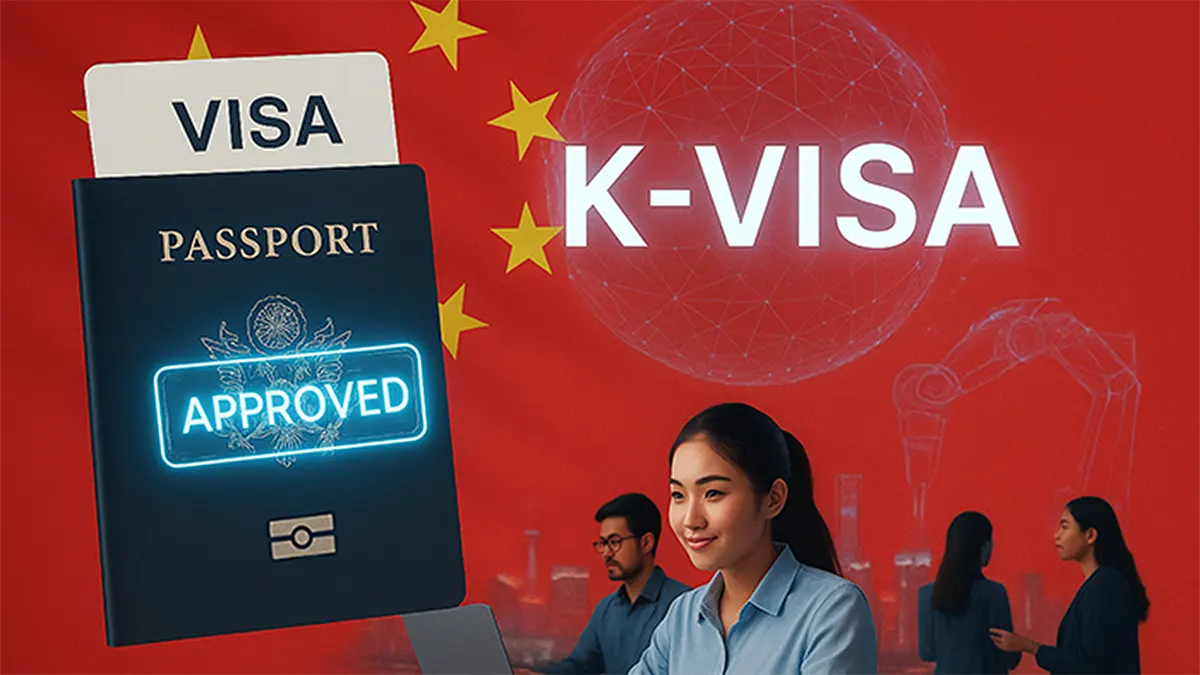
China has officially launched a new immigration program aimed at attracting scientists, engineers, researchers, and technology professionals from around the world.
Known as the K-Visa, the new pathway allows qualified STEM professionals to move to China without requiring sponsorship from an employer. The initiative marks one of the country’s most significant immigration reforms in years and signals Beijing’s growing ambition to compete for global talent.
The program was introduced on October 1, 2025, at a time when the United States is tightening aspects of its employment-based visa system, creating a new front in the global competition for highly skilled workers.
A Different Approach to Skilled Immigration
One of the most notable aspects of the K-Visa is its focus on individual applicants rather than employers.
Unlike many traditional work visa programs, applicants can apply independently without first securing a job offer from a company.
This self-petition model gives professionals greater flexibility and removes one of the biggest hurdles often associated with international relocation.
For many young researchers, software engineers, scientists, and entrepreneurs, the ability to enter a country before finding employment could significantly expand career opportunities.
Who Is Eligible for the K-Visa?
While Chinese authorities are expected to release additional implementation details, the program appears to target highly educated individuals working in science and technology-related fields.
Focus on STEM Professionals
The visa is expected to prioritize applicants who meet several key criteria:
- Young professionals, generally between 18 and 45 years old
- Holders of a bachelor’s degree or higher
- Individuals with experience in science, technology, engineering, or mathematics (STEM) fields
- Researchers, innovators, entrepreneurs, and technical specialists
The program reflects China’s growing demand for talent in sectors considered critical to future economic growth and technological leadership.
Greater Flexibility Than Traditional Work Visas
The K-Visa introduces several benefits that distinguish it from many existing immigration programs.
Freedom to Work Across Different Sectors
Visa holders may be able to pursue multiple professional activities, including:
- Research and scientific development
- Teaching and academic work
- Startup creation and entrepreneurship
- Technology innovation projects
- Cultural and educational exchange programs
This flexibility allows professionals to change career paths or pursue new opportunities without repeatedly navigating immigration procedures.
Easier International Mobility
The visa also offers provisions for multiple entries and extended stays, making it easier for professionals who regularly travel for conferences, research collaborations, or business activities.
For globally mobile workers, these features could make China a more attractive destination compared to countries with stricter residency requirements.
K-Visa and H-1B Highlight Competing Strategies
The launch of the K-Visa has drawn comparisons to the United States’ H-1B visa program, which has traditionally served as one of the world’s most popular pathways for skilled foreign workers.
China Removes Sponsorship Requirements
Under the K-Visa system, applicants can apply directly without employer sponsorship.
By contrast, the H-1B requires a U.S. employer to file a petition on behalf of the applicant before the process can begin.
No Lottery System Announced
The H-1B program operates under an annual cap and lottery process due to high demand.
China has not announced any numerical limits for the K-Visa, potentially providing a more predictable pathway for qualified candidates.
Lower Costs and More Career Freedom
The K-Visa is also expected to involve lower costs and greater work flexibility.
While H-1B holders are generally tied to a specific employer and position, K-Visa recipients may have broader freedom to conduct research, launch businesses, or pursue other professional activities.
These differences could make the program particularly attractive to young professionals seeking greater independence in their careers.
Why China Is Expanding Its Talent Recruitment Efforts
The K-Visa is part of a broader strategy to strengthen China’s position in emerging technologies and advanced industries.
Beijing has identified sectors such as artificial intelligence, biotechnology, semiconductors, renewable energy, and quantum computing as critical to its long-term economic goals.
To achieve those ambitions, China is seeking to supplement domestic talent with skilled professionals from around the world.
Supporting Innovation and Entrepreneurship
Officials hope the program will encourage researchers and entrepreneurs to contribute to China’s innovation ecosystem.
The initiative could also help fill talent shortages in specialized fields where demand continues to outpace supply.
Strengthening Global Competitiveness
Beyond economic goals, the K-Visa also serves a strategic purpose.
By making it easier for international talent to relocate, China is positioning itself as a global hub for research, innovation, and technology development.
The move reflects an increasingly competitive global race to attract the next generation of scientists and innovators.
Challenges Could Affect Long-Term Success
Despite the program’s potential appeal, several obstacles may influence how widely it is adopted.
Language and Workplace Culture
For many foreign professionals, adapting to Mandarin-language workplaces and China’s demanding work culture could present challenges.
Some industries continue to face criticism over long working hours and high-performance expectations.
Residency Questions Remain Unanswered
Another concern is the lack of clarity surrounding long-term residency options.
Unlike some immigration systems that offer clear pathways to permanent residency or citizenship, details regarding the future status of K-Visa holders remain limited.
Domestic Economic Pressures
China is also facing concerns about youth unemployment and competition for high-skilled jobs.
As a result, some observers believe the program could generate debate about balancing domestic employment opportunities with international recruitment efforts.
A New Phase in the Global Competition for Talent
The launch of the K-Visa represents more than a simple immigration reform.
It signals China’s intention to play a larger role in the global market for highly skilled workers and compete directly with established destinations such as the United States, Canada, and parts of Europe.
By lowering barriers for STEM professionals at a time when other countries are tightening immigration pathways, Beijing is making a clear statement about its long-term ambitions.
Whether the K-Visa becomes a major success or remains a niche program will depend on implementation, economic opportunities, and the willingness of global talent to see China as a destination for the next stage of their careers.
For now, the initiative marks a significant development in the worldwide race to attract the scientists, engineers, and innovators who will shape the future economy.