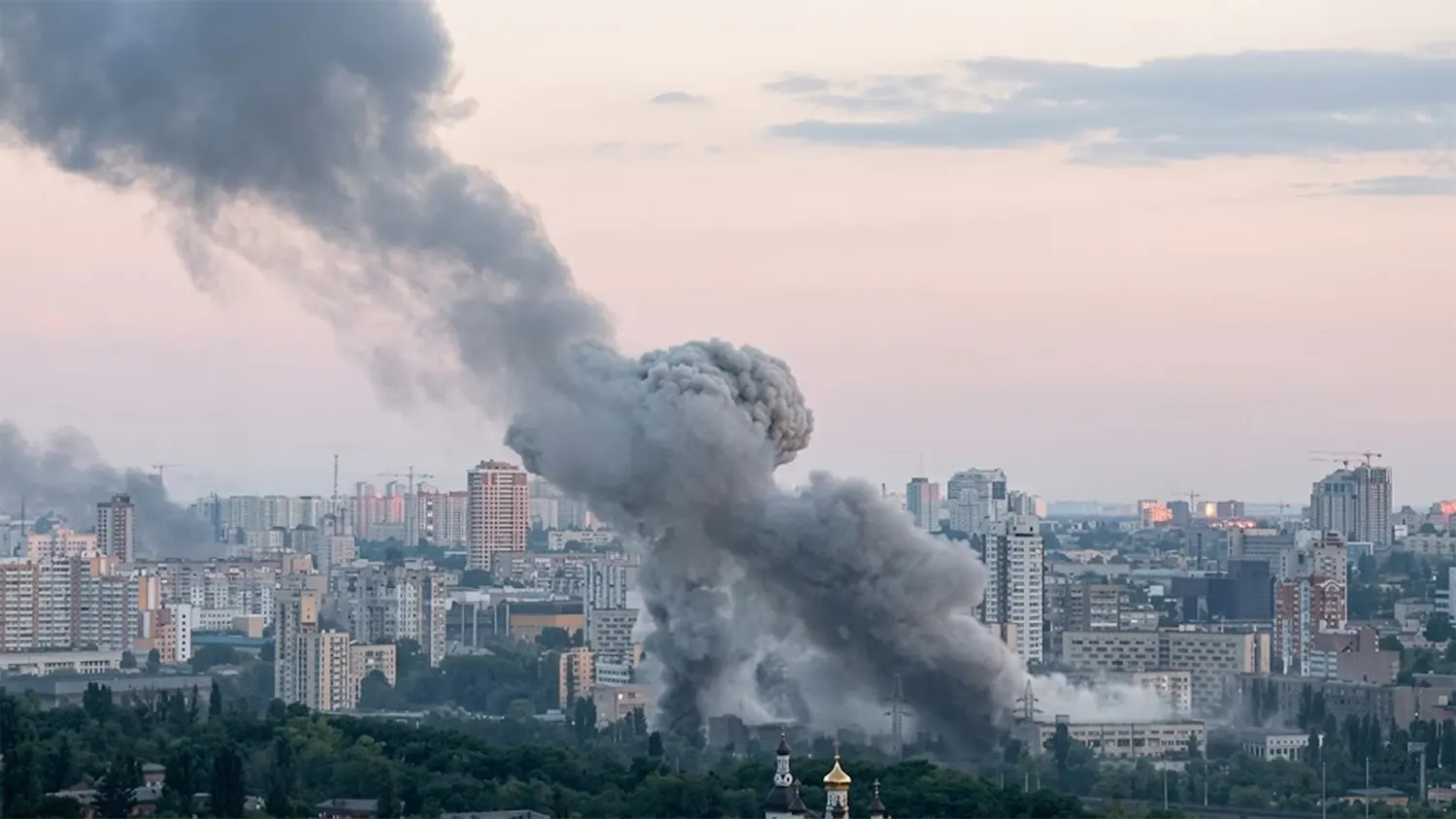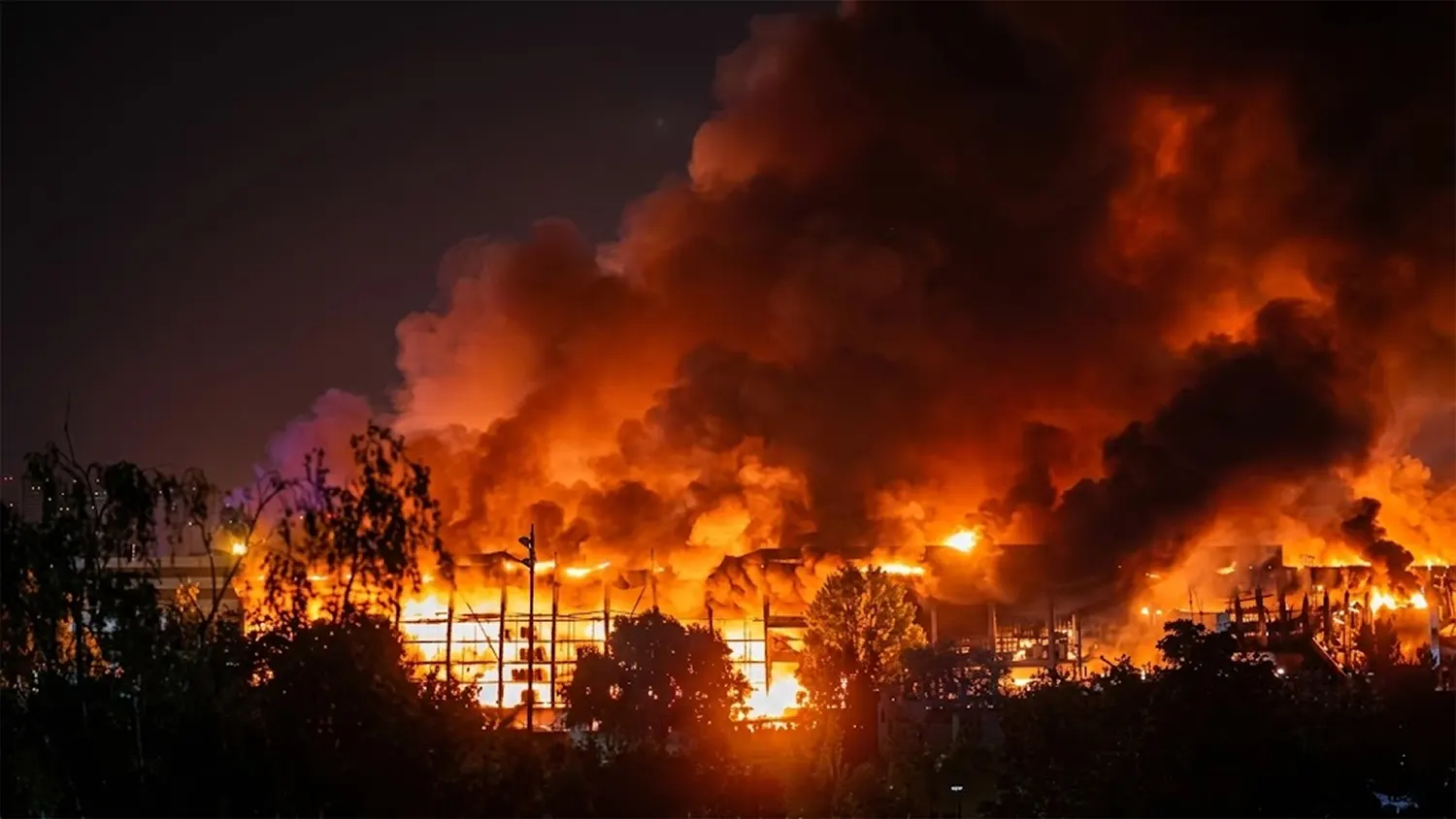
Kyiv had barely crossed into Wednesday, August 5, when the sky turned into a warning siren. Just after midnight, Russia launched one of its heaviest combined strikes of the year, a mix of ballistic missiles, hypersonic weapons, and drones aimed squarely at the capital and its surrounding towns. By the time the explosions stopped, more than an hour later, at least 17 people were dead and over 40 injured.
This wasn’t a random barrage. It was a calculated hit on the arteries that keep Ukraine’s economy and supply chains moving warehouses, logistics hubs, and commercial centers timed to land while the city slept.
A Night of Fire Across Seven Districts
The scale of the damage stretched far beyond central Kyiv. Fires tore through seven districts of the capital and spread into nearby towns including Brovary, Bucha, and Fastiv. Emergency crews were stretched thin responding to blazes at commercial warehouses, food storage sites, and building-material depots.
One of the hardest-hit businesses was Epicentr, one of Ukraine’s largest home improvement retail chains, which lost key logistics centers and a ceramic factory in the strikes.
Ukraine’s State Emergency Service confirmed firefighters battled blazes at seven separate sites:
- Brovary district — four locations, including the city itself and the villages of Velyka Dymerka, Kvitneve, and Peremoha
- Bucha district — a major logistics facility in Sofiivska Borshchahivka and a warehouse fire in Chaiky
- Fastiv district — a vehicle and industrial facility fire in Kalynivka
- Kyiv city center — strikes across the Obolonskyi, Sviatoshynskyi, Holosiivskyi, and Desnianskyi districts, including an ammonia leak at a commercial site in Holosiivskyi that crews managed to contain
Rail operators and emergency workers reported finding victims near transport hubs and logistics platforms, a detail that underscores just how deliberately this attack targeted Ukraine’s supply networks rather than purely military sites.
What Russia Actually Fired
The overnight assault combined three distinct types of weapons, each designed to overwhelm a different layer of Ukraine’s air defenses.
Ballistic missiles (24 launched). These were short-to-medium-range systems, likely Russian Iskander-M missiles and North Korean-supplied KN-23s. They climb to extreme altitude before diving almost straight down onto their targets at high speed, giving defenders very little room for error.
Supersonic and hypersonic missiles (4 launched). Ukrainian officials identified these as either 3M22 Zircon hypersonic cruise missiles or P-800 Oniks supersonic missiles. Zircon can travel at Mach 5 to Mach 9, which leaves air defense crews almost no time to react once one is detected.
Kamikaze drones (115 launched). The bulk of the assault came from Shahed-136 drones, including newer jet-powered versions, of Iranian design. These were used in swarms to saturate radar systems, pull interceptor fire away from the missiles, and keep pressure on defenses for over an hour straight.
The tactic itself has become familiar: fire the fast, hard-to-stop missiles first at critical infrastructure, then follow with waves of drones to strike whatever’s left exposed and slow down emergency response.
Zero Missiles Intercepted, Here’s Why
Ukraine’s air force reported shooting down 98 of the 115 drones. But of the 28 missiles fired, 24 ballistic and 4 hypersonic not a single one was intercepted.
That number tells its own story. The PAC-3 Patriot system is the only weapon in Ukraine’s arsenal capable of reliably taking down fast-moving ballistic and hypersonic missiles. Everything else NASAMS, IRIS-T, Gepard anti-air guns, mobile machine-gun units works well against slower drones and cruise missiles, but physically cannot catch something moving at Mach 5.
And Ukraine’s Patriot interceptor stock is running dangerously low. President Volodymyr Zelenskyy didn’t mince words after the attack: “Ballistics interceptors are something that could have saved the lives of those who died today… Delays in supplying them lead directly to such horrific casualties.”
Even a fully stocked battery would have struggled here. Firing 28 high-speed missiles at once, what’s known as a saturation volley, demands a dense wall of interceptors just to have a chance of stopping them all.
Why More Money Hasn’t Meant More Missiles
Here’s the uncomfortable part: funding for Patriot interceptors has largely been approved. The problem isn’t the money, it’s that the missiles themselves don’t exist in enough supply, and building more takes time nobody has.
Manufacturing simply can’t keep pace. A single PAC-3 MSE interceptor takes 18 to 24 months to build from raw materials to finished product. Combined global output from Lockheed Martin and Raytheon sits at roughly 750 to 800 missiles a year and a single major Russian attack can burn through 30 to 50 interceptors in one night defending just one city.
The Middle East is competing for the same missiles. Recent escalation in the region has pulled heavily on the same global stockpile. Reports indicate the US and its allies used more than 800 Patriot interceptors in the early days of recent Middle East operations. That drawdown forced the US State Department to warn NATO allies that delivery schedules to Ukraine were being delayed or deprioritized.
Approved funding still has to clear a bureaucratic maze. Most European NATO members don’t keep large surplus stockpiles of PAC-3 missiles sitting in reserve, they buy from the US, which is now stretched thin itself. Talks over letting Ukraine license and co-produce Patriot missiles domestically are still ongoing, and even if finalized tomorrow, setting up a production line would take another 1.5 to 2 years before it produces usable interceptors.
A Promise Made, Then Pulled Back
The politics around this shortage have shifted sharply in just a few weeks.
At the NATO summit in Ankara in early July 2026, President Donald Trump told Zelenskyy the US would license Ukraine to build Patriot interceptors on its own soil. “We’ll give them the right to make Patriots. We’ll show them how to do it,” Trump said at the time, framing it as support for defensive rather than offensive weapons.
But by late July into early August, that pledge had cooled. Speaking at Camp David, Trump said the technology transfer had never been formally approved, citing concerns about handing over sensitive military manufacturing know-how: “It’s a hard thing to give away that kind of technology… You have to be very careful about letting somebody build them.” He added that his focus had shifted toward ending the war rather than expanding weapons production: “I’m not looking for missiles. We’re looking for peace.”
The Bottom Line for Kyiv
With no finalized licensing deal or technology transfer in place, Ukraine remains fully dependent on finished Patriot interceptors shipped in from the US at exactly the moment American stockpiles are being pulled toward the Middle East. That gap is what left Kyiv’s skies open on August 5, and unless supply catches up with demand, it’s a gap Russia is likely to keep exploiting.