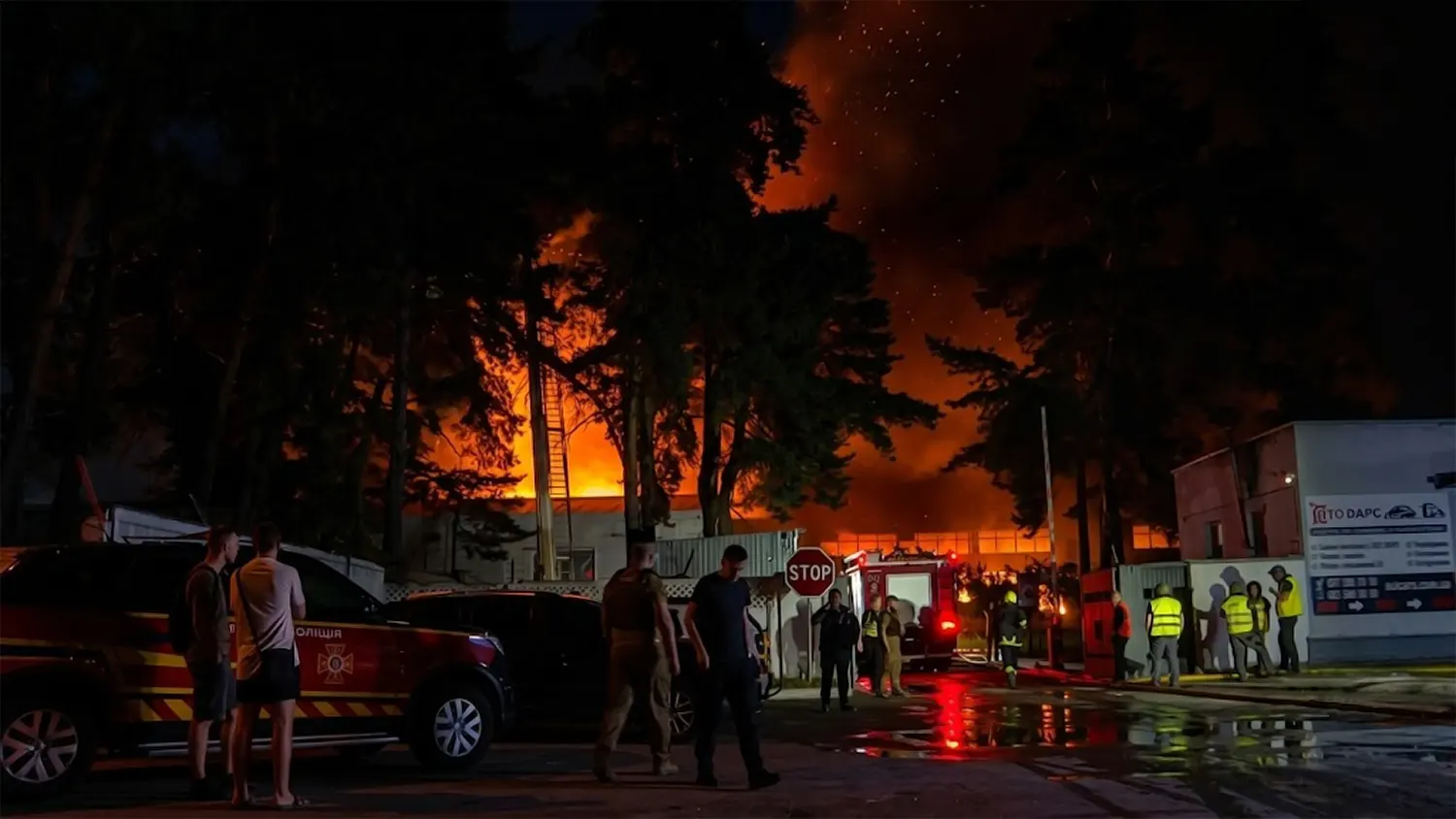
Russia launched a large-scale overnight aerial assault on Ukraine spanning June 25–26, firing seven Iskander-M ballistic missiles and 189 drones in one of the latest waves of attacks targeting the country’s infrastructure. Ukrainian air defenses intercepted part of the barrage over Kyiv, but falling missile debris ignited a massive fire at commercial warehouses in the capital’s Darnytskyi district, injuring two people and prompting an extensive emergency response. Meanwhile, missiles and drones that penetrated defenses struck industrial facilities in other regions, including Kremenchuk in Poltava Oblast. Ukrainian officials say the attack reflects Russia’s continued campaign against the country’s energy and logistics infrastructure. According to the Ukrainian Air Force, three of the seven ballistic missiles and 174 of the 189 drones were intercepted or suppressed.
| At a Glance | |
|---|---|
| Event | Russian overnight missile and drone attack on Ukraine |
| Date | June 25–26, 2026 |
| Main Targets | Kyiv and Poltava regions |
| Weapons Used | 7 Iskander-M ballistic missiles, 189 drones |
| Air Defense Results | 3 missiles and 174 drones intercepted or suppressed |
| Kyiv Casualties | 2 injured |
| Major Damage | Warehouse fire in Kyiv, industrial strikes in Kremenchuk |
Missile Debris Triggers Massive Fire in Kyiv
Kyiv escaped a direct ballistic missile strike after Ukrainian air defenses intercepted incoming Iskander-M missiles over the capital. However, officials said the destruction came from falling missile fragments, which crashed into two locations in the Darnytskyi district.
The largest impact occurred when burning debris slammed into commercial warehouse buildings, igniting a large overnight fire. A second section of debris landed in an open area elsewhere in the district without causing injuries.
Kyiv Mayor Vitali Klitschko said two people were injured and received medical treatment at the scene.
More Than 100 Firefighters Deployed
Ukraine’s State Emergency Service mobilized more than 100 rescue personnel along with 23 firefighting and specialized vehicles to contain the blaze.
Firefighters worked throughout the night before extinguishing the warehouse fire by the morning of June 26, preventing it from spreading further through the industrial area.
Ukrainian Air Defenses Intercept Majority of Incoming Threats
According to the Ukrainian Air Force’s morning operational report, Russia launched a combined attack consisting of:
| Weapon | Launched | Neutralized | Reached Targets |
|---|---|---|---|
| Iskander-M ballistic missiles | 7 | 3 | 4 |
| Drones (Shahed, Gerbera, Italmas and decoys) | 189 | 174 | 11 confirmed strike drones |
Officials said the remaining ballistic missiles and attack drones struck 12 locations across Ukraine, while debris from intercepted weapons fell at six additional sites. Air defenses relied on fighter aircraft, surface-to-air missile units, electronic warfare systems, unmanned systems and mobile fire groups to counter the assault.
Industrial Facilities Hit in Kremenchuk
While Kyiv avoided a direct ballistic missile impact, Kremenchuk district in Poltava Oblast sustained significant damage.
Regional authorities reported direct strikes on industrial facilities that sparked major fires and damaged utility infrastructure, triggering partial power outages affecting thousands of residents.
Despite the destruction, local officials said no casualties were reported in the district. Emergency crews worked overnight to restore electricity and contain the fires.
Drone Strikes Reach Residential Areas
The overnight drone campaign also affected several other Ukrainian regions.
In Sumy, a drone struck the roof of a nine-story residential building, prompting the evacuation of about 40 residents. Another drone hit a parking area, destroying one vehicle and damaging several others.
In Zaporizhzhia, authorities reported that a drone strike damaged residential buildings and outbuildings, leaving three people injured.
Explosions were also reported in Kharkiv and other regions as air raid alerts continued for hours after the initial missile launches.
Ballistic Missiles Continue to Pressure Air Defenses
Military analysts say attacks involving Iskander-M ballistic missiles serve multiple purposes.
Russia has consistently stated that such strikes target military-industrial facilities, logistics hubs and critical infrastructure. Ukrainian officials, however, say commercial and civilian infrastructure continues to sustain damage during these attacks.
Analysts also note that repeated ballistic missile strikes can place sustained pressure on Ukraine’s air defense network by forcing the use of advanced interceptor missiles capable of engaging high-speed ballistic threats.
Air Alerts Continue as Conflict Intensifies
The June 25–26 attack is part of an ongoing escalation in Russia’s long-range aerial campaign against Ukraine. Although Ukrainian defenses intercepted most incoming weapons, officials said the sheer size of ballistic missile debris and the volume of drones continue to pose serious risks even when interceptions are successful.
Emergency services remain engaged in recovery operations as authorities assess damage across multiple regions while air defense units continue to respond to recurring missile and drone threats.