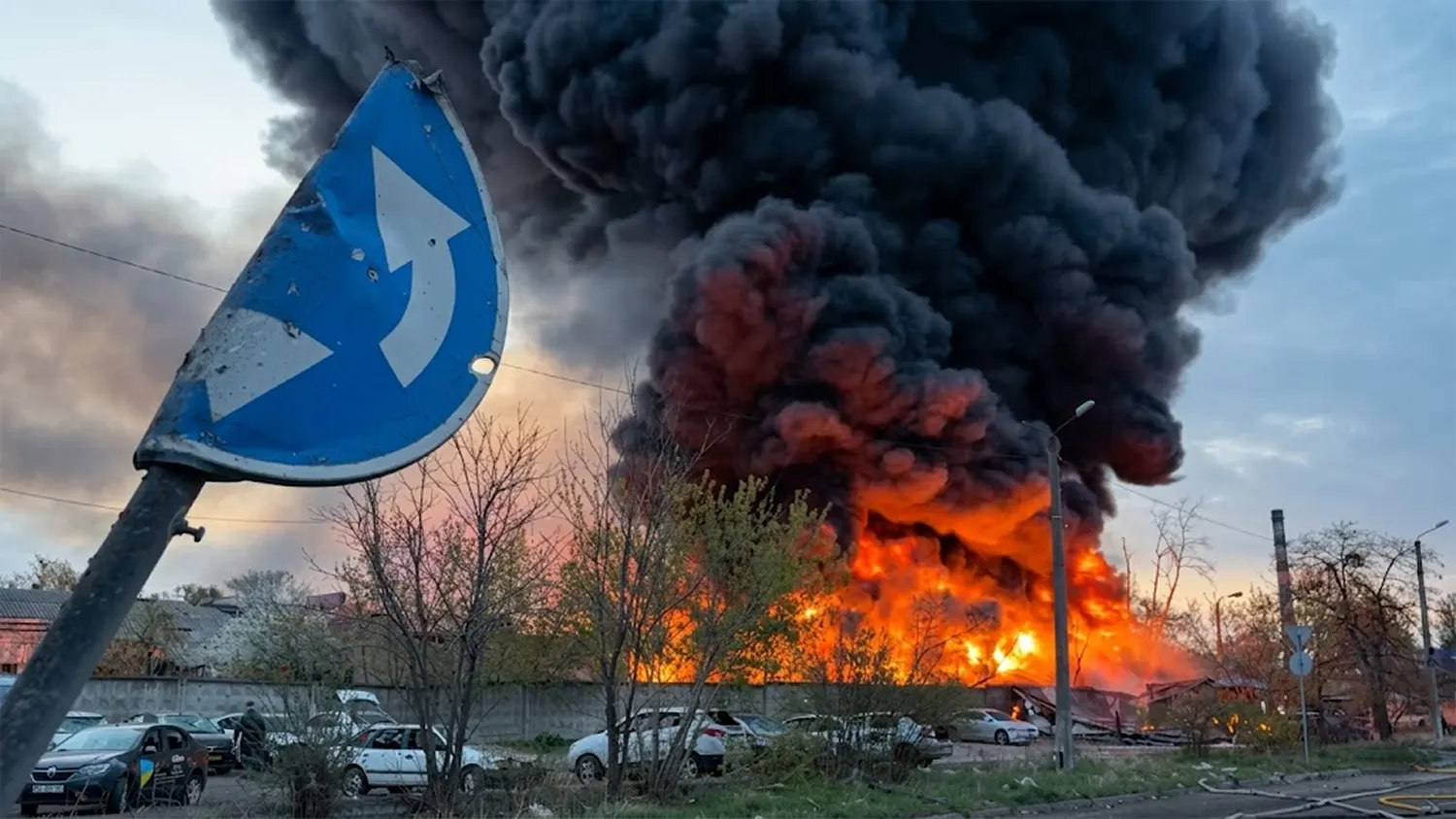
On April 16, 2026, Ukraine faced one of its most intense assaults of the year, as more than 700 drones and missiles struck multiple cities, killing at least 16 people and injuring over 100.
This barrage stands out not only for its scale but for its coordinated, multi-wave execution, targeting both infrastructure and civilian areas.
Why This Attack Signals a Dangerous Escalation
The significance of this strike goes beyond immediate casualties. It highlights a shift in both scale and tactics, with increasing pressure on Ukraine’s already strained defenses.
At the same time, the attack underscores a growing reality: even high interception rates cannot fully protect cities from modern missile systems.
Cities Under Fire: A Nationwide Impact
The destruction was widespread. In Kyiv, at least 17 residential buildings were damaged, with fires breaking out across the Podilskyi and Obolonskyi districts. Four people were killed, including a 12 year old child, and dozens more were injured.
But Kyiv was not alone. Odesa suffered the heaviest losses, with nine confirmed deaths and major damage to port infrastructure and high-rise buildings. In Dnipro, strikes hit residential and administrative sites, leaving several dead and dozens injured.
What makes this even more alarming is the geographic spread. From Kharkiv to Zaporizhzhia, the attacks demonstrated a nationwide reach, stretching emergency response systems to their limits.
When Precision Meets Volume: Inside the 700 Target Barrage
Ukraine’s Air Force tracked 703 aerial targets, including 659 drones and 44 missiles, in what officials described as a highly coordinated operation across multiple waves.
On paper, defenses performed strongly, intercepting around 95% of incoming threats. But that figure masks a critical vulnerability: ballistic missiles proved far harder to stop, with less than half intercepted.
This imbalance proved decisive. While drones were largely neutralized, high-speed ballistic strikes penetrated defenses, causing the most severe damage to urban centers.
The Moment That Changed the Rescue Effort
One of the most troubling aspects of the attack was the use of a “double tap” strike in Kyiv.
In the Obolonskyi district, a second missile hit minutes after the first, targeting
emergency responders as they arrived. Several paramedics and police officers were injured, and multiple ambulances were destroyed.
This tactic introduces a new level of risk. Rescue operations themselves are no longer safe, forcing responders to balance urgency with survival.
A City Defined by Fire and Collapse
In Kyiv’s Podilskyi district, the human cost was most visible. A strike tore through an 18-story residential building, leaving a gaping structural collapse and trapping residents inside.
Rescue teams worked through the debris, recovering victims while also managing moments of survival. A mother and child were pulled alive from the rubble, offering a rare point of hope amid widespread devastation.
But the broader image remains stark. Witnesses described a “skyline of fire,” with burning buildings and constant anti aircraft fire dominating the horizon.
Air Defense Strain Is Becoming Critical
The attack has intensified concerns over Ukraine’s air defense shortages, particularly for systems capable of intercepting ballistic missiles.
President Volodymyr Zelenskyy has warned of a “critical shortage” of Patriot interceptors, the only reliable defense against high-speed threats. Without sufficient supply, Ukraine is increasingly forced to prioritize which areas to defend, leaving others exposed.
What makes this even more urgent is the global context. Competing conflicts have stretched interceptor production, reducing the availability of these crucial systems.
A Fragile Energy System Under Renewed Pressure
Beyond immediate destruction, the strikes come at a precarious moment for Ukraine’s energy infrastructure.
After a winter of sustained attacks, the country has already lost significant power generation capacity, leaving the grid fragile. Recent declines in solar output have worsened the situation, triggering fresh blackouts.
With additional damage to residential buildings and infrastructure, the latest assault further complicates efforts to restore heating and electricity to affected communities.
A War Entering a More Relentless Phase
The events of April 16 reflect a broader shift in the conflict toward higher volume, greater precision, and increased psychological impact.
The combination of mass drone swarms, ballistic strikes, and targeted secondary attacks suggests a strategy designed not just to destroy, but to overwhelm and exhaust.
As Ukraine continues to defend its cities, the challenge is no longer just interception, it is endurance. And with each large scale assault, the question grows more urgent: how long can defenses hold under this level of sustained pressure?