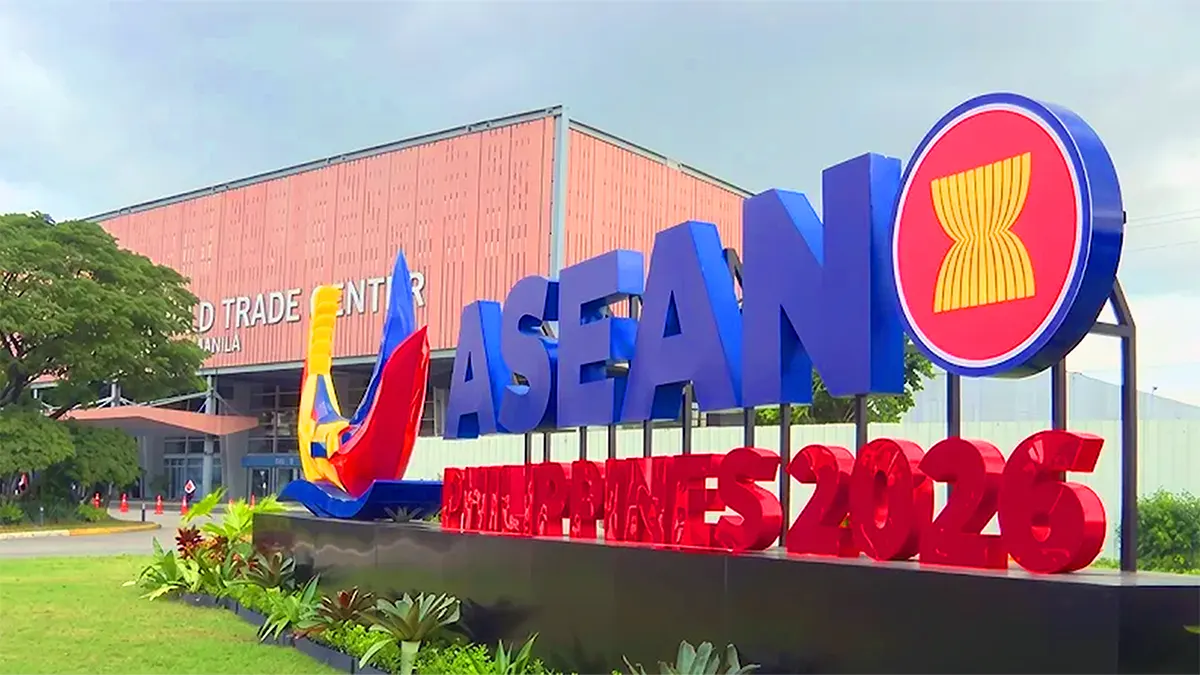
Southeast Asia’s leaders are gathering in Manila for one of the busiest diplomatic weeks of the year. The 49th ASEAN Summit and Related Summits runs from November 15 to 18, 2026 at the Philippine International Convention Center (PICC) in Pasay City. President Ferdinand Marcos Jr. chairs the event under the theme “Navigating Our Future, Together.”
A Milestone Year for an 11-Member Bloc
This summit closes the Philippines’ 2026 chairship. It is also the first full year ASEAN has operated with 11 members, after Timor-Leste formally joined in October 2025. Even the bloc’s look is changing: leaders will unveil an updated ASEAN emblem and flag that reflects the new member. On November 17, the chairship passes to Singapore for 2027.
Who Is Showing Up in Manila
At least 19 world and global institution leaders are attending, according to the Philippine Department of Foreign Affairs (DFA). Alongside the 11 ASEAN member states, the guest list includes:
- Indonesia: President Prabowo Subianto
- Australia: Prime Minister Anthony Albanese
- China: Premier Li Qiang
- Japan: Prime Minister Sanae Takaichi
- India: Prime Minister Narendra Modi
- South Korea: President Lee Jae-myung
- Russia: Foreign Minister Sergey Lavrov
- New Zealand: Deputy Prime Minister and Foreign Minister Winston Peters
- UN and IMF: Secretary-General António Guterres and Managing Director Kristalina Georgieva
Brazil’s President Luiz Inácio Lula da Silva arrived on November 13 for a state visit and will address the plenary as a Guest of the Chair. Canadian Prime Minister Mark Carney landed early on November 14 and met Marcos right away. The two countries concluded negotiations on a Canada–Philippines Free Trade Agreement.
President Donald Trump is due late on November 17 for the ASEAN–U.S. Special Summit. Myanmar is represented only at a non-political level, by a senior foreign ministry official, so its political leadership stays out.
The Big-Ticket Item: A Digital Rulebook for the Region
The headline economic deliverable is the ASEAN Digital Economy Framework Agreement (DEFA). Leaders are expected to sign what is described as the world’s first binding, region-wide digital economy pact. It aims to set common rules on cross-border e-commerce, digital payments, data flows, and AI and cybersecurity. The goal is to double Southeast Asia’s digital economy to $2 trillion by 2030.
Tension in the South China Sea
Hosting the summit while maritime friction continues, the Philippines has made a substantive Code of Conduct with China a top political priority. Malaysian and Philippine officials are pushing for a breakthrough during the ASEAN–China summit with Premier Li Qiang. The code has been under negotiation for years, so any real progress would be notable.
Energy, Food and a Shaky Global Economy
Leaders will also coordinate regional buffers against energy supply disruptions and price spikes linked to the 2026 Middle East crisis. They plan to stabilize food supply chains, strengthen trade within ASEAN and advance the ASEAN Power Grid.
Why the Smoke Over Sumatra and Kalimantan Is on the Agenda
Transboundary haze from forest and land fires (known in Indonesia as karhutla) is a high-priority item. Recent fires in Sumatra and Kalimantan have pushed smoke into Singapore and parts of Malaysia. Governments are now asking for concrete mechanisms, not just diplomatic pledges.
The first is the ASEAN Coordinating Centre for Transboundary Haze Pollution Control, planned for Jakarta. It would handle real-time air quality data, hotspot monitoring and cross-border firefighting coordination. But it can’t operate fully until at least six member states ratify its agreement, and so far only Vietnam has. Indonesia and Malaysia are urging fellow leaders to speed this up, and analysts say Indonesia must finish its own ratification to show the center will have real authority and funding.
The second is Malaysia’s proposal. Foreign Minister Mohamad Hasan called on November 13 for a Sustainable Haze Fund. Haze falls outside ASEAN’s standard disaster funding, so Malaysia wants long-term money for fire prevention, peatland management and rapid emergency response.
Indonesia, for its part, is pointing to tighter enforcement against companies behind illegal slash-and-burn land clearing. It is also expanding fire-hotspot information sharing with Singapore.
Scams, Migrant Workers and Myanmar
Leaders will also take up joint crackdowns on regional online scam syndicates and stronger protections for migrant workers. The bloc’s stance on Myanmar’s ongoing civil conflict is on the list too. Separately, Cyprus, Slovakia and Slovenia are set to join ASEAN’s Treaty of Amity and Cooperation.
What Manila Residents Should Expect
The government declared November 16–18 non-working days in Metro Manila. Expect road rerouting along Roxas Boulevard and around the PICC, a no-drone zone, and adjustments to more than 300 commercial flights at Ninoy Aquino International Airport.
The Schedule at a Glance
The core summit days are November 15–17. They cover the main plenary and retreat sessions, the ASEAN+1, ASEAN+3 and East Asia Summits, the ASEAN–U.S. Special Summit and the handover to Singapore. November 18 is for bilateral meetings and wrap-up forums. Many leaders, including Singapore’s Lawrence Wong, Japan’s Sanae Takaichi and China’s Li Qiang, then head straight to Shenzhen for the APEC Leaders’ Meeting on November 18–19.