A Diplomatic clash with wider implications
A single statement about Taiwan has triggered a sharp diplomatic confrontation between China and the Philippines highlighting how fragile the Indo Pacific balance has become.
What began as a comment framed around humanitarian concerns has quickly escalated into a broader geopolitical dispute, underscoring rising tensions not only over Taiwan but also across the South China Sea.
Marcos’s Remarks on Taiwan
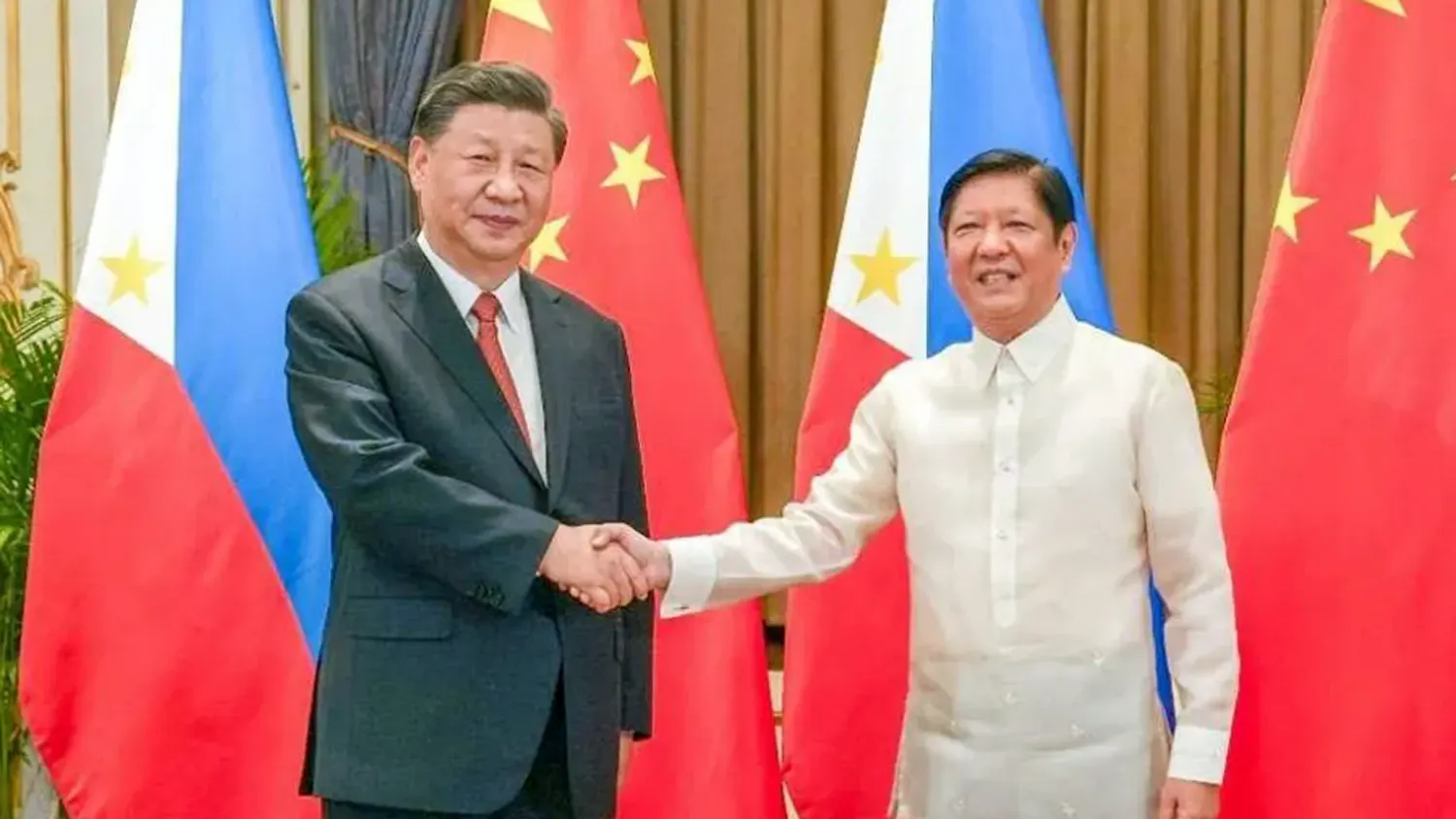
The latest dispute was sparked during a state visit to India by Ferdinand Marcos Jr..
When asked about a potential conflict between China and the United States over Taiwan, Marcos gave a candid assessment:
The Philippines, he said, would be “inevitably” drawn into such a conflict.
His reasoning was twofold:
- The country’s geographic proximity to Taiwan
- The presence of an estimated 160,000 Filipino workers on the island
Marcos emphasized that Manila’s primary concern would be humanitarian specifically, the evacuation and safety of Filipino nationals.
However, what Manila framed as practical realism was interpreted very differently in Beijing.
China’s Response: “Playing With Fire”
The reaction from China was immediate and forceful.
Chinese officials lodged formal diplomatic protests and issued a stark warning, accusing Manila of “playing with fire” on a matter Beijing considers a core national interest.
At the center of the dispute is the “One China” principle, which asserts that Taiwan is part of Chinese territory.
Beijing argued that Marcos’s remarks:
- Undermine the Philippines’ longstanding commitment to that principle
- Signal a shift toward interference in China’s internal affairs
A foreign ministry spokesperson went further, warning that:
Geography and overseas populations are not valid justifications for involvement in Taiwan related issues.
A Broader Context: South China Sea Tensions
This diplomatic clash does not exist in isolation.
It is unfolding against the backdrop of already strained relations in the South China Sea.
Recent months have seen repeated confrontations between Chinese and Philippine vessels, including:
- Aggressive maneuvers by coast guard ships
- The use of water cannons against Philippine boats
These incidents have heightened distrust and reinforced a pattern of escalating maritime friction.
As a result, any political statement especially on Taiwan now carries amplified consequences.
The U.S. Factor: Alliance Pressures
The situation is further complicated by the Philippines’ security relationship with the United States.
Manila is bound by a mutual defense treaty with Washington, and the U.S. has repeatedly reaffirmed its commitment to defending Philippine forces in the region.
From Beijing’s perspective, Marcos’s remarks may signal:
A deeper alignment between the Philippines and the United States on sensitive security issues.
This perception raises the stakes significantly, as Taiwan remains one of the most sensitive flashpoints in global geopolitics.
Why It Matters: Interconnected Flashpoints
The Taiwan issue and the South China Sea disputes are no longer separate, they are increasingly intertwined.
For countries like the Philippines, this creates a difficult balancing act:
- Maintaining economic ties with China
- Preserving security guarantees with the United States
In this environment, even carefully worded statements can be interpreted as strategic signals.
The margin for diplomatic ambiguity is rapidly shrinking.
What Happens Next: A Delicate Balancing Act
Looking ahead, the key question is whether this dispute escalates further or stabilizes through diplomatic engagement.
Several factors will be critical:
- Follow up statements or clarifications from Manila
- China’s diplomatic and military posture in the region
- The role of the United States in reinforcing or moderating tensions
For now, the situation remains tense but controlled.
The Bottom Line
This episode highlights how quickly regional tensions can escalate in today’s geopolitical environment.
What began as a comment about humanitarian preparedness has evolved into a symbol of deeper strategic rivalry in the Indo Pacific.
As tensions over Taiwan and the South China Sea continue to overlap, every statement, movement, and signal carries global significance.