Two months after the World Health Organization (WHO) declared the Bundibugyo Ebola outbreak a Public Health Emergency of International Concern (PHEIC), the situation has changed dramatically.
What began as a cluster of unexplained illnesses in eastern Democratic Republic of the Congo (DRC) has grown into the largest recorded outbreak of the Bundibugyo strain, with nearly 1,800 confirmed cases and hundreds of deaths.
While health authorities have managed to limit wider international spread, the virus continues to gain ground inside eastern DRC, where armed conflict, mass displacement, and limited healthcare access are complicating containment efforts.
Unlike previous Ebola emergencies, this outbreak presents an additional challenge: there is still no approved vaccine or targeted treatment for the Bundibugyo strain.
Outbreak Has Expanded Rapidly Since WHO Emergency Declaration
The latest data from the World Health Organization (WHO) and the European Centre for Disease Prevention and Control (ECDC) shows the outbreak has reached 1,792 confirmed cases, a sharp increase from the early weeks of the emergency response.
Health officials have also recorded:
- 625 deaths
- 295 recoveries
- 764 patients currently receiving treatment in isolation
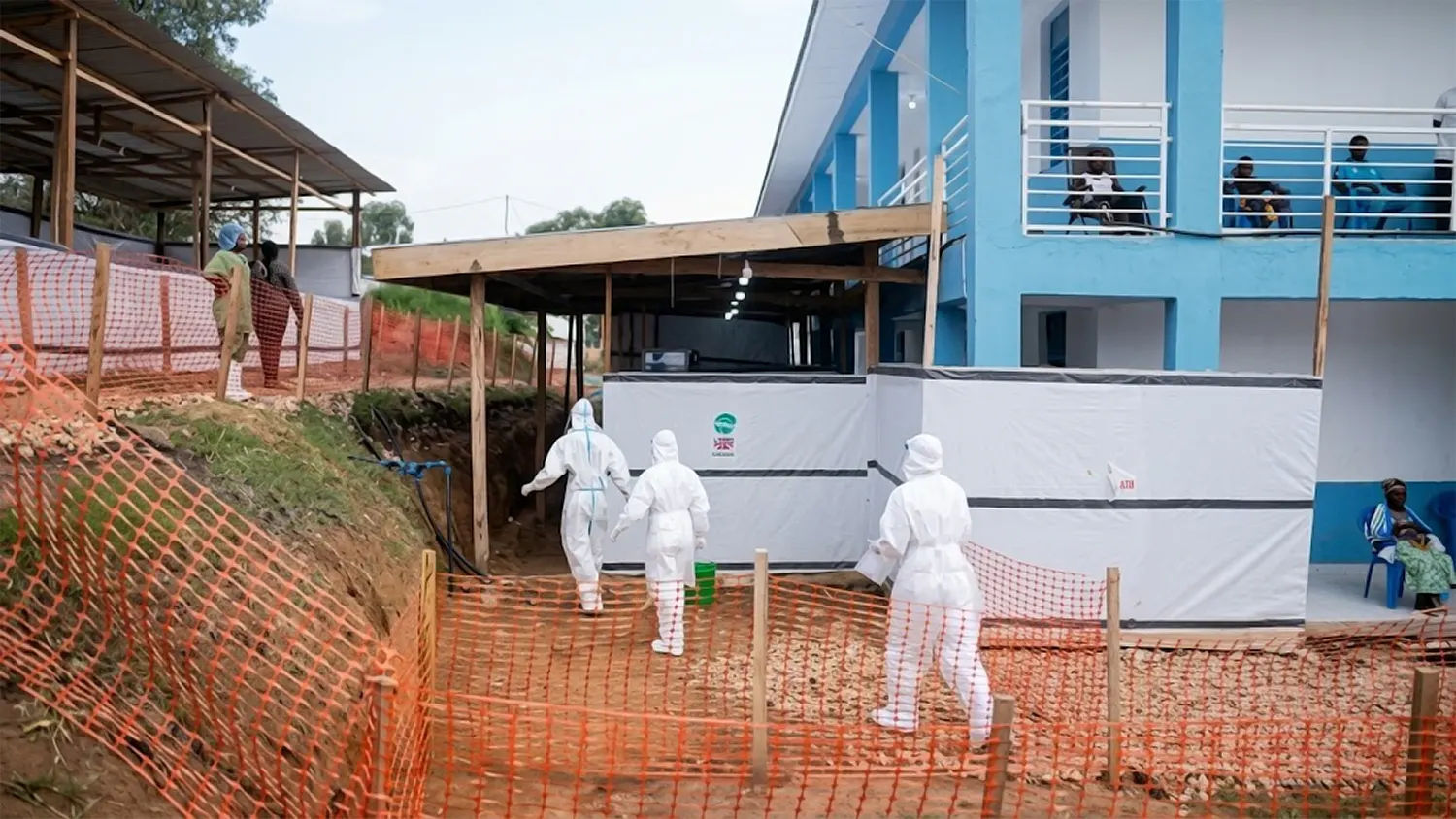
Although supportive care has helped improve survival rates compared to some previous Ebola outbreaks, medical facilities are approaching their operational limits as patient numbers continue to rise.
Eastern DRC Remains the Center of the Crisis
The outbreak continues to be heavily concentrated in the Democratic Republic of the Congo, particularly in the country’s conflict-affected eastern provinces.
Ituri Province remains the epicenter, accounting for approximately 91% of all confirmed infections.
Current figures include:
| Region | Confirmed Cases | Deaths |
|---|---|---|
| Ituri Province | 1,631 | 535 |
| North Kivu | 158 | 89 |
| South Kivu | 3 | 1 |
Health authorities are also investigating two suspected cases in Tshopo Province, raising concerns that the virus could expand into additional regions if transmission chains are not quickly interrupted.
Uganda Shows Containment Can Work
While eastern DRC continues to struggle, neighboring Uganda has demonstrated that aggressive public health measures can slow Ebola transmission.
The country has reported:
- 20 confirmed cases
- 2 deaths
- 17 recoveries
- 1 active patient remaining in isolation
More importantly, Uganda has not detected a new confirmed case since June 21, with most identified contacts successfully completing the standard 21-day monitoring period.
Public health experts view Uganda’s response as an encouraging example of how rapid case identification, contact tracing, and isolation can contain outbreaks before they become widespread.
Imported Cases Highlight Ongoing International Risk
Although the outbreak remains centered in central Africa, international travel has resulted in a small number of imported infections.
Health officials confirmed:
- France: One humanitarian worker tested positive after returning from the DRC.
- Germany: One medically evacuated U.S. citizen was diagnosed after being transferred for specialized treatment.
Authorities stress that these isolated cases were quickly identified and managed, with no evidence of sustained community transmission outside Africa.
No Approved Vaccine Remains the Biggest Challenge
Perhaps the most significant difference between this outbreak and recent Ebola emergencies is the virus itself.
The current epidemic is caused by the Bundibugyo ebolavirus, a much rarer species than the Zaire strain, which has been responsible for most major Ebola outbreaks over the past decade.
That distinction matters because Ervebo, the highly effective vaccine used to stop recent Ebola outbreaks, does not protect against the Bundibugyo strain.
Without an approved vaccine, doctors are relying almost entirely on supportive medical care, including:
- Intravenous fluids
- Electrolyte replacement
- Oxygen therapy
- Blood pressure stabilization
- Intensive monitoring of organ function
While early treatment can significantly improve survival, supportive care alone cannot stop transmission.
Experimental Vaccines Enter Fast-Track Development
Recognizing the urgent need for protection, global health organizations have accelerated development of vaccines specifically targeting the Bundibugyo strain.
The Coalition for Epidemic Preparedness Innovations (CEPI) has committed more than $60 million to support three experimental vaccine platforms.
Modified VSV Vaccine
Researchers are adapting the same viral vector technology used in the licensed Ervebo vaccine by replacing the Zaire virus protein with one from the Bundibugyo strain.
Among current candidates, this approach has shown the strongest results in preclinical studies.
ChAdOx Platform
Another candidate uses the viral vector technology made widely known through the Oxford-AstraZeneca COVID-19 vaccine.
Scientists believe this platform could be manufactured quickly if clinical trials prove successful.
mRNA Technology
Researchers are also evaluating an mRNA vaccine, which offers the fastest path from laboratory design to large-scale production if early safety and effectiveness studies are successful.
According to the WHO, emergency deployment could begin within approximately three months if ongoing clinical trials continue to produce favorable results.
Treatment Trial Begins as Doctors Search for Better Options
While vaccine research focuses on prevention, doctors are also testing therapies designed to improve survival among infected patients.
On July 2, researchers launched the PARTNERS clinical trial inside the DRC.
The study is evaluating three promising treatments:
- MBP134, an experimental monoclonal antibody therapy.
- Remdesivir, an antiviral medication being assessed alone and alongside antibody treatments.
- Obeldsivir, an oral antiviral intended for people who have recently been exposed to Ebola, including healthcare workers and close family contacts.
Researchers hope the trial will identify therapies that can reduce deaths while vaccine development continues.
New Rapid Test Could Speed Up Containment
Another major breakthrough has come in diagnostics.
The WHO recently authorized the first emergency-use diagnostic test designed specifically for the Bundibugyo strain.
Previously, laboratory confirmation often required samples to be transported long distances, delaying results for several days.
The new test allows field laboratories to confirm infections within hours, enabling health teams to isolate patients and begin contact tracing much more quickly.
Experts believe faster diagnosis could become one of the most important tools for slowing transmission.
Conflict Continues to Undermine the Response
Despite advances in testing and medical research, health workers face enormous logistical challenges.
Much of the outbreak remains concentrated in eastern DRC, where armed groups, population displacement, and active mining operations frequently disrupt disease surveillance.
Constant movement along gold and mineral trading routes has increased opportunities for cross-border transmission, while insecurity continues to limit access to some affected communities.
Health officials are also placing renewed emphasis on community engagement and safe burial practices, after investigations linked several early transmission clusters to traditional funeral ceremonies involving direct contact with the deceased.
Hospital Capacity Nearing Its Limit
The outbreak’s current case fatality ratio of roughly 31% to 35% is lower than some historic Ebola outbreaks caused by the Zaire strain, where mortality has exceeded 60%.
However, experts caution that those figures could change if healthcare systems become overwhelmed.
Treatment centers across eastern DRC are reportedly operating at around 90% capacity, placing growing pressure on medical staff and supplies.
As patient numbers continue to increase, maintaining adequate supportive care may become one of the biggest challenges facing the international response.
The Next Few Weeks Could Shape the Outbreak
Two months after the global emergency declaration, the Bundibugyo Ebola outbreak has entered a new phase.
The focus is no longer on detecting isolated cases but on preventing sustained transmission across a region already strained by conflict and humanitarian crises.
For now, health officials are relying on aggressive contact tracing, rapid diagnostics, supportive care, and experimental medical research to slow the virus.
Whether those efforts can outpace the outbreak before hospitals become overwhelmed may determine how this public health emergency unfolds in the months ahead.