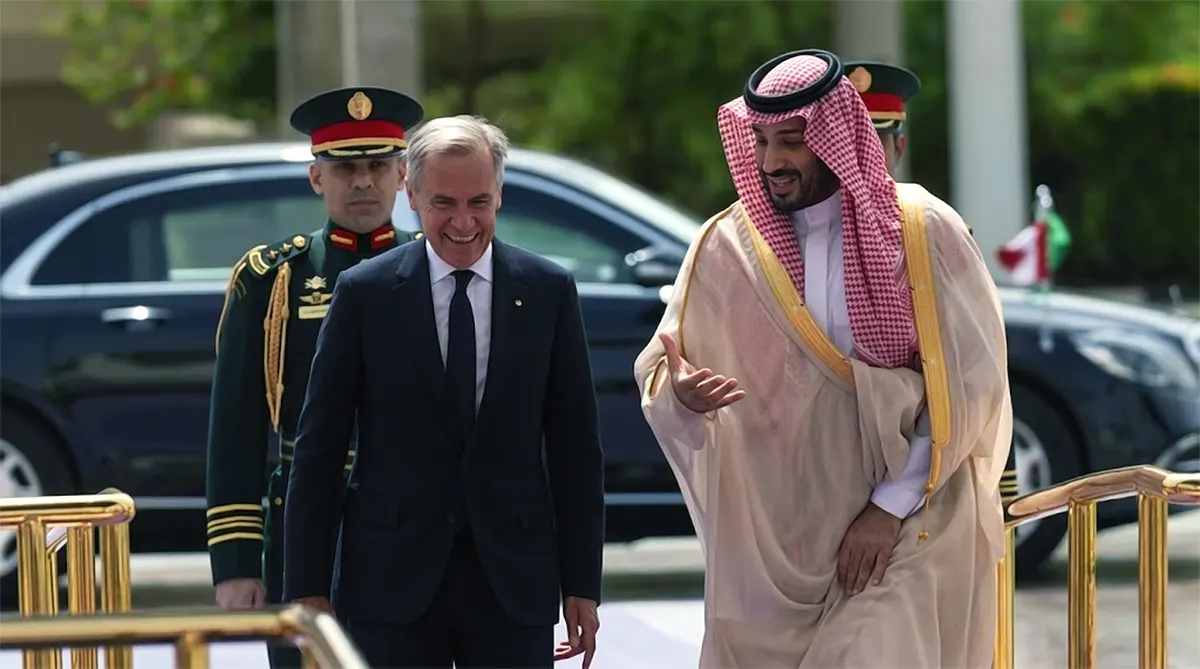
Canadian Prime Minister Mark Carney touched down in Jeddah on Wednesday, July 8, marking a moment that hasn’t happened in over two decades: the first visit by a Canadian prime minister to Saudi Arabia in 26 years. The stop came right after Carney wrapped up the NATO Summit in Turkey, and it’s already producing tangible results.
Over the course of high-level talks with Crown Prince Mohammed bin Salman (MBS), Canada and Saudi Arabia signed 13 agreements worth roughly $1 billion, spanning everything from artificial intelligence to mining to clean energy. But the trip wasn’t just about trade, regional security and a rapidly escalating crisis with Iran ended up dominating just as much of the conversation.
A Trade Package Built Around AI, Minerals, and Mega-Projects
The most eye-catching piece of the agreement is a partnership between Cohere, a leading Canadian generative AI company, and HUMAIN, Saudi Arabia’s AI initiative. Under the deal, HUMAIN is committing a massive 50 megawatts of AI compute capacity to help train Cohere’s next generation of frontier foundation models.
It’s a mutually beneficial trade: Canada gets access to serious computing horsepower it wouldn’t easily find elsewhere, while Saudi Arabia moves closer to its Vision 2030 goal of becoming a global hub for sovereign AI infrastructure.
The rest of the roughly $1.4 billion package (converted from C$1 billion) breaks down into a few key areas:
- Mining and critical minerals — Canadian companies will help Saudi Arabia build out mining as a “third pillar” of its economy, supporting exploration and supply chains for minerals essential to the broader tech transition.
- Vision 2030 infrastructure — Canadian engineering and construction firms landed contracts tied to Saudi mega-projects, with a heavy focus on expanding road and rail networks.
- Clean energy cooperation — Both countries signed memorandums covering liquefied natural gas (LNG), green hydrogen, carbon capture, and renewable energy grids.
For Ottawa, the strategy here is straightforward: trade diversification. With unpredictable tariff threats and trade tension continuing back home in North America, Canada is actively working to reduce how dependent it is on the U.S. market.
Iran, the Strait of Hormuz, and a New Defense Presence
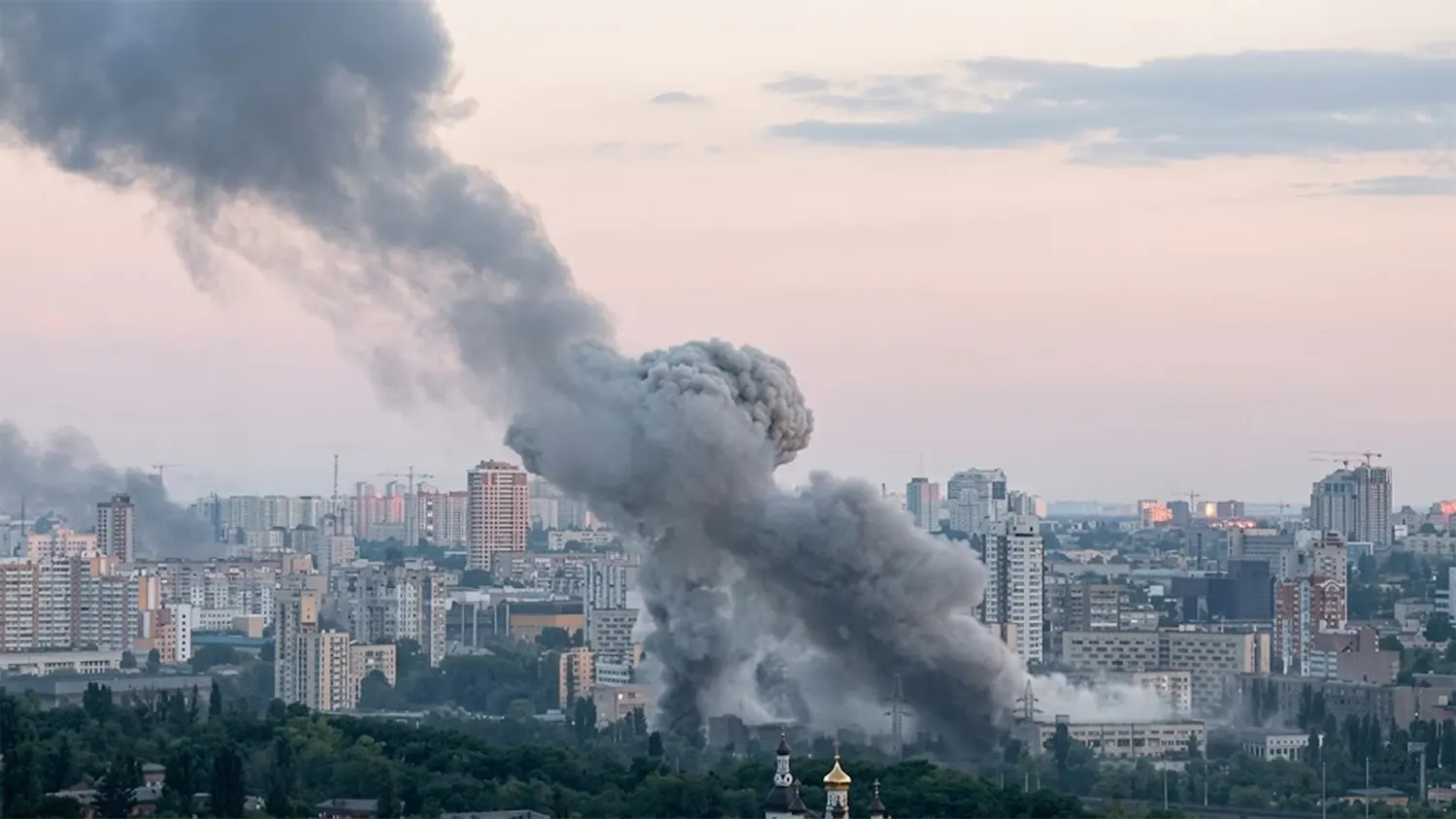
Carney’s visit happened to land at a tense moment. Just a day before the meetings, on July 7, Iran carried out attacks on commercial vessels in the Strait of Hormuz, further destabilizing an already collapsing U.S.–Iran ceasefire.
Carney and MBS responded with a joint statement condemning the attacks outright. Carney went a step further, publicly stating that Canada stands with Gulf nations facing what he called “Iranian aggression.”
That security concern is now translating into a longer-term commitment. Canada announced it’s establishing a permanent resident Defence Attaché in Riyadh, a diplomatic post meant to coordinate security matters directly and set the stage for a formal defense cooperation agreement between the two countries.
To formalize the broader relationship, both leaders also signed off on creating the Canada-Saudi Arabia Coordination Council, a new body designed to oversee and speed up joint projects across defense, education, science, and trade going forward.
Carney Pushes Back on Human Rights Questions
When reporters pressed Carney on whether he raised human rights concerns during the visit, his answer was pointed. He said “lecturing countries from afar is an ineffective strategy,” arguing instead that Canada needs pragmatic, strategic partnerships around the world particularly as it works to avoid being overly reliant on any single ally, namely the United States.
It’s a notable shift in tone, and one that lines up closely with the broader theme of the trip: results-driven diplomacy over public criticism.
Pension Funds, Expo 2030, and the Road to the World Cup
Beyond security and trade, Carney used the visit to court future investment. At an Investment Forum press conference, he confirmed that a delegation of Canadian pension funds will travel to Saudi Arabia in the coming months to explore opportunities tied to Vision 2030 projects.
The two countries also touched on cultural and sporting ties. Carney confirmed Canada’s participation in the Riyadh World Expo 2030, and the leaders discussed parallels between Canada’s current role co-hosting the 2026 FIFA World Cup and Saudi Arabia’s own preparations to host the tournament in 2034.
What It Signals Going Forward
Taken together, the visit reads less like a one-off diplomatic stop and more like the start of a long-term strategic relationship. Between the new Coordination Council, the permanent defense presence in Riyadh, and a growing list of commercial ties in AI, mining, and energy, Canada appears to be positioning Saudi Arabia as a central piece of its broader push to diversify trade and reduce reliance on the U.S.