What started as a temporary pandemic trend has now become a major part of global immigration policy. Around the world, countries are racing to attract remote workers through digital nomad visas, turning mobile professionals into valuable economic assets.
More than 70 countries now offer some form of digital nomad program, but governments are no longer simply handing out extended tourist stays. Instead, they are carefully designing policies to attract workers who can contribute money, skills, and long-term economic value.
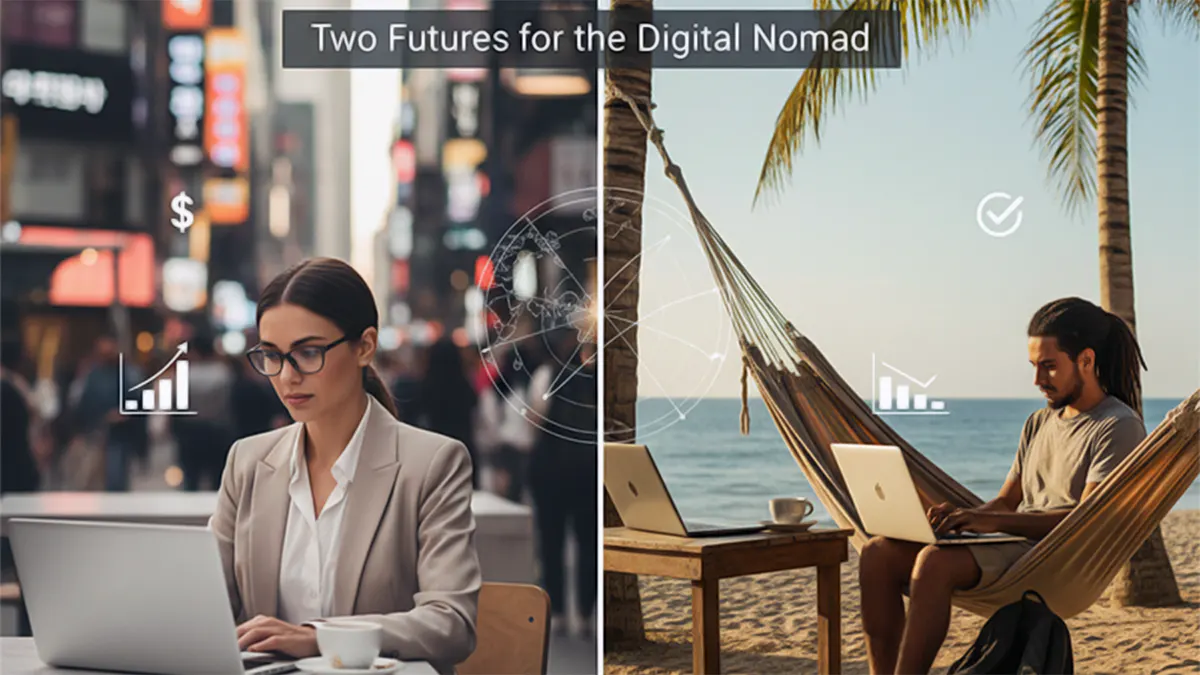
As competition grows, two clear strategies are emerging: some countries are targeting wealthy professionals with strict financial requirements, while others are making the process simple and accessible to attract larger numbers of remote workers.
Digital Nomad Visas Are Becoming More Serious
In the early days of remote work migration, many governments saw digital nomads as a quick way to support tourism during the pandemic. Temporary visa extensions and relaxed entry rules helped fill hotels, restaurants, and coworking spaces when international travel collapsed.
That approach has changed dramatically.
Today, digital nomad visas are evolving into formal residence programs designed to attract stable, high-earning professionals. Governments now see remote workers as a long-term economic opportunity rather than short-term tourists.
Many countries are also trying to balance the benefits of foreign spending with concerns about housing prices, local jobs, and infrastructure pressure.
Because of this, visa rules are becoming more structured, with governments introducing income requirements, proof of employment, and longer residency conditions.
Countries Are Competing With Two Different Models
As more nations enter the digital nomad race, two very different approaches are becoming visible.
High-Income Requirements Aim to Attract Wealthier Workers
Some countries are deliberately setting high financial thresholds to attract affluent professionals who are likely to spend more money locally and place less strain on public systems.
South Africa is one of the clearest examples of this approach. Its digital nomad visa requires applicants to show an annual income of around USD 55,000. The goal is not simply to attract remote workers, but to bring in financially established professionals who can contribute strongly to the local economy.
South Korea has taken a similar path. The country launched its remote-work visa program in 2024 with a focus on experienced global talent. The visa allows eligible workers and their families to stay for up to one year, with the possibility of renewal.
The emphasis is on attracting professionals who can integrate into the country’s growing technology and business sectors.
Simpler Programs Focus on Accessibility
Other countries are choosing a completely different strategy by making digital nomad visas easier and faster to obtain.
Uruguay has gained attention for offering one of the simplest digital nomad pathways available. Instead of requiring strict financial documentation, applicants mainly need to provide proof that they earn income remotely.
The country’s flexible approach appeals to freelancers, entrepreneurs, and younger remote workers looking for fewer administrative barriers.
This accessibility-first model helps countries attract larger numbers of remote workers, even if individual spending levels may be lower.
Taxes Remain the Biggest Challenge for Remote Workers
While digital nomad visas make international living easier, they do not solve every problem.
One of the biggest complications is taxation.
In many countries, a digital nomad visa gives permission to stay and work remotely, but it does not clearly define tax residency status. This often leaves remote workers responsible for figuring out complicated tax rules on their own.
Most programs also prohibit visa holders from taking local jobs, meaning workers must continue earning income from foreign employers or clients.
As digital nomad programs continue to grow, experts believe the next phase of competition between countries will focus less on visa availability and more on simplifying legal and tax systems for remote professionals.
Remote Workers Are Now Part of Global Economic Strategy
The rapid rise of digital nomad visas reflects a much bigger shift in the global economy.
Countries are increasingly competing not just for tourists or corporations, but for skilled individuals who can work from anywhere while spending money locally.
Whether governments choose strict financial requirements or open accessibility, the message is becoming clear: remote workers are now viewed as highly valuable economic contributors.
As remote work continues expanding worldwide, digital nomad policies are likely to become an even more important tool in shaping future migration, investment, and economic growth.