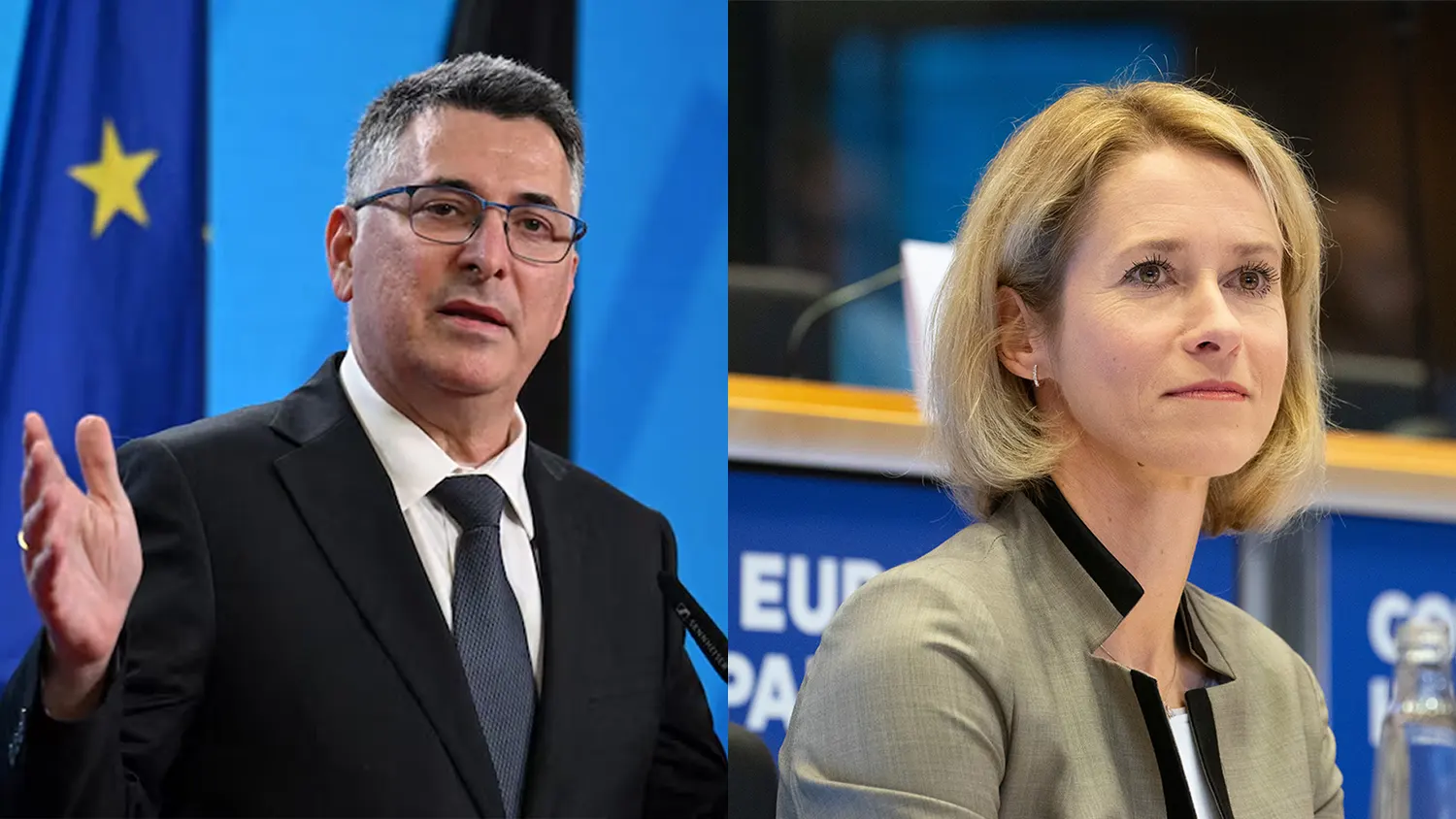
It started with a leaked comparison to apartheid. It ended with Israel’s foreign minister declaring he would no longer speak to the European Union’s top diplomat. But what looks like a personal feud between two politicians is actually the most visible crack yet in a relationship that has been quietly fracturing for months.
The Word That Broke the Relationship
During a diplomatic trip to Mexico, EU foreign policy chief Kaja Kallas allegedly told closed-door contacts that Israel’s treatment of Palestinians in Gaza and the West Bank resembled South Africa’s former apartheid regime. The remarks were never made publicly but they didn’t stay private for long.
When the leak surfaced, Israeli Foreign Minister Gideon Sa’ar didn’t hold back. He accused Kallas of acting “obsessively and with blatant unfairness” and called the comparison a “blood libel” against Israel, one of the most charged accusations in Jewish historical memory. His ultimatum was clear: issue a formal retraction, or Israel stops talking to you entirely.
Kallas chose a third path. She took to X to respond, neither confirming nor denying the remarks, and pushed back by saying that “dialogue is the foundation of diplomacy, especially when differences arise.” She also pointedly noted that Israel is entering an election period, a quiet suggestion that the fury from Jerusalem is at least partly a performance for domestic voters.
Sa’ar didn’t budge. The boycott stands.
This Isn’t Just About One Leaked Comment
The “apartheid” remark may have lit the fuse, but the powder keg had been building for months. Two specific policy moves have pushed EU-Israel relations to their lowest point in years.
The first is trade restrictions on West Bank settlements. Just days before the diplomatic blowup, Kallas announced that the EU is actively exploring legal options to limit trade with Israeli settlements in the West Bank which the EU, along with most of the international community, considers illegal under international law. Brussels argues that continued settlement expansion makes a two-state solution functionally impossible, and it wants trade policy to reflect that position.
The second is a push to sanction far-right Israeli ministers, specifically National Security Minister Itamar Ben-Gvir. While several individual EU countries including France have already imposed their own national-level sanctions on Ben-Gvir, getting the entire bloc to act is a different problem. EU-wide foreign policy sanctions require a unanimous vote from all 27 member states, and pro-Israel members have used that veto power to block action every time. After the mid-June Foreign Affairs Council meeting in Luxembourg, Kallas was forced to openly admit the votes simply aren’t there.
The Legal Workaround Kallas Is Quietly Building
Faced with a veto wall she can’t knock down, Kallas is looking for a door around it, and she may have found one in trade law.
Here’s the structural problem: foreign policy sanctions require unanimity. Every single EU member state must agree. That’s given a handful of pro-Israel governments an effective veto over the entire bloc’s position. Nations like France, Spain, Ireland, and Belgium that want stronger action have repeatedly been blocked.
But trade measures work differently. In many cases, they can pass by a qualified majority rather than a unanimous vote. By reframing the settlements issue as a trade and regulatory matter adjusting rules of origin, tweaking tariffs, modifying how settlement goods are labeled, the pro-sanction bloc can potentially bypass the vetoes that have paralyzed EU foreign policy on Israel for years.
It’s a legal workaround, and it’s deliberate.
The Fight Inside Brussels Nobody’s Talking About
Kallas isn’t just clashing with Jerusalem. She’s also locked in a quieter but significant confrontation with European Commission President Ursula von der Leyen.
When Kallas publicly demanded that the Commission draw up legal options to ban settlement goods, the Commission’s own legal service pushed back hard. Commission spokespeople ruled out drafting sweeping new trade bans, warning that using trade powers this aggressively could expose the EU to serious legal retaliation. They also pointed to an existing proposal already drafted last year to suspend trade preferences under the EU-Israel Association Agreement. That proposal has been sitting completely stalled in the Council ever since, for lack of member state support.
The internal divide is real: Kallas is pushing for action that her own institution’s leadership won’t fully back. It’s a turf war playing out behind the polished language of EU press releases.
Who’s Actually Winning This Fight
Diplomatically, the boycott is a significant symbolic blow but it’s deliberately limited in scope. Israeli officials have confirmed that direct talks with Kallas are frozen, but they will continue working with the European Commission and the European External Action Service at the institutional level. It’s a personal freeze, not a full severance.
Politically, the calculus is more complicated for both sides.
For Netanyahu and Sa’ar, the public confrontation with Brussels sends a clear signal to their right-wing voter base ahead of Israel’s election: this government won’t be lectured by Europe. The severity of cutting off an EU foreign policy chief over unverified leaked remarks makes more sense when you read it as domestic positioning.
For Kallas, the standoff has had an unexpected upside. Progressive and left-leaning EU lawmakers have rallied behind her, boosting her political standing within the European Parliament precisely because she’s been seen standing up to both Jerusalem’s pressure and internal resistance from within the Commission.
The relationship between Israel and the EU was already strained. What this week made clear is that it’s now broken at the personal level — and the structural disagreements underneath it aren’t going anywhere.