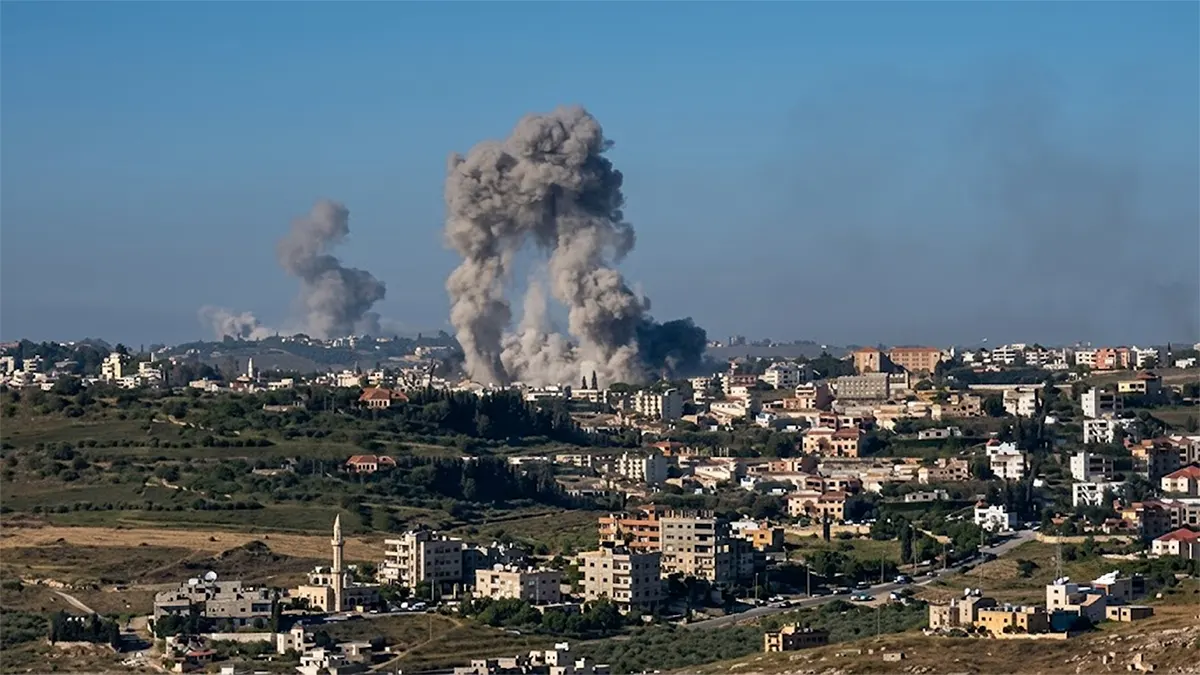
A truce that was supposed to hold shattered before the ink was even dry. Less than 24 hours after a renewed ceasefire took effect on June 19, 2026, Israeli warplanes and drones were already hitting southern Lebanon again and the consequences are rippling far beyond the battlefield.
The Night the Ceasefire Broke
The agreement was barely hours old when strikes lit up the Nabatieh region overnight. One of the deadliest hits landed in Arabsalim, where at least five people were killed and residential buildings were reduced to rubble. Artillery shelling continued into the early morning, making it clear to anyone on the ground that the ceasefire existed more on paper than in practice.
This wasn’t random. It was the latest chapter in a conflict that had just gone through one of its most explosive 24-hour periods in recent memory.
How 47 People Died in a Single Day
To understand why mediators rushed to broker yet another truce, you have to understand what happened just before it.
Hezbollah launched a coordinated assault using explosive drones, guided missiles, and artillery, ambushing Israeli troops advancing near a strategic hill in southern Lebanon. Three Merkava tanks were destroyed. Four Israeli soldiers were killed, and several others wounded.
The response from Israel was swift and overwhelming. Prime Minister Benjamin Netanyahu vowed to “extract a very heavy price,” and the Israeli military followed through striking roughly 150 targets across southern Lebanon and the Bekaa Valley. According to Lebanon’s Health Ministry, the bombardment killed at least 47 people and wounded 97 others, flattening homes in neighborhoods near Nabatieh and Tyre.
That single day of back-and-forth didn’t just cause a catastrophic human toll. It nearly blew up a much bigger diplomatic picture entirely.
The One Sticking Point Neither Side Will Budge On
At the heart of this conflict is a territorial dispute that keeps feeding the cycle of violence.
Israel has established what it calls a “security zone”, a stretch of territory spanning hundreds of square miles inside southern Lebanon. The IDF says this buffer is essential to protect communities in northern Israel and that troops will remain there as long as threats persist. Hezbollah sees it differently: Israeli boots on Lebanese soil are, in their view, an ongoing act of war, and they’ve used that presence to justify continued rocket and drone attacks.
Neither side is willing to move first. Israel says it will respect the ceasefire unless fired upon. Hezbollah says it won’t stop until Israel fully withdraws. That gap is where every truce goes to die.
The Swiss Talks That Never Happened
The fallout from this latest flare-up didn’t stop at the Lebanese border.
Critical diplomatic talks between the United States and Iran, scheduled to take place in Switzerland, were called off immediately after the violence escalated. Those talks were meant to finalize a broader framework to halt hostilities across the region. Iran had already made clear that a stable ceasefire in Lebanon was a non-negotiable condition for any wider peace deal making what happens in southern Lebanon directly tied to whether a regional agreement is even possible.
With those talks now canceled, mediators from the U.S., Qatar, and Iran are scrambling behind the scenes to keep the broader diplomatic process from completely collapsing.
Why This Keeps Happening
The pattern here isn’t new, but it’s getting harder to break. Both sides operate under a “strike and retaliate” logic that makes de-escalation nearly impossible without a third party holding the line and even then, as June 19 showed, the line doesn’t always hold.
As long as Israeli troops remain inside Lebanon and Hezbollah continues to use that presence as justification for attacks, every truce will be fragile by design. The security zone isn’t just a military strategy. Right now, it’s the single biggest obstacle standing between a shaky ceasefire and a sustainable peace.
The mediators know it. Both sides know it. The question is whether anyone is willing to move before the next 24-hour spiral forces them to.