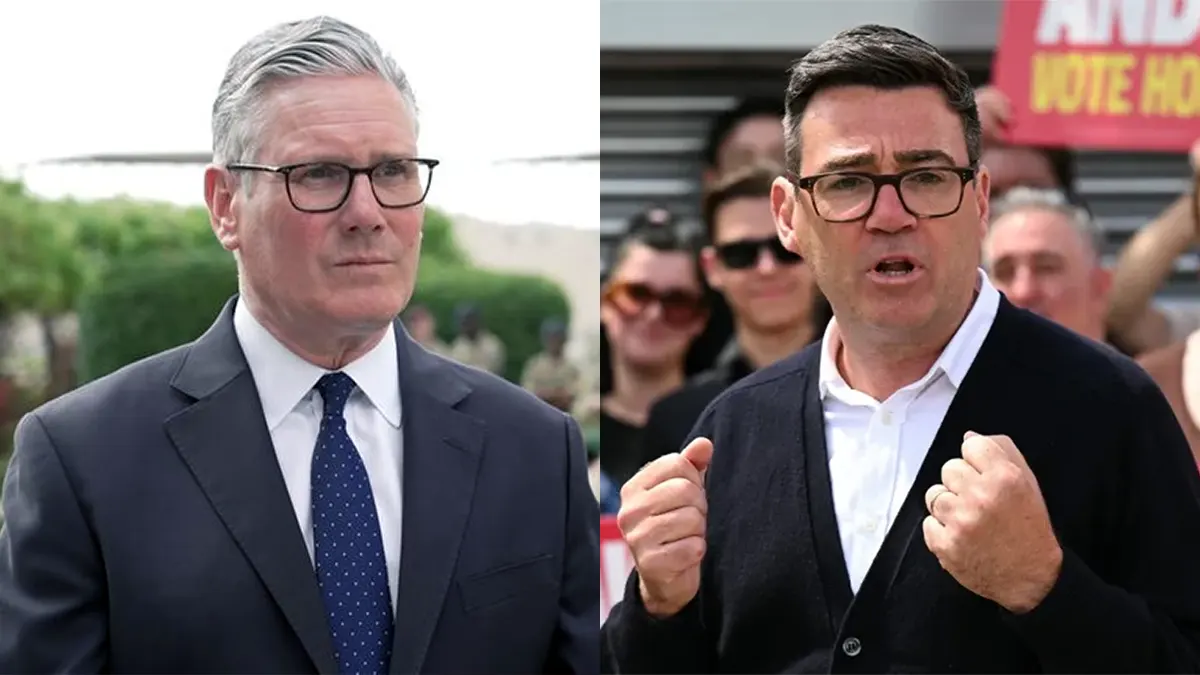
Prime Minister Keir Starmer is facing the gravest threat of his leadership after Andy Burnham’s victory in the Makerfield by-election handed Labour rebels the final piece they needed to challenge his hold on power.
While the by-election result has dominated headlines, the political crisis engulfing Downing Street did not begin in Makerfield. Instead, Burnham’s return to Parliament has accelerated a rebellion that had been building inside Labour for months as Starmer’s popularity collapsed among both voters and his own party.
With senior ministers breaking ranks, Labour MPs openly discussing leadership succession, and opinion polls increasingly favoring Burnham, Westminster is now preparing for what could become one of the most dramatic leadership battles in modern British politics.
A Prime Minister Losing the Confidence of Voters
The roots of the crisis stretch back to Labour’s landslide election victory in 2024.
Despite entering office with a commanding parliamentary majority, Starmer’s government has struggled to maintain public support amid a persistent cost-of-living crisis, pressure on public services, and a series of political controversies.
Critics inside Labour point to repeated policy reversals and controversial appointments, including the decision to appoint Peter Mandelson as Britain’s ambassador to the United States, as signs of a government that has lost its political direction.
The warning signs became impossible to ignore during May’s local elections, where Labour suffered heavy losses, surrendering control of dozens of councils and losing nearly 1,500 local councillors.
By the summer of 2026, Starmer’s approval ratings had fallen to levels comparable with those experienced by former Prime Minister Liz Truss during the final days of her short-lived premiership.
For many Labour MPs, the central concern is no longer governing the country. It is whether Starmer can realistically lead the party into the next general election.
Why Burnham Became the Focus of Labour’s Revolt
For years, Andy Burnham remained one of the most popular figures in British politics despite being outside Westminster.
As Mayor of Greater Manchester, Burnham built a national profile by positioning himself as a strong advocate for regional investment, public services, and local communities. His popularity earned him the nickname “King of the North,” while opinion polls consistently showed he enjoyed stronger approval ratings than many senior figures in Westminster.
More importantly for Labour rebels, Burnham has long been viewed as a leader capable of reconnecting the party with voters who have become increasingly disillusioned.
Recent polling suggests voters overwhelmingly prefer Burnham over Starmer as Prime Minister, creating a potentially dangerous contrast for the current Labour leader.
However, there was one major obstacle.
Under Britain’s political system, a Prime Minister must be a sitting Member of Parliament. As a regional mayor, Burnham could not challenge for Labour’s leadership or seek the premiership unless he first returned to Westminster.
The By-Election That Opened the Door
That obstacle disappeared when Makerfield became vacant.
Labour MP Josh Simons stepped down from one of the party’s safest parliamentary seats, triggering a by-election that many observers immediately viewed as more than a routine political contest.
The move gave Burnham a direct route back into Parliament.
His victory was decisive.
Burnham secured nearly 55% of the vote, finishing more than 9,000 votes ahead of Reform UK and confirming his political strength among Labour supporters.
The result did not create the rebellion against Starmer. Instead, it completed a strategy that allowed Burnham to legally enter Westminster and emerge as a credible alternative leader.
Within hours of the result being declared, Burnham signaled his intentions.
Declaring that Britain “isn’t where it should be,” he described the by-election as a “turning point” and immediately intensified speculation about his future ambitions.
Labour’s Internal Rebellion Gains Momentum
The political pressure on Starmer increased dramatically following Burnham’s return.
Senior Labour figures are now openly discussing an “orderly and managed transition” of power rather than waiting for a formal leadership contest.
The rebellion has moved far beyond disgruntled backbench MPs.
Several prominent figures have either resigned, broken ranks, or publicly questioned Starmer’s future. Former Health Secretary Wes Streeting is reportedly preparing his own leadership campaign, while senior ministers have openly urged Starmer to establish a timetable for departure.
The fractures within government have become increasingly difficult to conceal.
What began as private frustration has evolved into a public struggle over Labour’s future direction.
The Numbers Are Turning Against Starmer
Perhaps the most damaging development for the Prime Minister is the growing evidence that voters have already moved on.
A snap poll conducted after the Makerfield result showed overwhelming support for a Burnham leadership challenge.
Nearly half of respondents said Burnham should challenge Starmer, while only a small minority opposed such a move.
The gap widened further when voters were asked who would make the better Prime Minister, with Burnham holding a commanding advantage.
Even among Labour supporters, a majority now favor an immediate leadership challenge.
For MPs already worried about the next election, those numbers are difficult to ignore.
Can Starmer Survive the Coming Week?
Despite the mounting pressure, Starmer remains defiant.
The Prime Minister has publicly stated that he would contest any leadership challenge and continues to argue that his 2024 election victory provides him with a strong mandate.
Behind closed doors, however, reports suggest senior Labour figures are attempting to persuade him to negotiate a dignified exit before the situation becomes even more divisive.
The immediate battle now centers on timing.
Burnham is expected to be sworn in as an MP on Monday, formally completing his return to Westminster.
Starmer’s allies are reportedly exploring procedural delays and political obstacles that could slow any leadership challenge, including questions surrounding Burnham’s departure as Mayor of Greater Manchester.
Yet many Labour MPs believe events have already moved beyond the point where those tactics can succeed.
Under Labour Party rules, only 20% of Labour MPs are required to trigger a formal leadership challenge. With more than 100 MPs already publicly urging Starmer to announce his departure, the threshold appears well within reach.
A Defining Moment for Labour
The next few days could determine not only the future of Keir Starmer but also the direction of the Labour government itself.
What began as dissatisfaction with a struggling Prime Minister has evolved into a full-scale contest for Labour’s future.
Andy Burnham’s victory in Makerfield did not create that crisis.
It simply gave Labour’s growing rebellion the leader it had been waiting for.
As Westminster prepares for another turbulent week, Britain could soon be witnessing the beginning of a leadership battle that reshapes the country’s political landscape and potentially delivers its seventh Prime Minister in just ten years.