The 2026 Munich Security Conference may be remembered as the moment when tensions inside the Western alliance moved fully into public view.
A direct exchange between Kaja Kallas and Marco Rubio captured a deeper shift: the United States is redefining its expectations of Europe, while European leaders are signaling they want greater strategic independence.
The disagreement was not only about policy.
It was about identity, power, and who sets the terms of cooperation.
A Strategy That Sparked Friction
The background to the dispute lies in the U.S. National Security Strategy released in December 2025. The document argued that Europe faces “civilizational erasure,” blaming immigration, demographic decline, and progressive social policies.
At Munich, Rubio adopted a measured tone compared to other senior U.S. officials in recent months. He described America as a “child of Europe,” emphasizing shared history and values. However, he insisted the alliance must be “revitalized” and largely on Washington’s terms.
He criticized European climate policies and migration systems, suggesting they weaken Western societies. The message was clear: continued partnership would require policy shifts from European capitals.
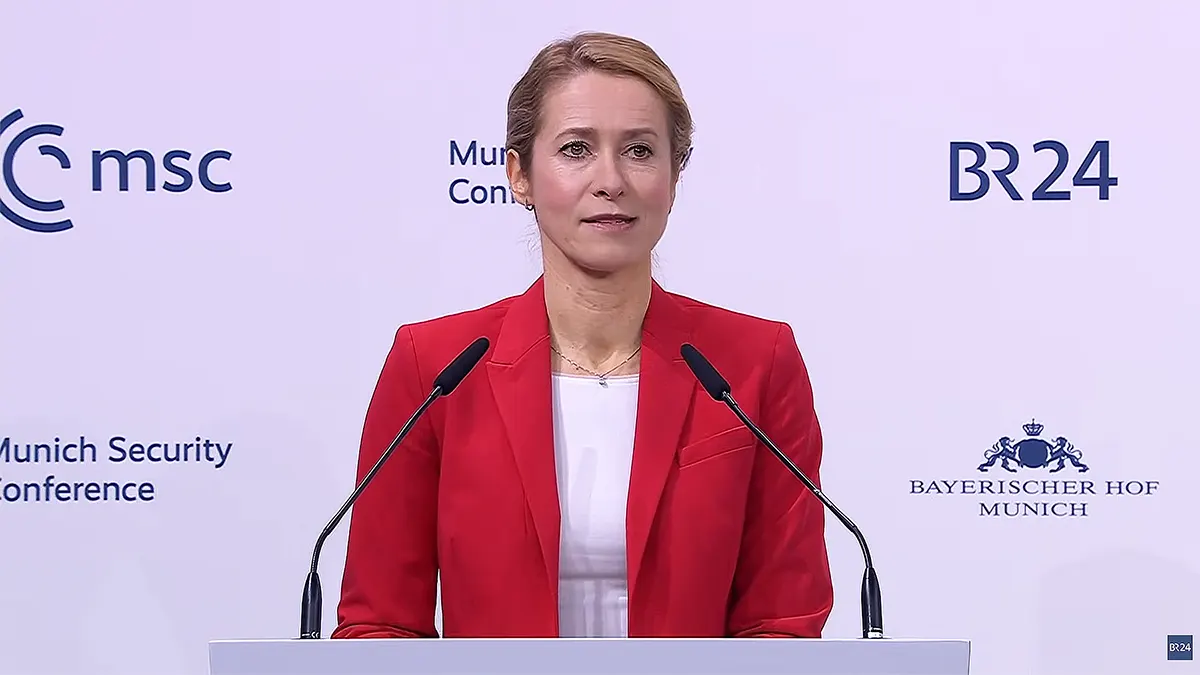
Kallas rejected that framing.
“Contrary to what some may say, woke decadent Europe is not facing civilizational erasure,” she said. “People still want to join our club.”
Her response signaled that Europe does not accept the narrative of decline and does not intend to reshape itself to meet American political preferences.
“Europeans, Assemble”
One of the most widely shared moments of the conference came when Kallas turned to popular culture.
Borrowing from the Marvel films, she said: “Europeans, assemble,” adding that the continent was “dusting off our capes” and preparing to step up.
Behind the light tone was a serious point. Europe, she suggested, can no longer assume that the United States will guarantee its security in the same way as before. If Washington becomes more transactional and protectionist, Europe must strengthen its own defense and economic coordination.
The metaphor resonated because it framed rearmament not as aggression, but as responsibility.
A Blunt Assessment of Russia
Kallas also delivered one of the conference’s sharpest warnings regarding Russia.
“Russia is no superpower,” she said. “Its economy is in shreds. The greatest threat Russia presents right now is that it gains more at the negotiation table than it has achieved on the battlefield.”
She cited heavy casualties and limited territorial progress after four years of full scale war. Her argument was that Russia’s image as an unstoppable force is overstated.
But her main concern was diplomatic. With peace talks expected soon in Geneva, European leaders fear that political concessions could exceed military realities.
Kallas laid out several principles for any future agreement:
- If Ukraine’s military capabilities are restricted, Russia’s must be restricted as well.
- Moscow should pay for the destruction caused by the war.
- There should be accountability for war crimes.
- Deported Ukrainian children must be returned.
Her warning was simple: no deal should reward aggression.
Ukraine’s Membership Question
Ukrainian President Volodymyr Zelenskyy arrived in Munich seeking a clear timeline for European Union membership, reportedly aiming for 2027.
For Ukraine, a fixed date would signal long term security and stability, especially as negotiations with Russia approach.
However, EU leaders stopped short of making that commitment. Kallas and Latvian President Edgars Rinkēvičs acknowledged that the bloc is not ready to fast track accession.
There are concerns that accelerating Ukraine’s entry could undermine the credibility of the enlargement process for other candidates, including Moldova and countries in the Western Balkans.
Kallas framed enlargement as a “geopolitical choice,” arguing that expanding the EU spreads stability and prosperity. She pointed to long term economic comparisons between Poland and Russia as evidence of the EU model’s impact.
Still, the message from Munich was cautious: political support for Ukraine remains strong, but institutional readiness is another matter.
Greenland and Strained Trust
Another flashpoint involved Greenland.
Earlier this year, Washington threatened tariffs reportedly around 10 percent during a dispute linked to President Trump’s continued interest in acquiring Greenland. Although the administration moderated its tone after a meeting with NATO Secretary General Mark Rutte, the issue has not fully faded.
In Munich, Danish Prime Minister Mette Frederiksen made clear that trust has been affected. She reiterated that Greenland’s people do not wish to become part of the United States and described pressure tactics as damaging to alliance unity.
The dispute is about more than territory. Greenland’s Arctic location makes it strategically valuable. But for many European leaders, the episode raises a broader question: how stable are traditional assumptions inside NATO ?
Pressure as a Catalyst
European Central Bank President Christine Lagarde offered a different perspective.
She described American pressure as a possible “kick in the butt” that
Europe needs to deepen integration in defense, energy, and finance. Historically, she argued, the European Union has taken its biggest steps forward during moments of crisis.
Her remarks reflected a growing belief among some policymakers that a more demanding United States could push Europe toward greater unity and strategic independence.
A Defining Moment
The official theme of this year’s conference was “Under Destruction.”
For many participants, it reflected a global order under strain.
The Western alliance is not collapsing. Cooperation continues on defense, intelligence, and economic matters. But the tone has shifted.
Disagreements that were once handled quietly are now debated openly.
Washington appears determined to reshape the partnership according to its priorities. European leaders are signaling that they want a stronger voice in defining their own future.
The coming Geneva talks and the months that follow will test whether this evolving relationship produces renewed coordination or deeper division.
For now, Munich has made one thing clear: the alliance remains intact,
but its foundations are being renegotiated in real time.