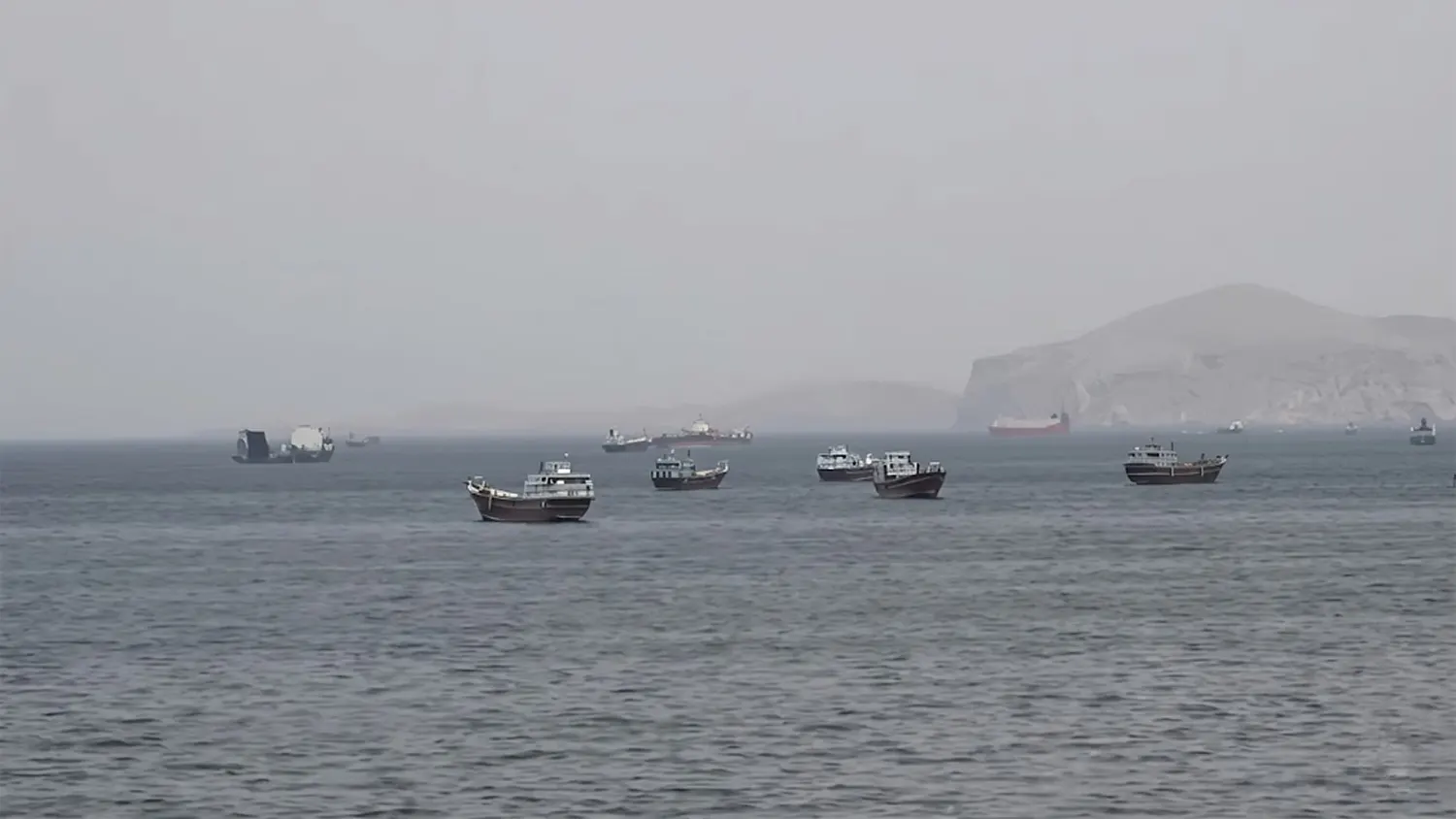
Iran’s Islamic Revolutionary Guard Corps seized two foreign container ships on April 22 near the Strait of Hormuz, escalating a maritime standoff just weeks after a regional conflict began and hours after a U.S. ceasefire extension.
The incident matters because it signals a shift from harassment to direct vessel seizures, pushing a fragile truce toward collapse while disrupting a chokepoint that carries one fifth of global oil supply.
A direct hit on global shipping lanes signals a sharper phase of conflict
The IRGC identified two vessels MSC Francesca and Epaminondas and diverted them to Iranian ports, citing alleged navigation violations. Iranian media claimed links to Israel, while Greece linked operators confirmed the second ship’s ownership.
Before its capture, Epaminondas reported being approached by an IRGC gunboat northeast of Oman. The vessel’s bridge was hit by gunfire, causing heavy structural damage but no casualties. Meanwhile, a third ship, Euphoria, came under fire but escaped and resumed its route.
Taken together, the incidents mark a shift from intimidation to kinetic enforcement at sea, raising immediate concerns about crew safety and insurance viability. As a result, shipping operators are already reassessing risk exposure across the Gulf.
A ceasefire in name only exposes a widening diplomatic split
The timing complicates diplomacy. The seizures occurred just hours after U.S. President Donald Trump extended a ceasefire to allow talks in Islamabad, creating what officials now describe as a “ceasefire paradox.”
Washington insists the actions do not violate the truce, noting the ships were neither American nor Israeli. Still, the White House labeled the seizures “acts of piracy.” Tehran rejects that framing, arguing the U.S. naval blockade itself breaches the agreement and makes reopening the Strait “impossible.”
This legal and political deadlock has immediate market consequences. Brent crude rose 1.8% to above $100 per barrel, reflecting fears that the standoff is no longer containable. From here, the dispute moves beyond legal semantics into economic reality.
The Strait of Hormuz becomes a strategic chokehold on energy and trade
What began as tit for tat enforcement has effectively turned the Strait of Hormuz into a
“no go zone” for commercial traffic. The International Energy Agency now calls the disruption the largest supply shock in modern energy history.
Roughly 20 million barrels per day, 20% of global consumption are offline due to the near total blockade. This exceeds the scale of the 1973 oil embargo and is compounded by a simultaneous collapse in LNG and fertilizer flows.
Qatar’s LNG exports have stalled under force majeure conditions, driving gas prices up more than 140% in Europe and Asia. At the same time, the Strait’s role in transporting 30% of global urea exports is triggering warnings of a looming food production crisis.
Emergency measures reveal how fragile global energy security has become
In response, the IEA has launched its largest coordinated intervention in five decades. Member states have agreed to release 400 million barrels from strategic reserves, a stopgap aimed at stabilizing supply.
Governments are also considering demand side controls. These include mandatory remote work, reduced speed limits, and restrictions on business travel. Such measures reflect a stark reality: supply cannot be restored quickly enough to meet demand.
Despite these efforts, the agency warns that even an immediate ceasefire would not restore normal conditions for months. That lag is now feeding directly into broader economic stress.
Naval escalation redraws the map far beyond the Gulf
At sea, enforcement is expanding. Under Operation “Clear Waters,” the U.S. has intercepted 29 vessels since mid April, targeting traffic linked to Iranian ports. The seizure of the cargo ship Touska underscored a willingness to use force.
Operations have also moved beyond the Gulf. U.S. forces recently intercepted three supertankers near India, Malaysia, and Sri Lanka, signaling a shift toward long range maritime containment.
Iran has responded by imposing its own constraints. The IRGC now directs vessels to use restricted northern routes, warning that main channels may be mined. The message is clear: no ship is guaranteed safe passage while the blockade persists.
Economic shock spreads through inflation, industry, and global inequality
As the conflict intensifies, its economic impact is no longer theoretical. The IMF warns global growth could fall to 2.0–2.5%, a level historically associated with recession.
The first transmission channel is inflation. Oil above $100 per barrel is acting as a global “energy tax,” pushing inflation toward 5.4% in worst case scenarios. Central banks are trapped between supporting growth and controlling prices.
The second channel is industrial disruption. Energy intensive sectors are imposing surcharges up to 30%, while shipping insurance costs have surged 400%, effectively halting normal trade flows through the region.
The third is fragmentation. Emerging Asian economies face severe shortages due to reliance on Gulf energy, while low income countries confront “national energy emergencies” with limited fiscal capacity. The crisis is widening global inequality in real time.
A prolonged standoff threatens to permanently reshape the global energy order
The core impasse remains unchanged. The U.S. demands changes to Iran’s nuclear and missile programs. Iran demands an end to the blockade. Neither side has shown willingness to concede.
In the meantime, the global economy is adapting under pressure. Countries are accelerating efforts to diversify energy sources, even as costs rise and supply chains fracture. The shift away from Gulf dependency is no longer strategic, it is forced.
If the Strait remains contested, the consequences will extend well beyond 2026. What opened as a regional conflict is now redefining how energy flows, how trade moves, and how risk is priced worldwide with no quick resolution in sight.