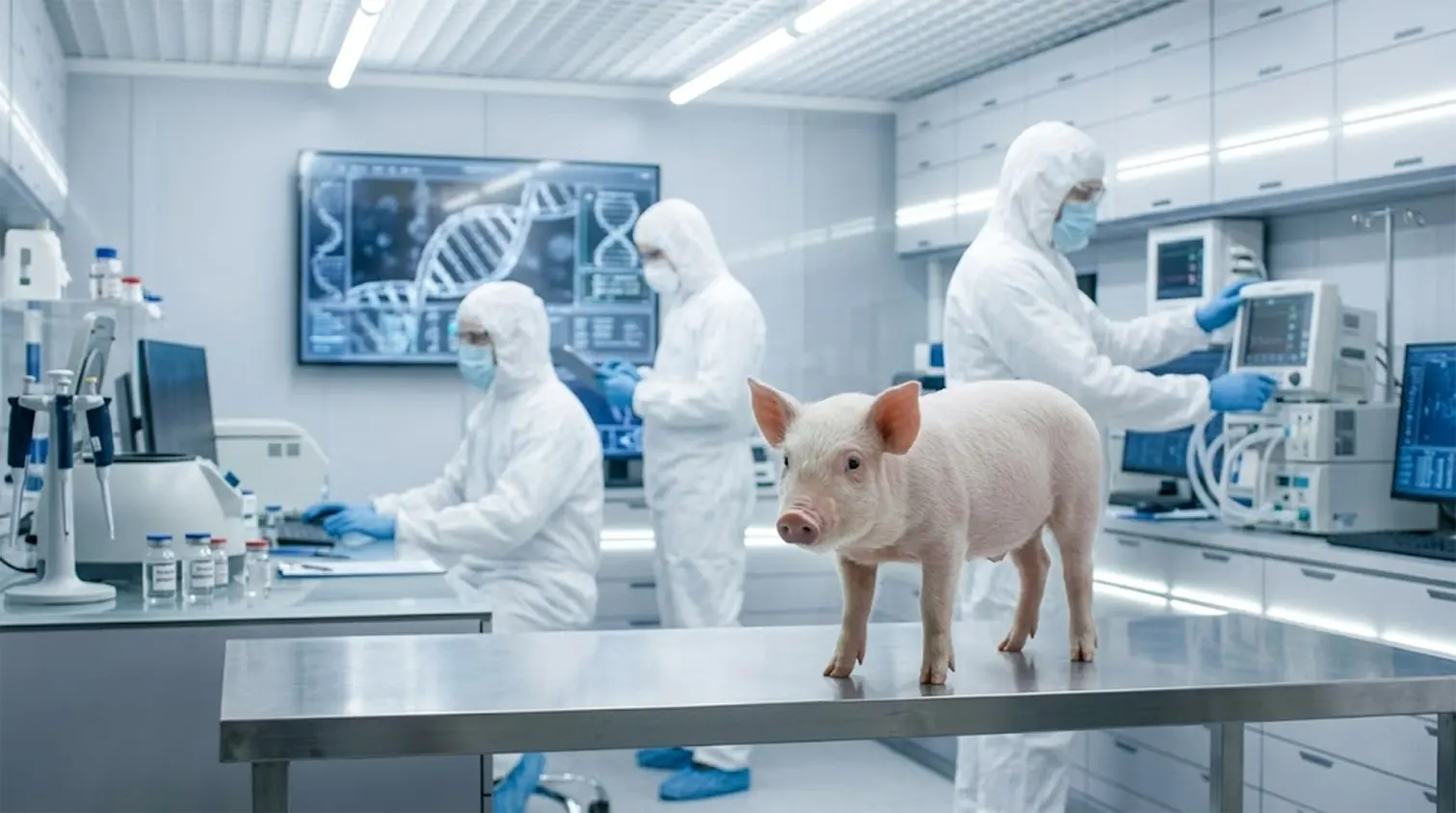
Imagine being told you need a life saving organ transplant but instead of waiting months or years, a doctor says, “We have one ready.” Not from another human, but from a specially engineered pig.
It sounds like science fiction. But in 2026, it’s quickly becoming reality.
A new breakthrough involving “XENO” pigs genetically engineered, cloned animals designed for organ donation has brought the field of xenotransplantation closer than ever to everyday medical use.
From Sci Fi to Science: What Exactly Is “XENO”?
At its core, XENO isn’t just one pig. It’s a stable, genetically engineered pig line created to act as a reliable organ donor for humans.
Here’s what makes it remarkable:
- Scientists removed a gene called GGTA1, which normally triggers instant immune rejection in humans
- They added human compatible genes to reduce clotting and inflammation
- Then, they cloned the result so every pig is genetically identical
Think of it like this: genetic engineering writes the perfect recipe, and cloning ensures every copy is identical no surprises, no variation.
And here’s the big news: researchers confirmed in April 2026 that these traits have remained stable for 11 generations over 17 years. That’s a huge milestone.
Why Stability Changes Everything
In the past, xenotransplantation was unpredictable. Every pig donor was slightly different, which made outcomes inconsistent.
Now, with XENO, scientists finally have a “standardized donor model” like using the same trusted medication instead of a new formula every time.
This shift enables:
- Repeatable clinical trials
- More predictable patient outcomes
- Faster progress toward regulated medical use
In short, it turns a risky experiment into something closer to a scalable medical solution.
2025–2026: The Year Organ Transplants Changed
The XENO breakthrough didn’t happen in isolation. It’s part of a wave of rapid progress in gene edited organ transplants.
Recent milestones include:
- A patient surviving 171 days with a pig liver far beyond previous limits
- A genetically engineered kidney functioning for over 4 months, freeing a patient from dialysis
- A record setting case where a pig kidney worked for 271 days (nearly 9 months)
Meanwhile, biotech companies have pushed the science further, creating pigs with up to 69 genetic edits to improve compatibility and eliminate viral risks.
Taken together, these advances signal a clear shift: xenotransplantation is no longer experimental, it’s entering clinical reality.
The Surprisingly Practical Choice
You might wonder why pigs, not monkeys or other animals?
The answer is surprisingly straightforward:
- Organ size matches humans closely
- Pigs grow quickly and reproduce in large numbers
- They can be raised in sterile, controlled environments
Other animals were tested in the past, including primates. But they posed ethical challenges, slower reproduction, and less practical scaling.
Today, pigs have clearly “won” the race, becoming the primary source for engineered human compatible organs.
How the Science Works
Creating a XENO pig involves two key steps:
1. Editing the DNA
Scientists use tools like CRISPR to:
- Remove genes that trigger immune attacks
- Add human genes to “humanize” the organ
2. Cloning the Perfect Result
Once they get one ideal cell, they clone it using a method similar to how Dolly the sheep was created.
The result? Every XENO pig is a biological copy of the original “perfect donor.”
A New Era: The Rise of “Bridging Therapies”
Here’s where things get especially interesting.
Doctors are no longer positioning pig organs as permanent replacements, at least not yet. Instead, they’re using them as “bridging therapies.”
That means:
- A XENO organ can keep a patient alive for 6–24 months
- It buys time while waiting for a human donor
- Patients can live relatively normal lives working, traveling, exercising
Compared to dialysis, which can consume 15+ hours per week, this is a dramatic improvement in quality of life.
Why 2026 Feels Like a Turning Point
Several developments are accelerating progress:
- The FDA has approved expanded clinical trials involving 30+ patients
- Multi center trials are testing whether results can be consistent across different people
- Even ethical barriers are shifting, with new guidance supporting gene edited animal organs in medicine
In parallel, innovations like external pig liver systems essentially “liver dialysis” are opening new possibilities for short term support.
All signs point to one thing: the transplant waiting list may no longer be a death sentence.
What This Means for Everyday Life
If these trends continue, the future could look very different:
- Shorter or eliminated waiting times for transplants
- Fewer deaths due to organ shortages
- More predictable and accessible treatments
In practical terms, it could transform organ failure from a life ending diagnosis into a manageable medical condition.
What We Still Don’t Know
Despite the excitement, there are still challenges to solve.
The biggest one? Long term immune rejection.
Even with dozens of genetic edits, the human body can eventually recognize the organ as foreign. This means:
- Current transplants are still temporary solutions
- Patients require ongoing immunosuppressive drugs
- Long term durability remains uncertain
Researchers are actively working toward a future where these organs last decades, not months but we’re not quite there yet.
From Bridge to Permanent Solution
Right now, XENO organs are a bridge. But the goal is something much bigger: “destination therapy” a permanent, one time transplant that lasts a lifetime.
Early research suggests this could be possible within the next decade.
If that happens, it would mark one of the most profound shifts in modern medicine turning organ transplantation into a reliable, scalable, and widely available treatment.
The Beginning of the End for Organ Shortages
The XENO breakthrough represents more than just a scientific achievement. It’s a glimpse into a future where organ shortages are no longer a barrier to survival.
We’re still in a transition phase. But for the first time, the path forward is clear.
And if progress continues at this pace, the question may soon change from “Will a donor be available?” to something far simpler:
“When would you like your transplant?”