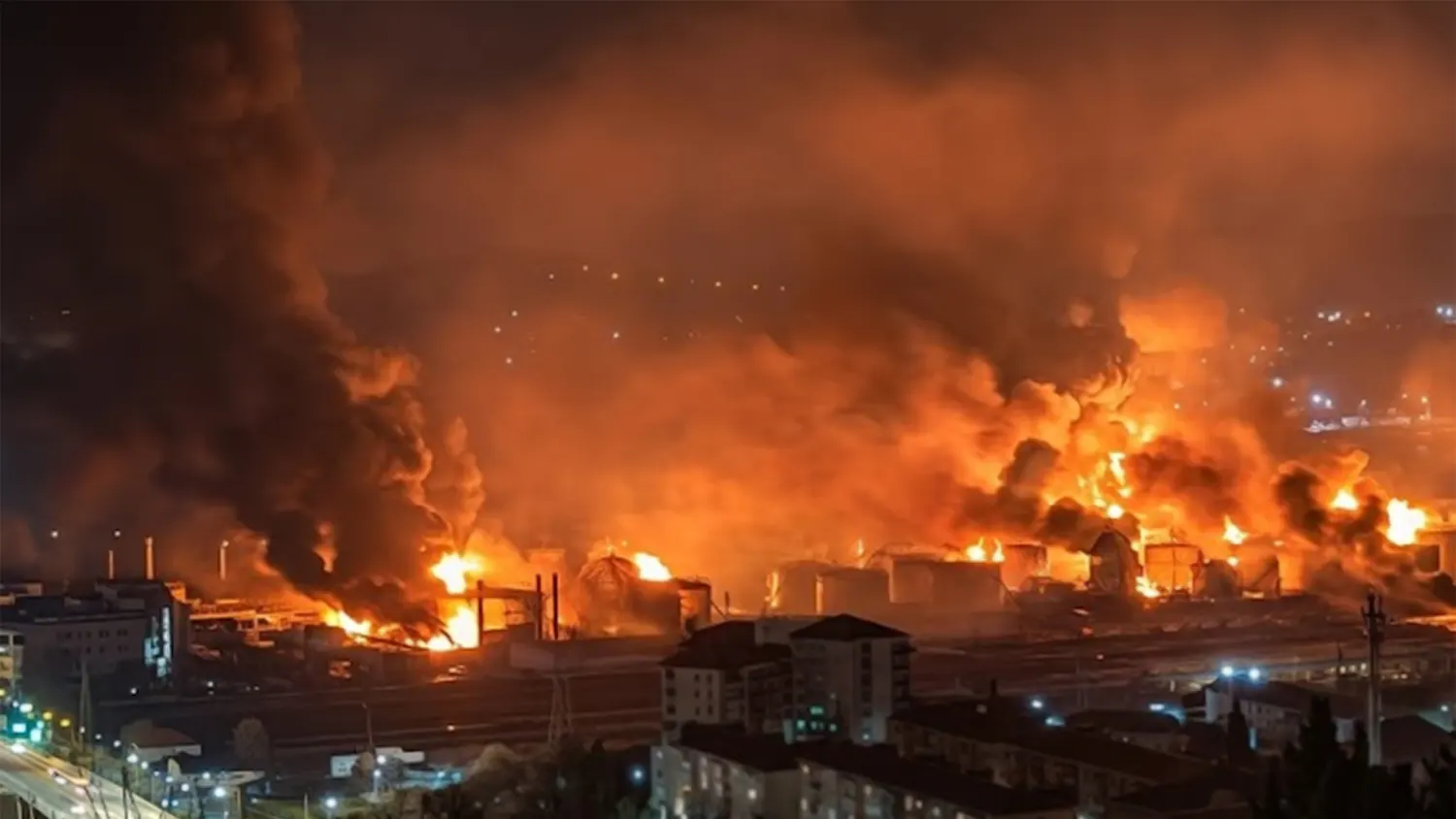
A second drone strike hit Russia’s Tuapse oil refinery overnight on April 19–20, 2026, setting multiple fuel tanks ablaze and killing at least one person, just days after an earlier attack damaged the same facility.
That sequence matters because it signals more than a single strike. This is a coordinated campaign against critical energy infrastructure, with the Tuapse site now hit twice in less than a week. The immediate damage is visible in fire and smoke but the broader impact could reshape export flows and wartime economics.
But the real shift came with how the second attack was executed.
A second strike turns damage into disruption
The overnight assault involved what officials described as a “massive” wave of drones, with enough reaching the target to ignite fires across the refinery’s storage area. Early analysis points to up to 10 fuel tanks burning simultaneously, creating a large scale industrial blaze.
Satellite data confirms the scale. Thermal imagery detected multiple fire points across the site, while a thick plume of black smoke stretched for dozens of kilometers. The fire also spread toward the port area, linking the refinery damage directly to export operations.
But the consequences extended beyond the facility itself. Local authorities reported civilian infrastructure damage, including a school, a gas pipeline, and nearby buildings affected by blast waves and debris.
That raises a second question: why target the same site twice in such a short window?
The “double tap” strategy targeting recovery itself
The answer lies in timing. The first strike, on April 16, had only just been contained. That earlier attack damaged the refinery’s core processing unit known as ELOU-AVT-12, effectively halting production.
The fire from that strike burned for more than 42 hours. It was extinguished less than a day before the second wave hit. By returning so quickly, the attackers ensured recovery efforts never fully began.
The second strike shifted focus. Instead of processing, it targeted storage tanks and export infrastructure, destroying fuel already refined and ready for shipment. Together, the two attacks hit both the “engine” and the “output” of the facility.
This layered approach is not accidental. It reflects a strategy designed to cause lasting operational paralysis, not temporary damage.
Why Tuapse matters to Russia’s energy exports
The refinery itself is not just another industrial site. Operated by Rosneft, the Tuapse oil refinery is one of Russia’s key export hubs on the Black Sea.
With an annual capacity of around 12 million tons of oil, it plays a central role in shipping diesel, fuel oil, and naphtha to global markets. Its coastal location makes it especially valuable, as it connects production directly to maritime export routes.
By striking both processing and shipping infrastructure, the attacks disrupt more than output. They threaten Russia’s ability to move fuel to market, a critical source of revenue.
What makes this even more significant is the broader economic context.
“Kinetic sanctions” and the economics of warfare
Analysts increasingly describe these strikes as “kinetic sanctions”, physical attacks that achieve what financial restrictions aim to do. Instead of limiting trade through policy, they destroy the infrastructure needed to export goods.
In this case, the impact is twofold. First, production is halted due to damage to the processing unit. Second, existing fuel reserves are destroyed or trapped due to damage to storage and port facilities.
With global oil prices remaining elevated in 2026, the financial stakes are high. Every disrupted shipment represents lost revenue, directly affecting the funding of military operations.
But the economic impact is only part of the story. The human and environmental costs are also mounting.
Civilian impact and environmental fallout grow
Authorities confirmed one fatality and at least one injury from the latest strike. This follows earlier casualties from the April 16 attack, underscoring the growing human toll.
Beyond casualties, the strikes have caused widespread disruption in the surrounding area. Damage to schools, homes, and infrastructure highlights how industrial targets can spill over into civilian life.
There are also environmental concerns. The first strike triggered a 10,000 square meter
oil spill in the Black Sea, with containment efforts still ongoing. The second strike risks compounding that damage, particularly if fires or leaks spread further.
These overlapping crises human, environmental, and economic are intensifying pressure on local authorities already struggling to respond.
A conflict shifting deeper into economic targets
The repeated strikes on Tuapse point to a broader shift in strategy. Rather than isolated attacks, this is part of a sustained effort to target critical economic infrastructure.
By hitting the same facility twice in rapid succession, the goal appears clear: prevent repair, disrupt exports, and increase long-term costs. The declaration of a local state of emergency reflects how quickly such attacks can overwhelm regional resources.
And as similar strikes continue, the pattern suggests a widening campaign with implications far beyond a single refinery.
In that sense, the fires burning in Tuapse are not just industrial accidents, they are signals of a conflict increasingly defined by economic disruption as much as battlefield gains.