A fast moving fire has turned a coastal settlement in Sabah into the site of a major humanitarian emergency. What began as a small kitchen accident in the early hours of April 19 quickly escalated into a large scale urban fire disaster, exposing how vulnerable densely built communities can be to sudden catastrophe.
But the speed and scale of the destruction have shocked even seasoned responders.
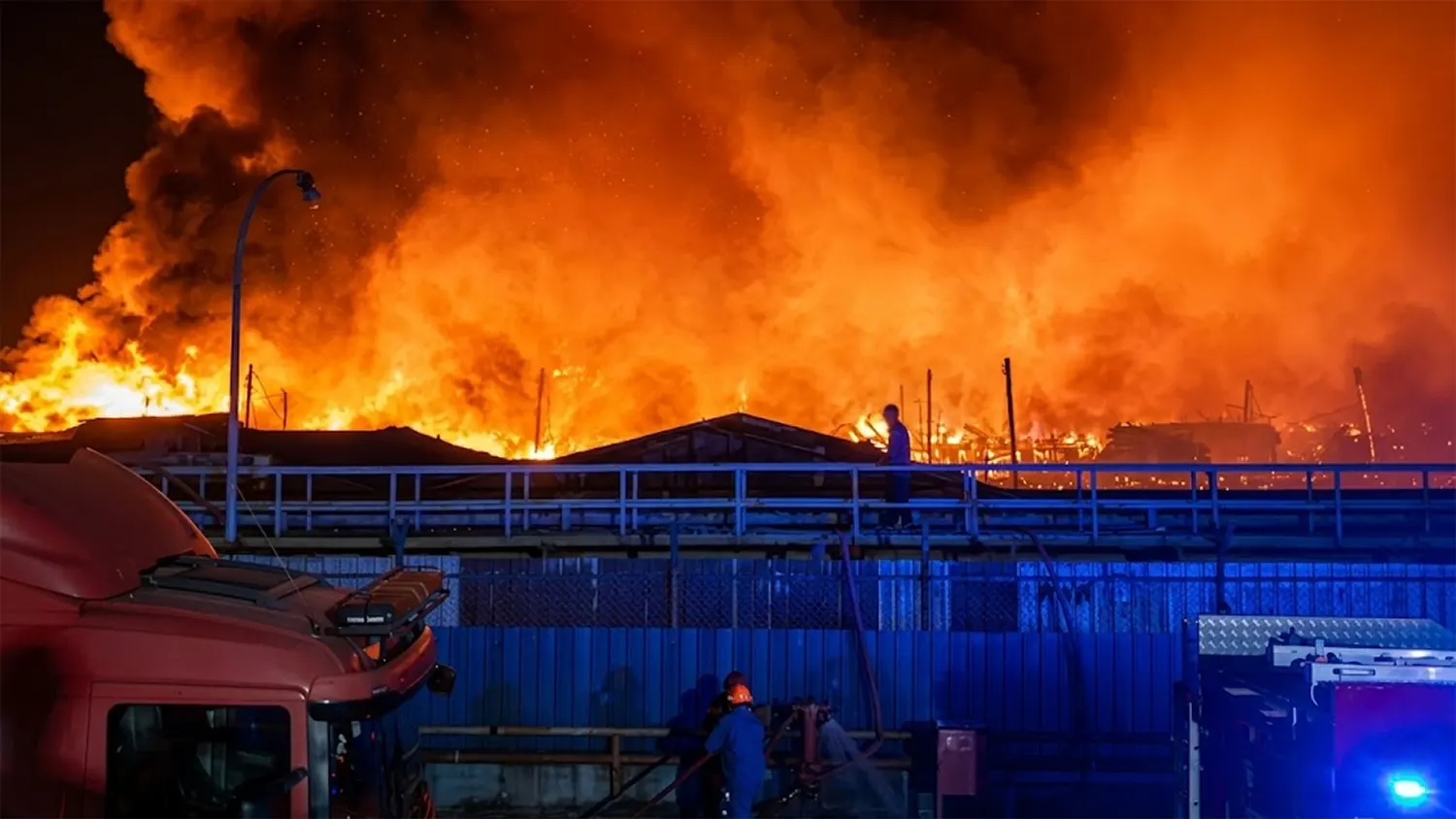
At around 1:30 a.m., flames broke out in Kampung Bahagia, a “water village” in Sandakan where homes sit on wooden stilts above the sea. Within hours, the fire tore through the settlement, ultimately destroying around 1,000 homes, five times higher than early estimates. The blaze spread so rapidly that entire sections of the village were reduced to ash before firefighters could gain control.
That rapid spread was no accident.
Authorities say the fire began when a resident lost control of a gas stove while cooking. Under normal conditions, such an incident might have been contained. But here, several factors combined to turn a routine mishap into a disaster. The houses were built from highly flammable wood and packed tightly together, allowing flames to leap from one structure to another in seconds.
What made the situation worse was the environment itself.
Strong coastal winds fanned the fire across a roughly 10 acre area, accelerating its path of destruction. At the same time, firefighters faced an unexpected obstacle: low tide. In water villages, emergency crews often rely on seawater to fight fires. But with the tide out, there was no immediate water source available, forcing responders to rely on tankers and distant hydrants.
Access proved to be another critical challenge.
Narrow wooden walkways common in such settlements prevented fire engines from reaching the heart of the blaze. Residents initially tried to extinguish the flames themselves, but without adequate water or equipment, their efforts were quickly overwhelmed. By the time professional responders gained partial control, much of Kampung Bahagia had already been destroyed.
When one spark becomes a humanitarian crisis
Despite the scale of destruction, there is one remarkable detail: no deaths or serious injuries have been reported. In a disaster of this magnitude, that outcome is highly unusual. Still, the absence of fatalities does not lessen the severity of what comes next.
More than 9,000 people have been displaced, many from stateless or indigenous communities with limited resources to begin with. For them, the fire has not just destroyed homes, it has erased livelihoods, documents, and any sense of stability.
That raises an urgent question: where do thousands of displaced residents go?
In the immediate aftermath, authorities established emergency relief centers to house survivors. Facilities such as the Batu Sapi People’s Housing Project hall filled quickly, forcing officials to open additional shelters, including a nearby primary school. Even with these measures, the sheer scale of displacement is straining local capacity.
And the response has had to expand just as quickly.
The Malaysian government, led by Prime Minister Anwar Ibrahim, has moved to coordinate federal and state efforts. Emergency funds have been released to provide food, clothing, and basic supplies. Agencies like the Civil Defence Force and Social Welfare Department have been deployed to manage registrations and distribute aid.
Relief efforts ramp up as long term questions emerge
Officials have formally labeled the event a “humanitarian tragedy,” a designation that signals more than just immediate relief. It opens the door to broader federal intervention, including the possibility of long-term housing solutions for those affected.
But the transition from emergency response to recovery will not be simple.
Many of the displaced residents lived in informal housing without legal ownership or formal documentation. This complicates resettlement efforts and raises concerns about whether victims will be able to access permanent, secure housing in the future.
At the same time, the disaster has reignited debate over the safety of water villages.
These communities are culturally significant and economically vital, but they are also highly vulnerable to fire. Built largely from wood and often lacking modern infrastructure, they can turn into high risk environments where fires spread uncontrollably. The Sabah government is now considering relocating affected families into planned, fire resistant housing.
That proposal reflects a deeper shift in thinking.
Rather than simply rebuilding what was lost, authorities are exploring whether this disaster should mark a turning point. The goal is to prevent future incidents of similar scale events where a single spark can wipe out an entire community in hours.
A fragile recovery begins amid uncertainty
For now, however, the focus remains on immediate survival. Relief centers are crowded, resources are stretched, and thousands of families are beginning to grasp the reality of long term displacement.
The emotional toll is already evident.
Survivors have lost not only their homes but also personal belongings, savings, and vital documents. For vulnerable populations, this creates a cycle of hardship that can persist long after the flames are extinguished. What appears to be a contained physical disaster may evolve into a prolonged social and economic crisis.
And that is what makes this event especially significant.
The Sandakan fire is not just an isolated incident. It highlights how quickly everyday risks like a cooking accident can escalate in fragile environments. It also underscores the importance of infrastructure, planning, and rapid response systems in preventing small incidents from becoming large scale disasters.
As Sabah begins the long process of recovery, one reality stands out: the fire may be over, but its consequences are only beginning.