Europe has just crossed a critical line. After weeks of political brinkmanship, the European Union has approved a €90 billion loan for Ukraine, securing Kyiv’s finances and redefining how the bloc handles internal divisions.
This is not just another aid package. It is a moment that shows how far the EU is willing to go to support Ukraine and how much its internal politics are shifting under pressure.
From Deadlock to Deal
Just days ago, the situation looked uncertain. Hungary and Slovakia had blocked the package, tying their veto to energy concerns and threatening to derail the entire plan.
Now, that standoff has ended.
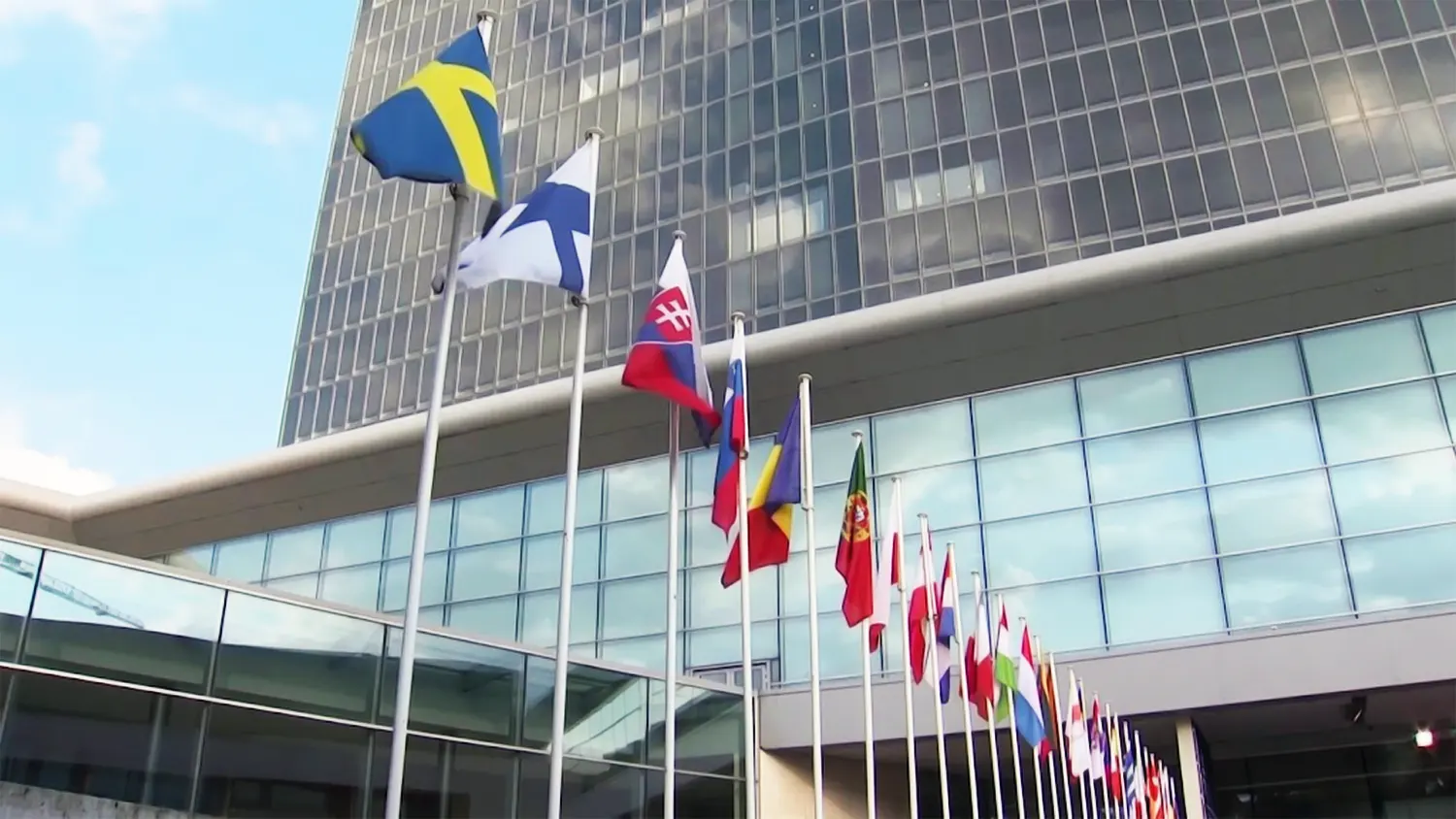
The Council of the European Union finalized the deal on April 23 through a “written procedure”, meaning no country formally objected before the deadline. As a result, the €90 billion package is now legally approved and locked in.
The turning point came quickly. EU ambassadors reached a preliminary agreement on April 22 after both Hungary and Slovakia dropped their vetoes. Within hours, the full approval followed.
The message from Brussels is clear: even deep internal divisions can be overcome when the stakes are high enough.
Oil, Politics, and Leverage
To understand why the deal suddenly moved forward, you have to look at energy and politics.
At the center of the dispute was the Druzhba pipeline, which carries Russian oil through Ukraine into Central Europe. Hungary and Slovakia had taken a hard line: “No oil, no money.”
That changed when Ukraine completed repairs on the pipeline, restoring oil flows. This removed the technical justification for the veto.
But the bigger shift was political.
Hungarian Prime Minister Viktor Orbán, long seen as the EU’s most consistent blocker was defeated in an April 12 election. His loss to Péter Magyar dramatically weakened resistance inside the EU.
With the pipeline flowing and Orbán out of power, the entire political equation shifted almost overnight.
What the €90 Billion Actually Does
The loan is designed to keep Ukraine functioning through 2026 and 2027, addressing both immediate survival and long term defense.
The structure is straightforward but strategically balanced:
- €60 billion for military support, including weapons, ammunition, and defense industry expansion
- €30 billion for economic stability, covering salaries, pensions, hospitals, and schools
The funds will be distributed in stages, with the first tranche expected by late June 2026.
Crucially, the EU will cover the interest payments, making the loan effectively interest free for Ukraine. The principal, however, is expected to be repaid through future Russian reparations, a politically sensitive but significant detail.
This is not just financial aid, it is a long term commitment to Ukraine’s survival as a functioning state.
The “Funding Cliff” Ukraine Just Avoided
Timing was everything.
Ukraine was approaching what economists called a “funding cliff”, a point where the government would run out of cash to maintain basic services.
Without this deal, Kyiv would likely have been forced to print money, risking currency collapse and hyperinflation.
Instead, the EU package now covers roughly 77% of Ukraine’s total financing gap, estimated at $136.5 billion through 2027.
The rest is filled by:
- IMF support programs
- G7 backed loans tied to frozen Russian assets
In practical terms, this deal buys Ukraine time financially, economically, and strategically.
A New Phase of Pressure on Russia
The approval did not come alone. Alongside the loan, the EU adopted its 20th sanctions package against Russia.
This round is more targeted than previous ones.
It focuses on:
- Russia’s “shadow fleet” of uninsured oil tankers
- Financial networks helping Moscow bypass restrictions
The goal is to tighten enforcement, not just expand sanctions.
Russia’s response has been mixed. The Kremlin publicly dismissed the move, insisting it would not change the war’s outcome. At the same time, officials issued warnings about countermeasures and legal action over frozen assets.
Notably, Moscow quickly resumed oil flows through the Druzhba pipeline suggesting that economic realities still shape its decisions behind the scenes.
What This Means for the European Union
Beyond Ukraine, this moment reveals something deeper about the EU itself.
For years, the bloc has struggled with unanimity rules, where a single country can block major decisions. This crisis tested that system.
In the end, the EU did not need to bypass Hungary and Slovakia but it came very close.
That alone signals a shift: the EU is increasingly willing to act, even if consensus breaks down.
At the same time, the episode exposed real fractures:
- National interests versus collective strategy
- Energy dependence versus geopolitical alignment
- Short-term politics versus long-term security
The result is a more flexible but also more fragile union.
Turning Political Unity Into Real Support
With the deal approved, the focus now shifts to execution.
Key questions remain:
- Can the EU deliver funds quickly enough to meet Ukraine’s urgent needs?
- Will internal divisions resurface in future decisions?
- How will Russia respond as pressure increases?
There is also the issue of conditions. Ukraine must meet strict anti corruption and rule of law benchmarks to receive the funds, meaning oversight will remain tight.
At the same time, the broader war continues, and financial support alone will not determine its outcome.
A Turning Point for Both Ukraine and the EU
The approval of the €90 billion loan is more than a financial decision, it is a geopolitical signal.
Ukraine avoids immediate economic collapse.
The EU proves it can overcome internal resistance.
And Russia faces renewed economic pressure.
But the deeper story is about change inside Europe itself.
When unity falters, the EU is learning to adapt and act anyway.
That shift may shape not just this conflict, but every crisis that follows.