A High Stakes Standoff in Europe
Europe is facing a critical test of unity and Ukraine’s financial survival may depend on it.
At the center of the crisis is a €90 billion loan package for Ukraine, now stalled after a dramatic European Union summit on March 20, 2026. Two countries Hungary and
Slovakia have refused to approve the deal, triggering a political confrontation that could reshape how the EU operates in times of crisis.
But Brussels is not backing down. In fact, it is preparing to move forward without them.
A Summit That Exposed Europe’s Divisions
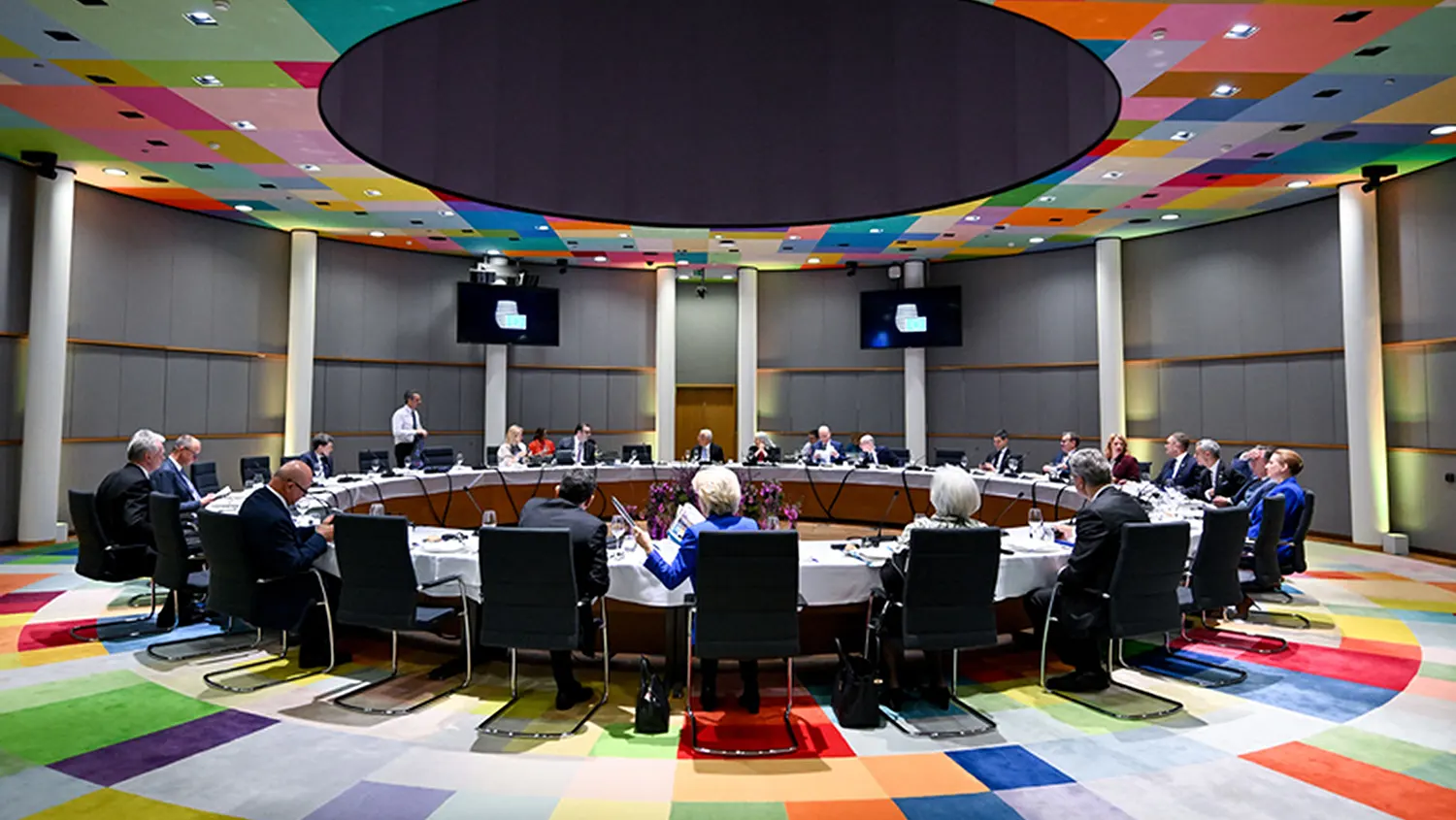
The latest EU summit ended in an unusually tense outcome.
Only 25 of the 27 member states signed off on the Ukraine aid package.
The holdouts:
- Viktor Orbán
- Robert Fico
Fico, in particular, has aligned closely with Orbán in what officials describe as a
“No Oil, No Money” pact, effectively forming a coordinated bloc.
It is worth noting that while the previous Petr Fiala administration secured a legal “opt out” from the loan’s financial liability in late 2025, the current government in Prague, led by Prime Minister Andrej Babiš, has chosen not to join the active veto effort.
Still, the immediate consequence is clear:
The two country veto has blocked changes to the EU’s long term budget framework known as the Multiannual Financial Framework (MFF).
EU Responds: “One Way or Another”
Despite the deadlock, the European Commission is signaling firm resolve.
Ursula von der Leyen delivered a blunt message:
“We will deliver, one way or the other.”
This is more than rhetoric. It reflects a deeper shift in how the EU is willing to operate under pressure.
When unanimity breaks down, EU is increasingly prepared to bypass it.
How “Plan B” Sidesteps the Veto
Because the MFF requires unanimous approval, the EU is turning to a workaround.
This “Plan B” effectively replaces unity with a coalition of committed states.
A Different Financial Structure
Instead of relying on the shared EU budget:
- 25 member states will provide bilateral guarantees
- The European Commission will still raise funds on global markets
- Participating countries will act as the financial backstop
This structure allows the loan to move forward without Hungary or Slovakia.
The Legal Mechanism Behind It
To make this possible, the EU is invoking a specific legal pathway.
Officials are relying on Article 212 of the Treaty on the Functioning of the European Union (TFEU).
This provision allows:
- A group of countries to act together
- Others to opt out without blocking the process
As a result:
Hungary and Slovakia are excluded from both the risk and the decision making power.
The Real Dispute: Energy as Leverage
At the heart of the conflict lies a critical energy issue.
Hungary and Slovakia have tied their veto directly to the Druzhba oil pipeline.
This pipeline carries Russian oil through Ukraine into Central Europe.
The “No Oil, No Money” Strategy
Both governments have made their position explicit:
No restoration of oil flows, no support for Ukraine funding.
They argue that:
- Their energy security is under threat
- Ukraine must restore transit flows before receiving aid
However, Kyiv maintains a different narrative.
Ukrainian officials say the pipeline was damaged by Russian strikes and cannot be repaired for several more weeks.
Rising Tensions Within the EU
The response from other European leaders has been swift and unusually sharp.
Friedrich Merz warned that the standoff is leaving “deep scars” on European unity.
What was once a policy disagreement is now being viewed as a test of loyalty within the bloc.
Why the April Deadline Matters So Much
Beyond politics, the timing is critical.
Ukraine is approaching a financial breaking point.
According to analysts:
- The country’s liquidity buffer could run out by early May 2026
- A funding gap is expected as soon as April
Because of this, the EU is racing against the clock.
The target is to release the first tranche of funding by mid April.
Inside the €90 Billion Package
The loan is not a single pool of cash, it is carefully structured.
The goal is to keep Ukraine functioning both economically and militarily.
Keeping the State Running
€30 billion is allocated for basic government operations, including:
- Salaries for teachers and healthcare workers
- Maintaining electricity and infrastructure
Building a “Steel Porcupine”
€60 billion is dedicated to military support through the Ukraine Assistance Fund.
This includes:
- Weapons procurement
- Defense systems
The strategy is clear:
Turn Ukraine into a heavily fortified state that is difficult to penetrate.
A Turning Point for the European Union
What makes this moment so significant is not just the funding but the precedent.
The EU is shifting from unanimity to flexibility.
This “coalition of the willing” model means:
- Decisions can move forward without full consensus
- Individual veto power is reduced
- Unity becomes more adaptable but also more fragile
It marks a fundamental evolution in how the EU handles crises.
What Happens Next: A Narrow Window
With the April deadline approaching, attention now turns to execution.
Can the EU deliver funds fast enough to avoid a financial crisis in Ukraine?
At the same time:
- Hungary and Slovakia may continue to use energy as leverage
- Political tensions inside the EU could deepen
- The broader conflict with Russia continues to escalate
Every delay increases the risk not just for Ukraine, but for European stability as a whole.
A Defining Test for Europe’s Unity
This is more than a dispute over money, it is a defining test of Europe’s unity and resilience.
Hungary and Slovakia are defending national energy interests.
The rest of the EU is pushing forward to support Ukraine at any cost.
The result is a new reality: when consensus fails, Europe will act anyway.
And with Ukraine running out of time, that shift may prove decisive.