
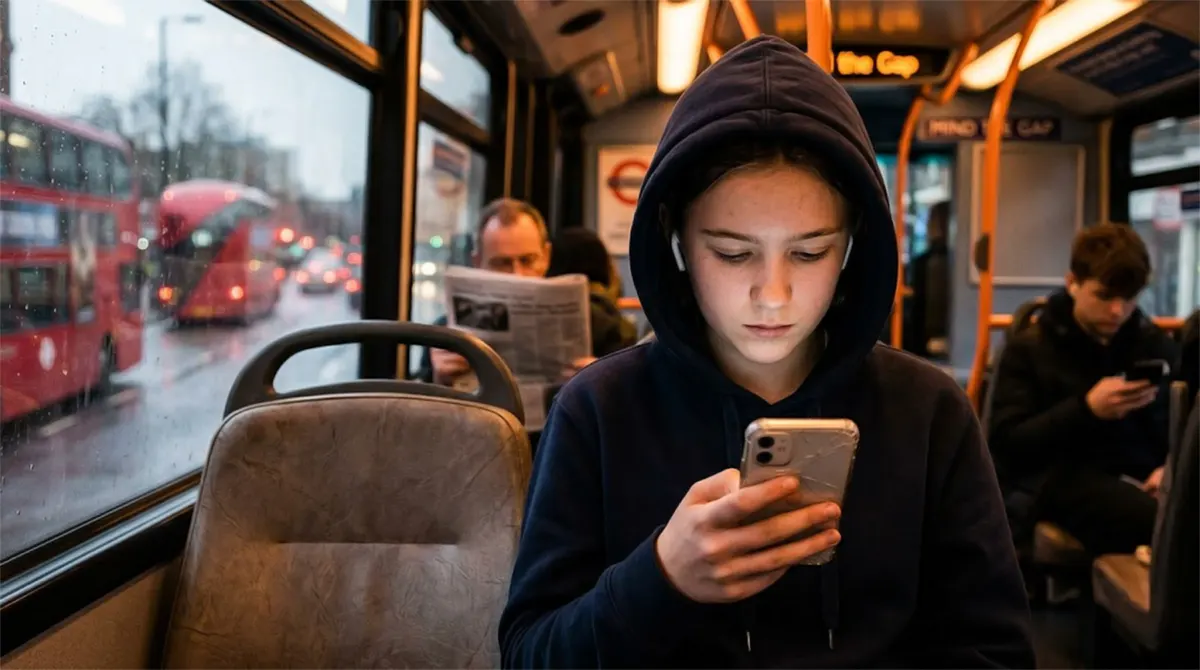
Britain just announced one of the most sweeping crackdowns on social media for children ever attempted. Prime Minister Keir Starmer’s proposed policy, already being called “Australia Plus” by policy insiders, doesn’t just copy Australia’s historic ban on social media for kids under 16, it goes further. Significantly further.
If it passes, TikTok, Instagram, YouTube, Snapchat, Reddit, and a handful of other platforms won’t just be restricted for British teens. They’ll be off the table entirely backed by multi million pound fines against the tech companies themselves, not the parents.
And the British public appears to want it. A massive government consultation found that over 90% of responding parents backed an under-16 restriction. That kind of mandate is rare. So is this kind of policy ambition.
What Gets Banned and What Doesn’t
The UK framework draws a clear line between what it calls utility apps and attention-driven platforms. The distinction matters, because this isn’t a blanket “no internet for kids” rule.
Here’s where things currently stand:
Banned for under-16s: TikTok, Instagram, Facebook, X, Threads, Snapchat, Reddit, YouTube, Twitch, Kick, and romantic or sexual AI chatbots (the latter restricted to 18+).
Explicitly exempted: WhatsApp, Signal, and YouTube Kids.
The logic is that messaging apps serve a genuine communication function between people who already know each other. Attention-driven scroll and discover platforms are the target, the ones engineered to keep you hooked, not just connected.
This Goes Well Beyond a Simple Age Gate
What separates the UK plan from every other country’s approach isn’t just the list of banned apps. It’s the additional guardrails layered on top.
For kids aged 16 to 18, the government is exploring mandatory overnight app curfews and enforced “breaks in infinite scrolling” direct legislative strikes against the features most linked to sleep deprivation and compulsive use patterns.
For gaming platforms, the mandate would require stripping out features that allow children to communicate with unverified strangers. Parents of Fortnite or Roblox players know exactly why this matters.
And for the school day specifically, all schools in England would be legally required to ban physical smartphones entirely. No more confiscating phones on a case-by-case basis, it becomes national law.
Tech Giants Are Pushing Back Hard
The response from platforms has been fast, coordinated, and pointed. Every major company claims to share the government’s goal of protecting children. None of them think this is the right way to do it.
Their pushback falls into three main arguments.
First: banning them doesn’t make teens safer, it just makes them invisible. Meta warned the ban “risks isolating teens from online communities and driving them to unregulated alternatives that lack built-in protections and parental controls.” YouTube made a similar case that curated, supervised spaces would be replaced by anonymous, less-safe ones. Snapchat pointed out that most of its usage is private messaging between real-world friends, arguing the ban “may simply push them to less safe platforms.”
Second: the fix should happen at the App Store level, not the app level. The tech industry has long lobbied for Apple and Google to enforce age limits at the operating system layer at the point when someone first sets up a phone or downloads an app. Companies like Meta argue it’s wildly inefficient to expect thousands of individual apps to each verify every user’s age independently, when one centralized checkpoint at the device level could handle it more cleanly, with parents having a single dashboard to grant or deny access.
Third: some platforms would rather exit than comply. Signal has previously stated that if UK legislation forces them to compromise encryption or implement sweeping identity checks, they would withdraw from the UK entirely. That’s not a bluff, they’ve said the same in response to other legislation.
Technology Secretary Liz Kendall didn’t flinch at these arguments: “Tech companies have had countless opportunities to keep children safe, yet they have failed to act. That is why we are taking power away from the tech giants.”
The UK’s communications regulator, Ofcom, has been tasked with determining what “highly effective age assurance” actually looks like before the bill goes to Parliament later this year.
The Enforcement Problem Nobody Has Solved Yet
Here’s where things get complicated and where Australia’s experience becomes instructive.
When Starmer announced the UK ban, British teenagers didn’t log off. Within hours, Google searches for VPNs spiked 165% in the UK. Teenagers were already looking up how to bypass a law that doesn’t even exist yet.
In Australia, where the ban is already in effect, platforms were ordered to take “reasonable steps” to verify users’ ages. What followed was a crash course in teenage ingenuity:
The VPN workaround is the simplest. Point your phone’s apparent location to the US or Europe, and the regional age gates disappear entirely.
Gaming facial scans was supposed to be harder to crack. Platforms use third-party software to estimate age via a video selfie. Australian kids found ways around this quickly strategic lighting, makeup, or simply getting an older sibling to sit in front of the camera for the initial scan.
Borrowed identities work exactly like fake IDs at a bar. Kids use a parent’s or older friend’s passport or driver’s license to authenticate an account. Simple, effective, and nearly impossible to detect at scale.
The numbers from Australia tell the real story: while platforms successfully blocked or purged millions of accounts, over 60% of Australian kids aged 12 to 15 who had social media accounts before the ban still maintained access to at least one of them.
How the UK Plans to Close the Loopholes
The UK government is well aware of Australia’s cat and mouse problem. The “Plus” in “Australia Plus” is specifically designed to close the gaps Australian teens are already slipping through.
Targeting the App Store, not the app itself. If verification happens at the operating system level when the phone is first set up then a VPN becomes useless. The restriction is baked into the device before TikTok even has a chance to ask who you are. A 14 year old’s phone simply won’t let them download restricted apps in the first place.
Device and SIM card tracking. Instead of just checking an IP address (which a VPN spoofs easily), the UK is pushing for platforms to use network data, SIM card location, and in-app GPS to confirm that a user is genuinely in the UK. Harder to fake.
The school smartphone ban as a backstop. Even if a child bypasses the ban at home, the physical confiscation of phones during school hours removes the social pressure dynamic, the peer group that makes these platforms valuable in the first place.
The Parents Who Quietly Help Their Kids Cheat the System
There’s one more variable that no algorithm fully accounts for: parents who don’t want to enforce the ban.
In the tech policy world, this is bluntly called the “Parental Co-Conspirator” loophole. Many parents worn down by daily screen-time arguments or genuinely convinced their 14 year old is mature enough will simply hold their own face up to the verification camera or upload their own ID to get their child past the gate.
The UK government’s position on this is deliberate and, frankly, politically savvy.
Parents will not be fined or criminally charged. Full stop. Keir Starmer has been explicit that the law is designed to back parents, not police them. If a parent completes a facial scan for their child, the government isn’t sending police to their door. Policing private behavior inside homes is both practically impossible and a civil liberties nightmare.
Instead, 100% of the legal and financial exposure falls on the tech companies. If a platform allows millions of underage UK users to maintain access even with parental assistance, the platform faces fines of up to 10% of their global revenue under the Online Safety Act framework.
Because the risk sits with the platforms, they’re being forced to design systems that assume parents will try to help their kids cheat. This has led to some genuinely innovative (and invasive) compliance strategies:
Continuous re-verification means a user isn’t just checked once at signup. An app might randomly lock mid-session and demand a fresh 3-second facial scan. If mum did the initial scan but a 13-year-old is currently holding the phone, the account locks.
Behavioral AI monitoring tracks how an account actually behaves over time. An account verified by a 45 year old but spending six hours a day watching teenage dance trends, typing in teen slang, and interacting exclusively with local schoolkids gets flagged as a “suspected minor” and pushed to re-verify.
App Store-level blocking is the most structural fix. When a parent buys a child a phone and registers it under a “Child Account” which most already do for location tracking or app purchase approval, the UK wants social media platforms blocked at that device-account level entirely. A parent can’t just flash their face to unblock a download that’s been restricted in the phone’s own operating system without overhauling the device’s account settings.
What Happens If the System Still Fails?
Privacy and civil liberties groups aren’t convinced any of this is workable without serious collateral damage to everyone else online.
The Open Rights Group has warned that building a system robust enough to keep a tech-savvy 15 year old off TikTok would effectively require every adult in the UK to upload government-issued ID or submit to biometric checks creating what they call “an unwanted dragnet of digital checkpoints” for tens of millions of people who aren’t teenagers.
Tech researchers have added that blanket bans risk pushing teens toward the unmoderated fringes of the internet platforms with no safety features, no reporting tools, and no accountability which is the opposite of the intended outcome.
The government expects to pass initial regulations before Christmas, with the full prohibition targeting spring 2027. Ofcom’s rapid assessment of what “highly effective age assurance” actually means in practice will be critical to shaping what the final law looks like.
The honest assessment from experts on all sides is the same: even the best-designed system won’t be 100% foolproof. The government isn’t pretending otherwise. The real goal is to create enough friction that the average parent stops enabling bypass attempts, and the average child finds the whole process too annoying to be worth it.
Whether that’s enough and whether the compliance cost to adult users is acceptable is the argument the UK is about to have in Parliament.
The UK government’s “Australia Plus” social media ban is expected to reach Parliament before the end of 2025, with full enforcement targeted for spring 2027.