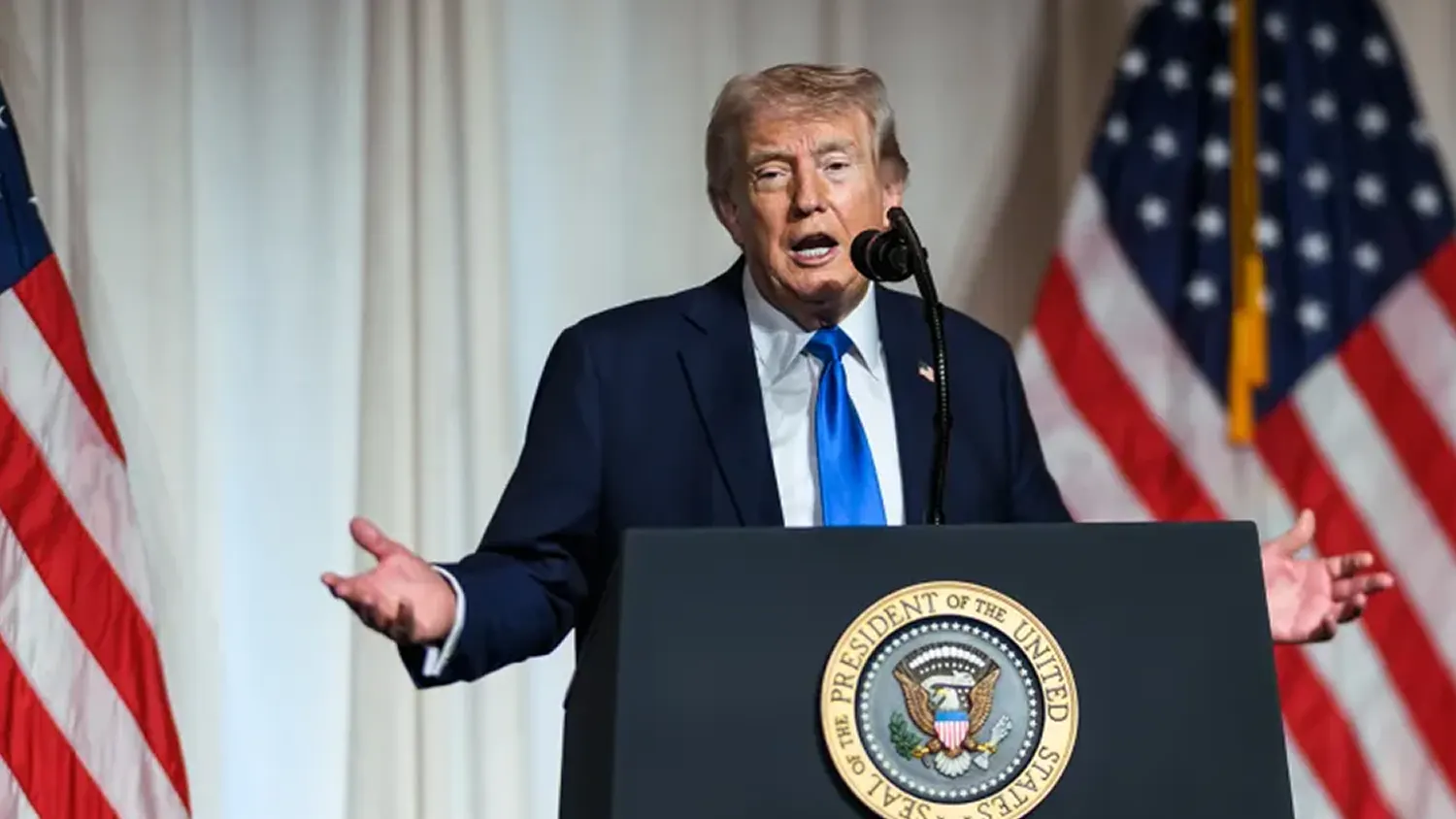
President Donald Trump has rejected a sweeping peace proposal from Tehran, casting fresh doubt on efforts to end a conflict that has simmered since late February. The 14-point plan, delivered through Pakistani intermediaries, was meant to build on earlier U.S. proposals. But Trump’s blunt response saying Iran has “not yet paid a big enough price” signals that a breakthrough remains distant.
That reaction matters because the proposal itself marks a pivotal diplomatic moment. For the first time in weeks, both sides have put detailed proposals on the table, suggesting at least a willingness to negotiate. But Trump’s immediate skepticism has dimmed hopes that talks will yield quick results.
The Iranian offer, submitted via Islamabad on May 2, outlines a compressed 30-day timeline for a full resolution, far shorter than Washington’s preferred 60-day framework. It also calls for lifting the naval blockade and releasing frozen assets, alongside compensation for war damages. These demands go beyond a simple ceasefire and aim to reset the broader economic and military balance.
But the real shift came in how Tehran widened the scope. The proposal links the conflict to regional flashpoints, including Lebanon, and suggests a new governing structure for the Strait of Hormuz. In effect, Iran is pushing for a comprehensive regional settlement, not just a bilateral pause in fighting.
A peace plan that asks for everything and offers little immediate leverage
That expansive approach helps explain Washington’s resistance. U.S. officials argue the current naval blockade is working, with estimates suggesting Iran has lost roughly $4.8 billion in oil revenue since late February. From this perspective, easing pressure too quickly would undermine one of the few effective tools on the table.
Trump has reinforced that stance in public remarks. He has described the blockade as both “essential leverage” and a controlled measure short of war, even as critics label it economic coercion. His warning that strikes could resume if Iran “misbehaves” underscores a broader strategy: maintain pressure while keeping military options open.
That raises a second question: what, exactly, is non-negotiable? By Trump’s own account, the nuclear issue remains the central obstacle. Washington is demanding zero enrichment and the removal of nuclear material from contested sites, terms Tehran has consistently rejected.
Iran, for its part, insists on its right to enrich uranium for civilian purposes, framing the U.S. position as unrealistic. This fundamental disagreement has stalled previous negotiations, and it continues to define the current impasse.
The ceasefire that exists on paper but not in practice
While diplomats argue, the situation on the ground remains unstable. A ceasefire brokered in early April has largely halted direct U.S.-Iran strikes, but it has not produced a full cessation of hostilities. Instead, the conflict has shifted into a tense holding pattern.
Nowhere is that more visible than at sea. The U.S. Navy continues to enforce a near-total blockade of Iranian ports, turning away dozens of vessels. Washington calls it a “friendly” enforcement action. Tehran sees it as economic warfare that violates the spirit of the truce.
The strain is even clearer in Lebanon. Israeli forces continue to carry out daily strikes against Hezbollah targets, keeping that front active despite broader diplomatic efforts. This creates a fragmented battlefield, where peace in one region does not translate to stability elsewhere.
What makes this even more urgent is the growing risk of escalation. Iranian military leaders have warned that renewed conflict is “likely” if pressure tactics continue, while Israeli officials are actively reviewing options for expanded operations. At the same time, the U.S. is repositioning forces in the region, signaling readiness for a rapid shift back to combat.
A negotiation shaped by pressure, not compromise
All of this points to a deeper reality: the two sides are negotiating from fundamentally different assumptions. Iran’s proposal focuses on ending the conflict quickly and restoring economic normalcy. The U.S., by contrast, is seeking long-term strategic concessions that would reshape the region’s balance of power.
That gap is most visible in the issue of compensation. Tehran is demanding payment for war damages and access to frozen funds. Trump has dismissed that outright, framing it as politically and strategically unacceptable.
The dispute over the Strait of Hormuz reflects a similar divide. Iran wants a new framework that could increase its influence over the vital shipping lane. The U.S. insists on maintaining unrestricted control to secure global oil flows, making compromise difficult.
These overlapping disagreements on nuclear policy, military presence, and economic terms leave little room for quick progress. Instead, the talks appear to be a test of endurance, not a path to immediate peace.
The uneasy pause before a possible turning point
For now, the ceasefire is holding but only just. Direct strikes remain paused, yet pressure tactics and proxy conflicts continue, creating a fragile equilibrium. Diplomacy has not collapsed, but it has not advanced either.
The result is a geopolitical standstill. Both sides are waiting, calculating, and preparing for the next move. And as rhetoric hardens, the risk grows that this pause is not the start of peace, but a brief lull before a wider confrontation resumes.