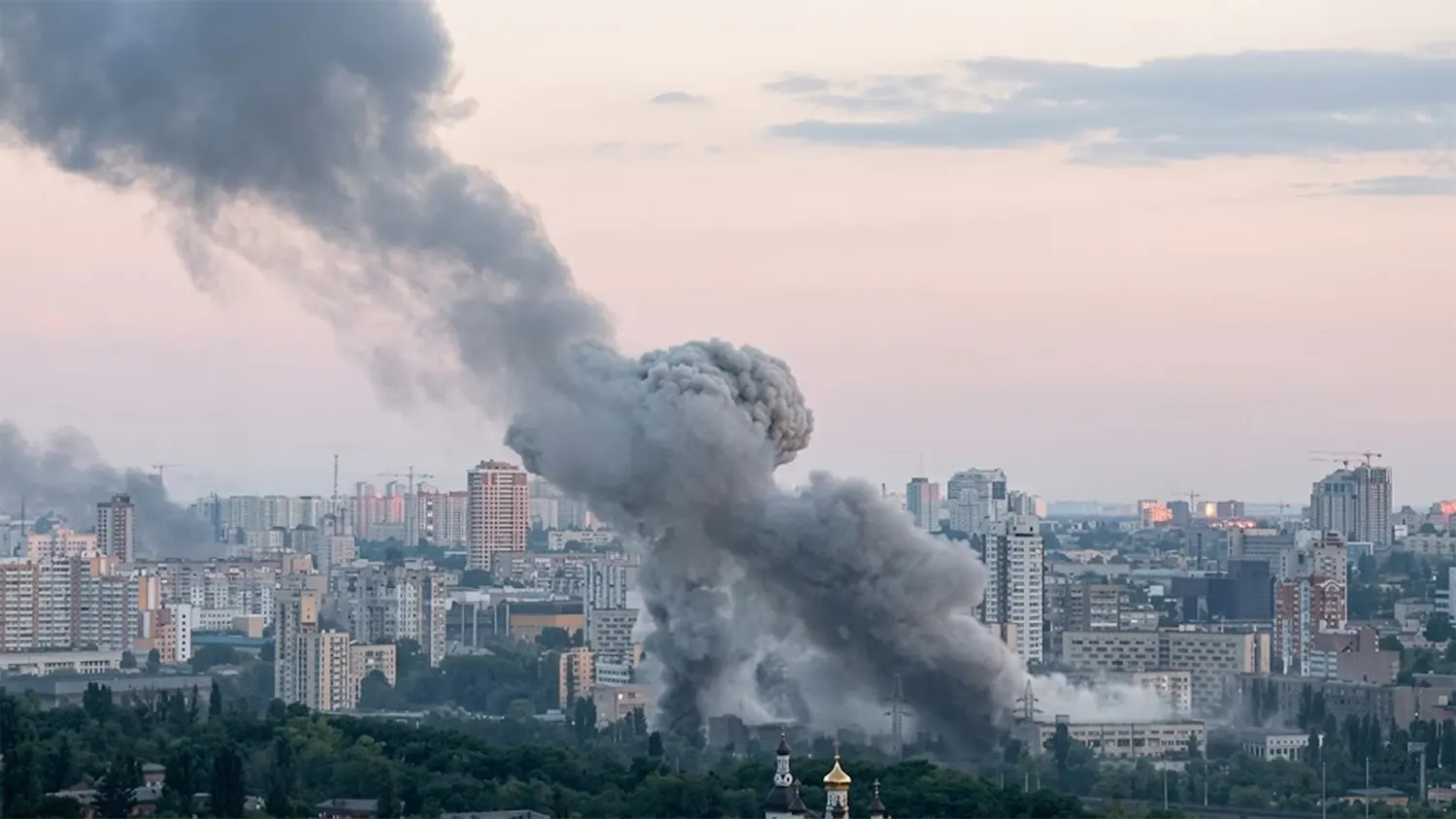
Russia launched what military analysts are now calling one of the most complex and devastating aerial assaults of the entire war, a coordinated wave of 690 simultaneous aerial threats directed at Kyiv and its surrounding region overnight. The attack, designed to overwhelm Ukraine’s layered air defense network, punched through in ways that left every single district of the capital damaged.
A Strike Package Built to Break Through, Not Just Destroy
The assault was not a simple barrage. It was an engineered saturation attack meaning it was specifically designed to flood Ukrainian radar systems and exhaust interceptor stockpiles simultaneously. At its core was the RS-26 Oreshnik, an intermediate-range ballistic missile fired from the Kapustin Yar test range in Astrakhan, Russia. Its target: Bila Tserkva, a city roughly 90 kilometers south of Kyiv.
This marks only the third operational use of the Oreshnik in the war. Surveillance footage captured its multiple independently targetable reentry vehicles known as MIRVs separating in the upper atmosphere before plunging down at speeds up to Mach 10, producing rapid, consecutive explosions on the ground with almost no warning time for those below.
Supporting the Oreshnik were two Kh-47M2 Kinzhal hypersonic missiles launched from MiG-31K aircraft, three 3M22 Zircon hypersonic anti-ship missiles, 30 Iskander-M/S-400 ballistic missiles, and 54 cruise missiles. But the sheer scale of the drone component is what gave the attack its paralyzing geometry.
600 Drones Designed to Burn Through Ukraine’s Defenses
Flanking the missile groups was a swarm of 600 Shahed attack drones, heavily supplemented by low-cost Gerbera, Italmas, and Parodiya radar decoys. These decoys some made from wood and foam are virtually worthless as weapons, but they serve a devastating purpose: forcing Ukrainian air defense crews to engage them using interceptor missiles that cost between $2 million and $4 million each.
The math is deliberately cruel. Russia spends almost nothing on a decoy drone. Ukraine potentially burns millions of dollars in Patriot or IRIS-T interceptors responding to it. Multiply that across 600 objects in the sky simultaneously, and the stockpile erosion becomes unsustainable.
How Ukraine’s Defenses Held and Where They Didn’t
Ukrainian air defense units and mobile electronic warfare teams worked through the night and managed to shoot down or electronically suppress 604 of the 690 threats. That is, by any measure, an extraordinary interception rate particularly for cruise missiles and drone threats. An additional 19 Russian missiles suffered internal guidance failures and crashed prematurely in rural areas before reaching their targets.
| Weapon Type | Launched | Intercepted / Suppressed |
|---|---|---|
| Oreshnik Hypersonic IRBM | 1 | 0 |
| Kinzhal & Zircon Hypersonic | 5 | 0 |
| Iskander-M / S-400 Ballistic | 30 | 11 |
| Cruise Missiles (Kh-101/Kalibr) | 54 | 44 |
| Strike Drones & Radar Decoys | 600 | 549 |
The problem was the missiles that did get through. At least 16 ballistic missiles and 51 kamikaze drones pierced Ukraine’s terminal defense shields, striking 54 locations across the capital. Hypersonic platforms like the Oreshnik, Kinzhal, and Zircon simply cannot be intercepted by Soviet-era systems or mid-tier Western platforms, only top-tier systems like the Patriot PAC-3 are capable, and Ukraine does not have enough of them.
Every District Hit Damage Across the Capital
Kyiv Mayor Vitali Klitschko confirmed that damage was recorded in every district of the city. At least 2 people were killed and more than 80 were injured across the country, with the overwhelming majority of casualties concentrated inside the capital.
In the Shevchenkivskyi district, a five-story residential building suffered a near-total structural collapse. Search and rescue teams with heavy equipment and canine units moved in to comb through the rubble for survivors. Across the city in the Solomyanskyi district, a fire tore through the upper floors of a 24-story residential complex, requiring high-altitude firefighting equipment and a full building evacuation of hundreds of residents.
The cultural toll was equally significant. On Independence Square, the historic building housing Ukraine’s national postal service was heavily damaged by a nearby blast wave, its facade scorched, the surrounding square covered in shattered glass. The National Chernobyl Museum in the Podil district, which had only recently reopened following a two-year restoration, suffered shattered windows and structural compromise, threatening delicate archives dedicated to the memory of the 1986 nuclear disaster.
A local school was also among the civilian structures damaged near the city center. Municipal crews and volunteer groups began clearing debris almost immediately to keep emergency routes open, even as air raid sirens continued cycling throughout the night.
Why Russia Is Using Its Most Advanced Weapons Now
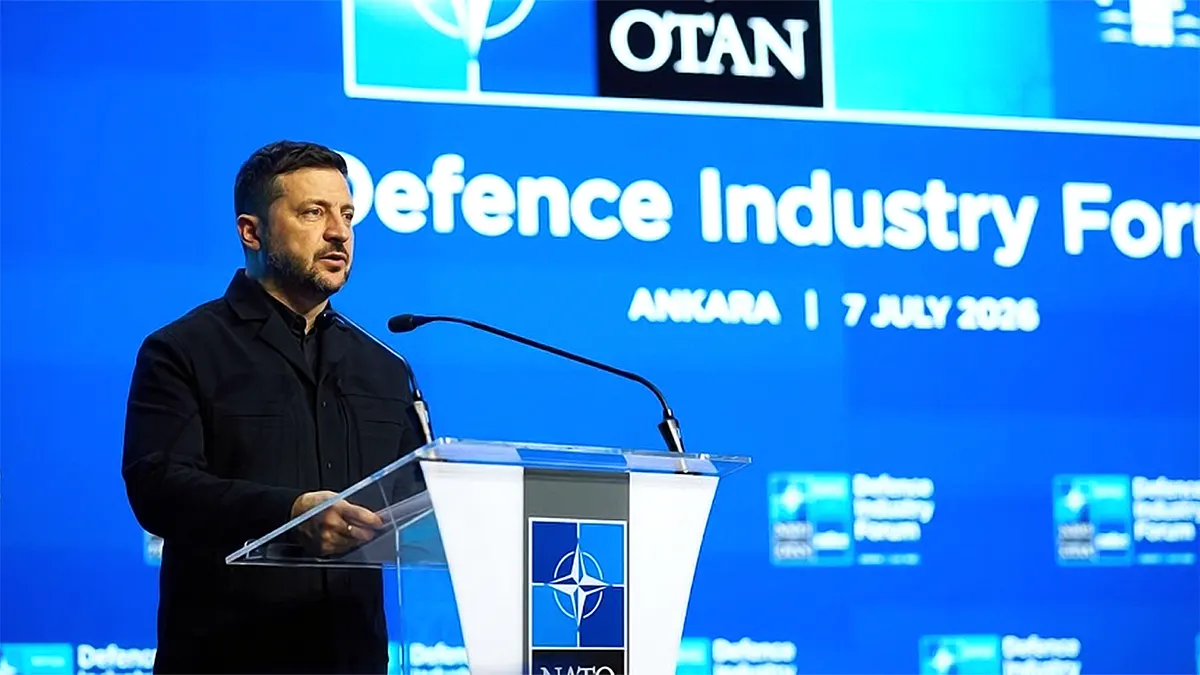
President Volodymyr Zelenskyy described the Oreshnik’s deployment as setting a “dangerous global precedent” for international security. The concern is well-founded: the Oreshnik was originally designed to carry nuclear warheads. Using it repeatedly with conventional payloads deliberately blurs the line between conventional battlefield warfare and strategic nuclear deterrence, a line that once mattered enormously to global stability.
The broader strategic picture suggests Russia is deliberately draining Ukraine’s Western-supplied air defense reserves ahead of an anticipated summer offensive. By pairing decoy-heavy drone swarms with top-tier hypersonic missiles in a single attack, Moscow forces Kyiv to make impossible choices about when and what to intercept and to burn through irreplaceable interceptor stockpiles in the process.
The timing of the escalation is also considered highly deliberate. Moscow officially framed the strike as retaliation for a Ukrainian drone attack on a logistics hub in Russian-occupied Starobilsk days earlier. But military analysts note a broader aim: by hitting every district of the capital and deploying its most advanced weapons in a single night, Russia is projecting a message to Western backers that no current level of air defense can fully protect Ukraine’s decision-making centers. It is kinetic leverage, aimed squarely at shaping the terms of any future ceasefire or negotiation.
The question that now hangs over Western capitals is how to respond to a battlefield reality where hypersonic weapons are being normalized, interceptor stockpiles are finite, and the cost asymmetry overwhelmingly favors the attacker.