Russia’s president went on record blaming Ukraine for the Starobilsk dormitory strike then told his Ministry of Defense to draw up options for retaliation. Here’s what he said, and what happens next.
The Speech That Raised the Stakes
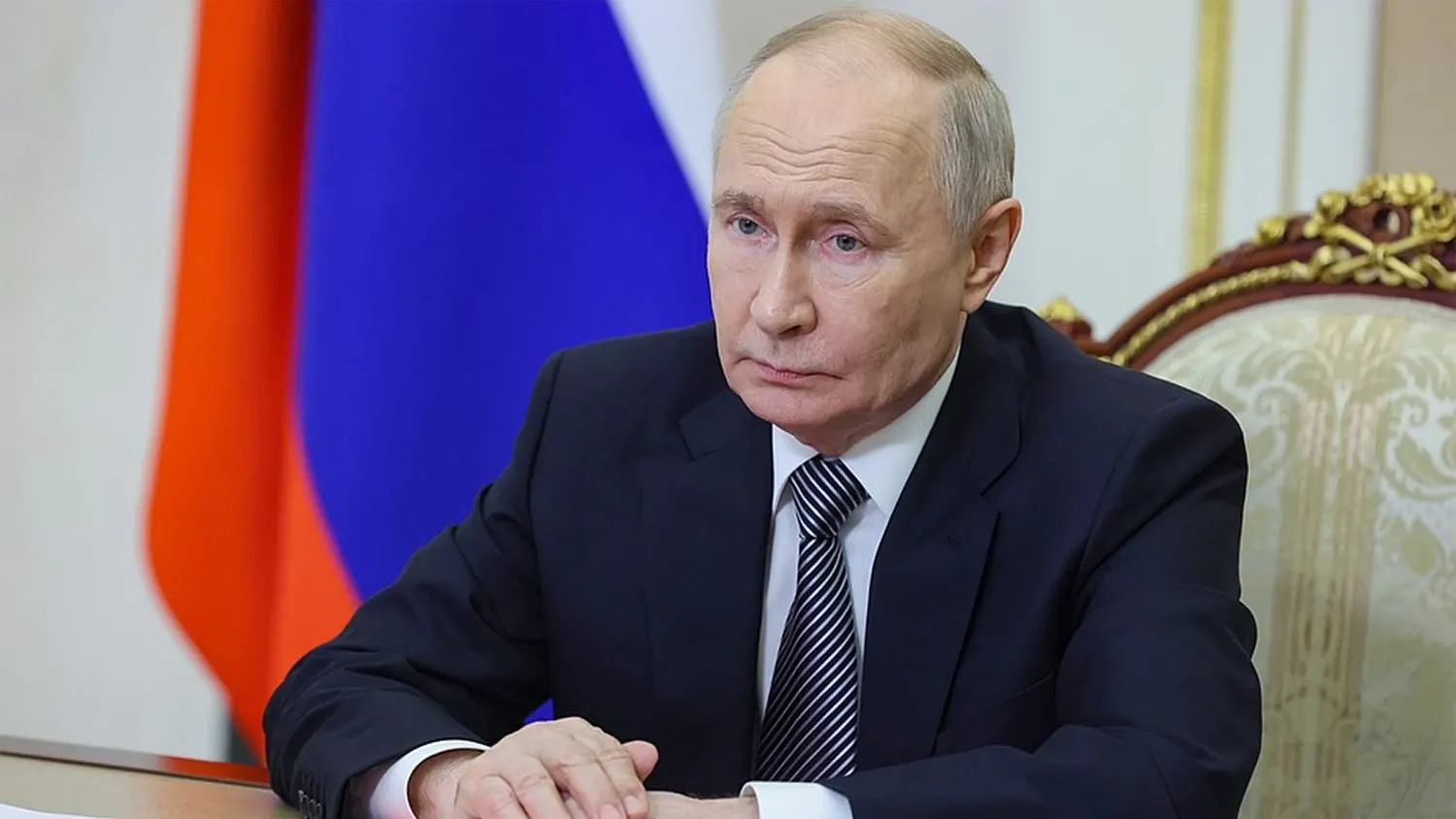
Vladimir Putin didn’t just condemn the strike on the Starobilsk college dormitory. He used it.
Speaking during a meeting with military veterans in Moscow, Putin delivered a carefully constructed address that moved through four distinct beats: grief, accusation, an appeal to Ukrainian soldiers, and finally an order to his Ministry of Defense to begin preparing options for a military response.
At the time of his speech, Putin reported six dead, 39 injured, and 15 still listed as missing as debris clearing continued. He acknowledged the numbers were still developing.
“The Strike Was Not Accidental”
The most pointed section of Putin’s statement was a direct rebuttal to any possibility that the dormitory was hit by accident, a pre-emptive response to a line of argument he clearly anticipated from Ukraine.
Putin stated explicitly that there were no military facilities, intelligence assets, or related infrastructure near the dormitory, ruling out any claim that Russian air defense or electronic warfare systems inadvertently redirected the drones into the building. He then went further: the strike, he said, came in three separate waves, 16 UAVs hitting the same location repeatedly.
“Nobody can claim that they were trying to hit some other target,” he said. “The strike was not accidental.”
That framing matters. By emphasizing the multi-wave, precision nature of the attack, Putin was closing off the interpretive space Ukraine typically uses to justify strikes in occupied territory, the argument that a military target was present and civilians were incidental.
An Appeal to Ukrainian Soldiers and a Warning
Mid-speech, Putin pivoted to address Ukrainian military personnel directly, urging them not to follow what he called “the criminal orders of an illegitimate, corrupt junta.” He warned that soldiers who carry out such orders become accomplices to war crimes.
This is a recurring rhetorical device in Putin’s public addresses framing the Ukrainian state as illegitimate while presenting its soldiers as potentially redeemable individuals acting under coercion. It serves a dual purpose: delegitimizing the Kyiv government internationally while also functioning as a psychological pressure tool aimed at Ukrainian troops.
The Front Line Claim Behind the Strike
Putin’s explanation for why Ukraine would carry out such a strike was blunt: desperation.
He argued that Ukraine’s military situation on the front lines had deteriorated from “difficult and critical” to “catastrophic,” and that strikes on civilian infrastructure in occupied territory were a direct consequence of sustained battlefield failures, an attempt to compensate for lost ground and military momentum with high-visibility attacks that generate international attention.
Ukraine disputes this characterization of its front-line position entirely.
Russia Takes It to the UN And Hits a Wall
Russia’s Permanent Mission to the United Nations moved quickly, circulating formal statements to UN member states and pushing for an emergency Security Council session to condemn the strike as a war crime under international humanitarian law.
At the Security Council, the Russian delegation framed the strike in identical terms to Putin’s speech: a deliberate, multi-wave attack on a civilian dormitory housing teenagers, carried out at night to maximize casualties, with no proximate military target to justify it.
Ukraine and its Western allies pushed back with an equally firm counter-narrative, that the facility was housing the Rubicon Center for Advanced Unmanned Technologies, Russia’s classified elite drone warfare unit, making it a legitimate military target under the laws of armed conflict. Ukraine further argued that Russia routinely embeds military units inside schools, colleges, and civilian buildings in occupied territory, precisely because those structures offer both physical cover and a propaganda shield when they’re struck.
The result was the outcome that defines almost every major incident brought to the Security Council in this war: complete gridlock.
Russia holds a permanent veto. So do the United States, United Kingdom, and France all of whom back Ukraine. Any resolution condemning Ukraine is blocked by the West. Any resolution condemning Russian retaliation or the broader occupation is blocked by Moscow. The UNSC session produced heated floor speeches, dueling press releases, and no binding outcome which has become the Council’s default setting for this conflict.
What “Prepare Military Response Options” Actually Means
The most consequential line in Putin’s speech may have been its final directive: he announced he had ordered the Russian Ministry of Defense to present proposals for a military response.
In Kremlin communications, this language occupies a specific register, it’s deliberately non-specific enough to maintain flexibility, while publicly signaling that a response is coming. It places the Ministry of Defense on record as being directed to escalate, without committing Putin to a specific action or timeline.
Whether that response materializes as a targeted strike on Ukrainian infrastructure, a broader missile barrage, or remains as rhetorical leverage depends on factors the Kremlin is not disclosing. But the public announcement itself is a signal to Ukraine, to Western governments, and to Russia’s domestic audience that the Starobilsk strike will not be absorbed without consequence.
The Competing Narratives, Unchanged
At the center of all of this the speeches, the UN sessions, the escalation signals remains the same unresolved factual dispute: was the Starobilsk building a student dormitory or a military command post?
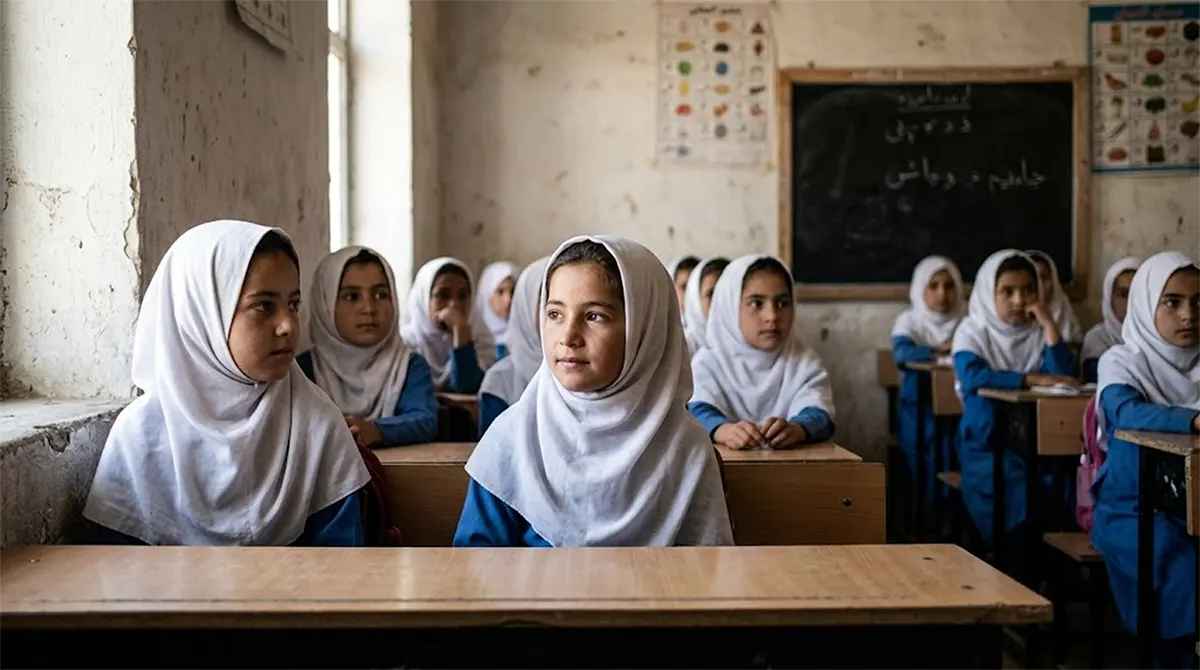
Russia says 86 teenagers were sleeping inside when 16 drones hit in three waves. Ukraine says the building was the operational headquarters of Rubicon, one of Russia’s most advanced drone warfare units. Independent verification is structurally impossible, the city is under Russian occupation and closed to neutral monitors and journalists.
Both sides know this. And both sides are using it.