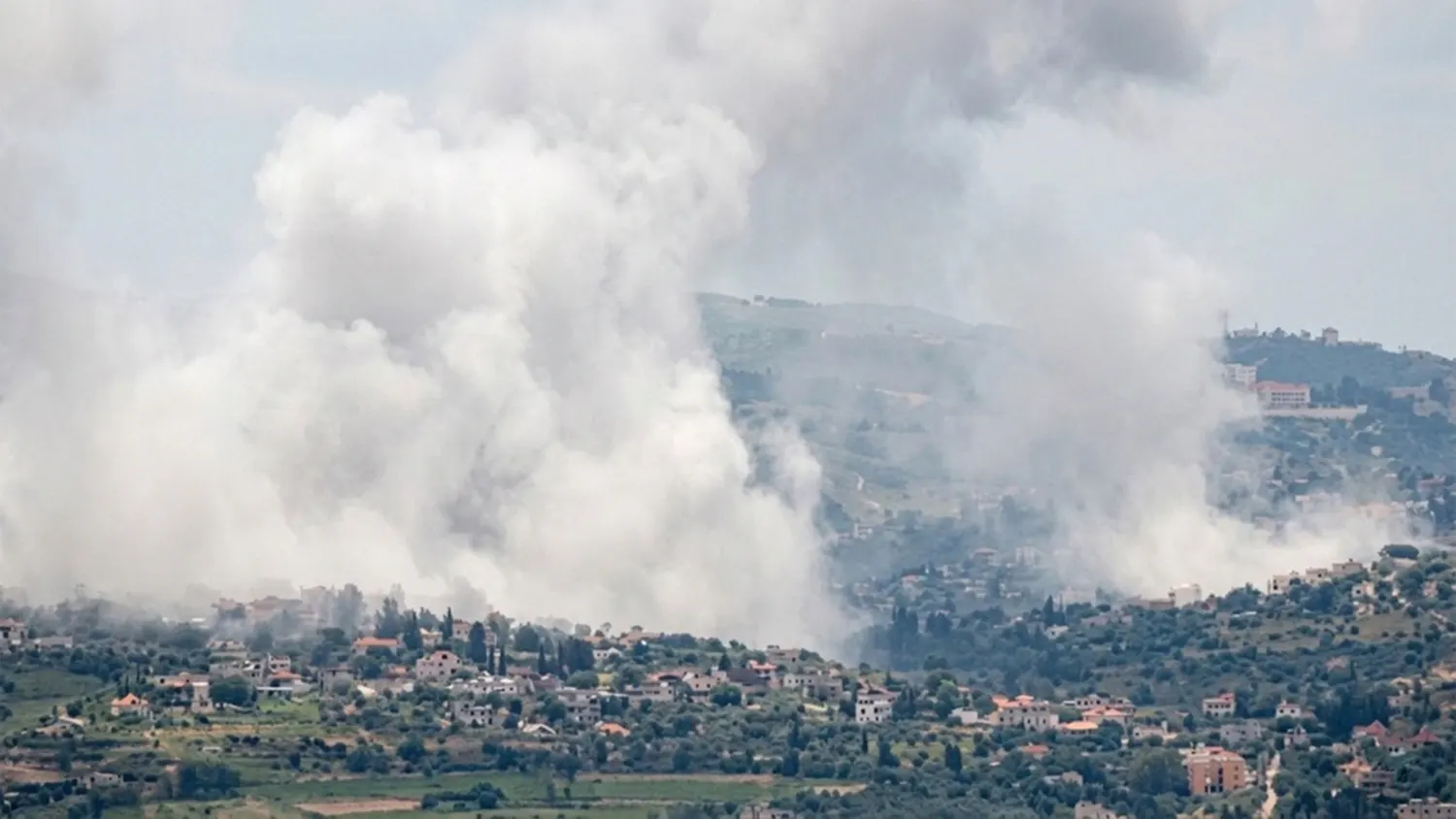
Israeli airstrikes in southern Lebanon killed at least 11 people, including three emergency workers, in late April 2026, hitting Nabatiyeh and Tyre districts despite an active ceasefire extension announced days earlier.
That detail matters because it sharpens a shift already underway. The issue is no longer whether the ceasefire is weakening, but whether protected civilian roles like medics are becoming part of the battlefield itself, raising the stakes legally and politically.
But the real turning point comes into focus when examining who was killed, not just how many.
When first responders become targets, the conflict crosses a legal threshold
Among the dead were paramedics and civil defense personnel, individuals normally shielded under international humanitarian law. Lebanese officials argue these were not incidental casualties but part of “systematic” strikes on emergency teams, citing over 70 such incidents since March.
This is a serious allegation. If substantiated, it shifts the narrative from collateral damage to potentially deliberate targeting of protected actors, a category that carries far greater international scrutiny.
At the same time, Israel maintains these operations respond to Hezbollah activity embedded in civilian areas, a claim that complicates verification and accountability.
That tension between legal protection and military justification raises a second question: how these strikes unfolded in practice.
Evacuation orders did not prevent casualties, they preceded them
Hours before the strikes, the Israeli military issued evacuation warnings to 16 towns across Bint Jbeil, instructing residents to move north.
But the sequence that followed is what stands out. Airstrikes hit shortly after the deadline, including a strike in Majdal Zoun that killed five people, among them three paramedics.
This pattern warning followed by rapid, wide area strikes is increasingly central to how the conflict is being conducted. In theory, evacuation orders are meant to reduce civilian harm. In practice, they are now unfolding alongside mass-casualty incidents in precisely those warned areas.
What makes this even more consequential is how frequently this pattern is repeating.
A pattern of repeated strikes on medical teams is taking shape
Since early March, more than 115 health workers have reportedly been killed, according to UN-linked assessments. Combined with dozens of incidents involving ambulances, this suggests more than isolated breakdowns.
Instead, the data points to a recurring operational environment where emergency response itself is exposed to risk. Whether due to proximity to militant activity or broader targeting criteria, the outcome is the same: the erosion of protected status in active combat zones.
This has immediate consequences. Emergency response slows. Casualty survival rates drop. Civilian confidence collapses.
And that operational shift feeds directly into a broader military strategy now visible on the ground.
Civilian evacuation and destruction appear aligned with a “no-return” strategy
The strikes coincided with expanded ground positioning and what analysts describe as efforts to establish a 10-kilometer “no go” buffer zone along the border.
Reports from towns like Yohmor and Mansouri show entire residential blocks leveled, with even civil defense infrastructure destroyed. Vehicles used for rescue operations were found buried under rubble.
This is not just battlefield clearing. It is a model that combines:
- Evacuation directives
- Follow up strikes
- Structural demolition
Together, these steps produce a single outcome: areas that cannot be reoccupied, even if fighting pauses.
That raises a deeper issue not just about tactics, but about the underlying coherence of the ceasefire itself.
A ceasefire that permits escalation creates irreconcilable rules
As of April 30, the ceasefire extension remains formally in place. Yet military operations, rocket fire, and territorial expansion continue simultaneously.
Israel frames strikes as enforcement against violations. Hezbollah rejects that framework entirely. Meanwhile, international mediators continue to describe the situation as a “truce.”
These are mutually incompatible definitions of reality. A ceasefire that allows one side to strike preemptively while the other retaliates is not stabilizing the conflict, it is reframing escalation as compliance.
And as that contradiction deepens, the humanitarian consequences are compounding faster.
The humanitarian crisis is no longer driven by fighting alone
More than one million people are displaced, and the UN estimates 25% of Lebanon’s population faces acute food insecurity.
But the key shift is structural. Displacement is no longer just a result of active clashes, it is reinforced by destruction of homes, infrastructure, and services, including emergency response systems.
When paramedics are killed, ambulances destroyed, and towns flattened, the barrier to return is not just safety. It is feasibility.
This transforms the crisis from temporary disruption into long-term societal destabilization.
And that trajectory points to a broader conclusion about where the conflict is heading.
The conflict is redefining its own limits in real time
The deaths of 11 people in a single day, including emergency workers, are not just another data point. They illustrate a deeper shift: the boundaries that once constrained the conflict are eroding.
Civilians are displaced not only by danger, but by design. Protected roles are exposed to repeated risk. Ceasefire terms coexist with ongoing strikes.
The result is a conflict that no longer escalates in clear stages. Instead, it normalizes higher levels of violence within existing frameworks, making each new threshold harder to distinguish from the last.
And as that pattern continues, the central question is no longer whether the ceasefire will hold but what, if anything, it still restrains.