America is facing a measles crisis unlike anything seen in a generation. As of May 1, 2026, the CDC has confirmed 1,792 measles cases across 37 states and at the current rate, 2026 is on track to become the worst year for measles since 1991. Even more alarming, health officials are warning that the U.S. could officially lose its “measles elimination” status, a public health milestone held since 2000.
Here is everything you need to know about the outbreak, who is most at risk, and what you can do to protect yourself and your family.
How Bad Is the 2026 Measles Surge?
To put the numbers in perspective: there were 2,288 total cases in all of 2025. The pace in 2026 has already nearly matched that in just four months.
The 93% of all cases are directly linked to specific local outbreaks rather than isolated travel exposures. Health officials now warn that if these outbreaks continue through November, the Pan American Health Organization (PAHO) will formally re-evaluate and possibly revoke the U.S.’s measles-free certification.
The Four Major Outbreak Hotspots
While cases have been reported in 37 jurisdictions, four states are driving the vast majority of the surge:
South Carolina (668 cases in 2026 / 997 total since late 2025) South Carolina’s Upstate region became the site of the largest single measles outbreak in modern U.S. history. Centered almost entirely in Spartanburg County, the outbreak spread rapidly through elementary schools, two local churches, a Costco, and a community college. At its peak in January 2026, the state was reporting more than 50 new cases every three days. Over 550 individuals were placed under mandatory quarantine. On April 27, 2026, the South Carolina Department of Public Health officially declared the outbreak over after 42 consecutive days without a new case.
Utah (428 cases in 2026 / 600+ since June 2025) With South Carolina’s crisis resolved, Utah has become the nation’s most active hotspot. In some local health districts, nearly 96% of cases are among unvaccinated individuals, and kindergarten vaccination rates in certain counties have dropped to just 78.5% far below the 95% threshold needed to stop measles from spreading.
Texas (180 cases) Rapidly growing clusters are emerging in suburban areas, with concerns about further spread if vaccination rates are not quickly improved.
Florida (134 cases) Frequent travel-related introductions continue to seed local transmission chains across the state.
Who Is Getting Sick?
Children and teenagers are bearing the heaviest burden of this outbreak:
- 72% of all 2026 cases involve children and teens
- Children under 5 years old account for approximately 21% of total cases
- 92% of all infected individuals were either unvaccinated or had an unknown vaccination status
- Only 4% of cases involved someone who had received two doses of the MMR (measles, mumps, rubella) vaccine strong proof that the vaccine itself is working
The hospitalization rate stands at approximately 6% for all cases, but rises to 9% for children under age 5, a sobering reminder of how hard the virus hits the most vulnerable. Critically, there have been zero deaths in the U.S. in 2026 so far.
Why the Virus Is Spreading: The “95% Rule”
Measles is the most contagious virus known to infect humans, with a basic reproduction number (R₀) of 12 to 18. This means that in an unvaccinated community, one infected person will pass the virus to up to 18 others.
To stop this chain reaction, a community needs at least 95% of its population to be vaccinated, a threshold known as herd immunity. When that rate drops, the virus exploits the gap with terrifying speed.
The national average for kindergarten vaccination has fallen to approximately 92.5% already below the critical threshold. In specific communities like Spartanburg County, South Carolina, school-age vaccination rates had dropped to just 88.9%, creating the conditions for the largest outbreak in modern U.S. history.
The “unknown vaccination status” category which makes up a significant portion of that 92% unvaccinated figure presents its own challenge. Many adults in their 30s and 40s have no digital record of childhood immunizations, and some may have received only one dose decades ago, leaving them partially unprotected in high exposure environments.
Why Is This Happening in a Country With Free Vaccines?
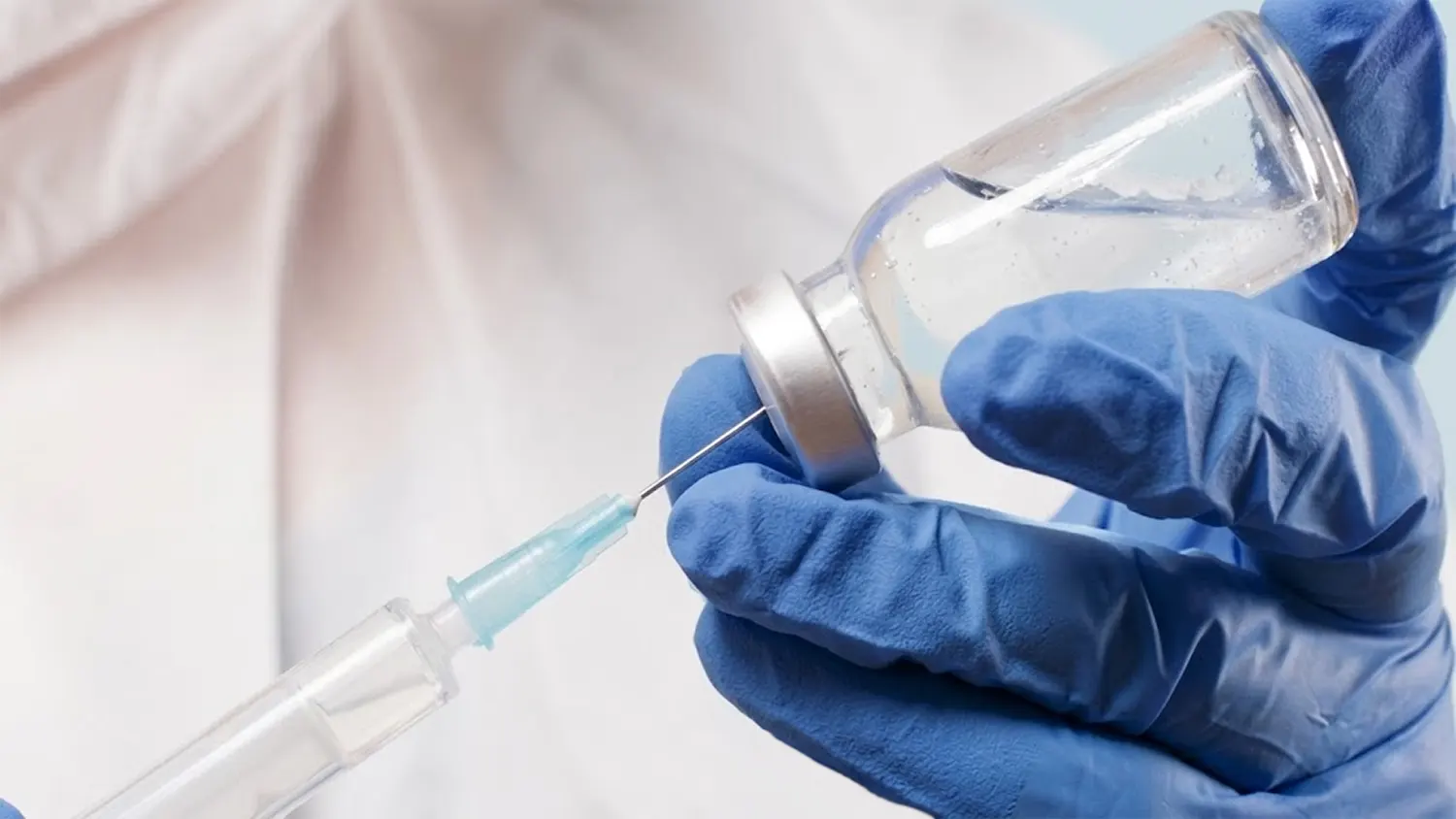
This is perhaps the most striking paradox of the 2026 crisis. The U.S. government’s Vaccines for Children (VFC) program provides the MMR vaccine at no cost to uninsured, underinsured, and Medicaid-eligible children. The vaccine is available at virtually every pharmacy and pediatrician’s office in the country. Yet cases are surging.
Three key forces are driving this contradiction:
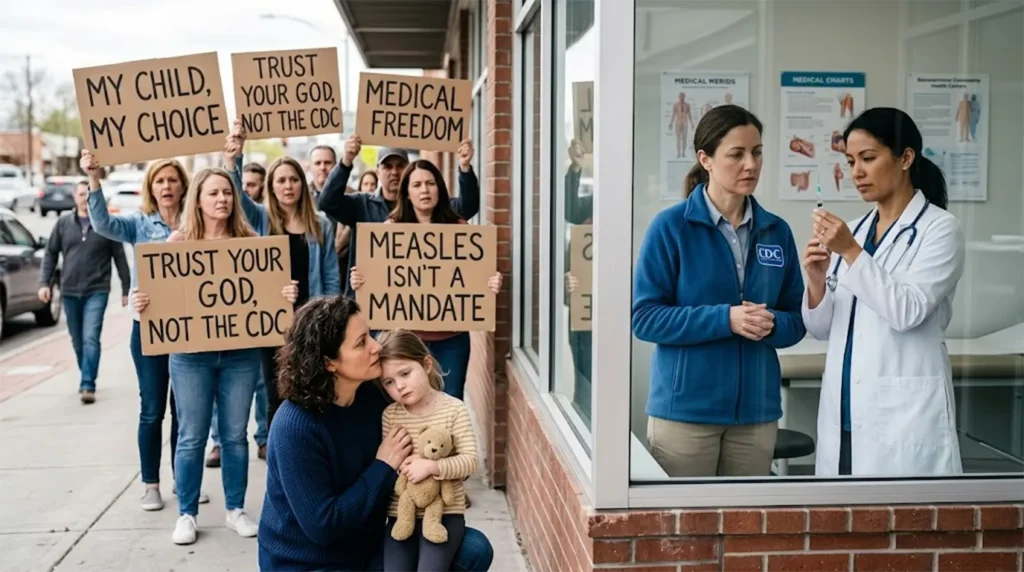
Vaccine hesitancy and misinformation. A global survey released in April 2026 found that 7 in 10 people hold at least one health belief that contradicts medical science. On social media, anti-vaccine content spreads faster than official public health guidance, and trust in agencies like the CDC is at a historic low in many communities.
Easier exemptions. Several states have made it significantly easier to obtain “philosophical” or “religious” exemptions to school vaccine requirements, creating pockets of unvaccinated children concentrated in specific schools and neighborhoods.
The pandemic backlog. Millions of families fell behind on routine childhood immunizations between 2020 and 2023 and simply never caught up. A generation of children entered school without the protection their predecessors had.
Experts at the Children’s Hospital of Philadelphia have now issued a warning that measles may be becoming “endemic” in the U.S. again meaning the virus is no longer just being imported by travelers, but is now circulating continuously within American borders.
The Hidden Toll on Children
Beyond the physical symptoms high fevers up to 105°F, severe cough, and intense light sensitivity measles carries consequences that many parents don’t know about.
Immune amnesia. Measles has a devastating, lesser-known effect: it essentially erases the immune system’s memory. A child who recovers from measles may lose the antibodies they had built up against other diseases, leaving them vulnerable to unrelated infections for months or even years afterward.
School exclusion. In hotspots like Utah, hundreds of unvaccinated children were barred from school for 21 days following a single exposure even if they never got sick. The social and educational consequences of this isolation are significant and lasting.
Risk to infants. Because the first MMR dose is not typically given until 12 months of age, infants under one year old have no vaccine protection. They depend entirely on the people around them being vaccinated. In the 2026 surge, unvaccinated older siblings are bringing the virus home to newborns who could not have been protected even if their parents wanted them to be.
SSPE (Subacute Sclerosing Panencephalitis). Perhaps the most chilling long-term risk is a rare but fatal brain disease that can develop 7 to 10 years after a measles infection. For the thousands of children infected in 2026, that risk will follow them for years.
What the CDC Is Doing Right Now
The CDC’s 2026 response is operating on several fronts simultaneously:
- Epidemic Intelligence Service teams have been deployed to major hotspots to trace transmission chains and map the virus’s spread
- The 72-hour rule is now aggressively promoted: unvaccinated individuals exposed to measles should receive the MMR vaccine within 72 hours to potentially prevent infection
- Early vaccination for infants (as young as 6 months) is now recommended for those traveling to countries with active outbreaks
- A real-time Measles Tracker has been launched and is updated weekly, showing confirmed cases by state, hospitalization rates, and progress toward the zero-death goal
What Should You Do Right Now?
If you live in a high-risk area (Utah, Texas, Florida):
- Confirm your children’s MMR vaccination records are up to date
- If your child is 6–12 months and you are planning international travel, ask your doctor about an early MMR dose
- If your child received only one MMR dose, consider moving up the second dose rather than waiting until age 4
If you are an adult born before 1990:
- The CDC recommends checking your vaccination records many people in that generation received only one dose and may benefit from a second
If you or your child has been exposed:
- Contact your doctor or local health department immediately
- The MMR vaccine given within 72 hours of exposure can prevent or reduce the severity of infection
- High-risk individuals (infants, pregnant women) who cannot receive the vaccine may be eligible for immunoglobulin antibody treatment within six days of exposure
Science Didn’t Fail. Coverage Did
The 2026 measles surge is not a failure of science. The MMR vaccine remains 97% effective after two doses. It is free, widely available, and has been proven safe for decades.
This is a crisis of coverage of communities falling just far enough below the 95% threshold that a single imported case can paralyze schools, businesses, and families for months. The South Carolina outbreak, which paralyzed an entire region for over six months and infected nearly 1,000 people, proved exactly what happens when that protective buffer disappears.
Protecting your child is not just a personal decision. It is a shared responsibility to the infants too young to be vaccinated, the cancer patients whose immune systems cannot fight the virus, and every person who relies on the community around them to stay safe.
This article is for informational purposes only and does not constitute medical advice. Please consult your healthcare provider for guidance specific to your situation.