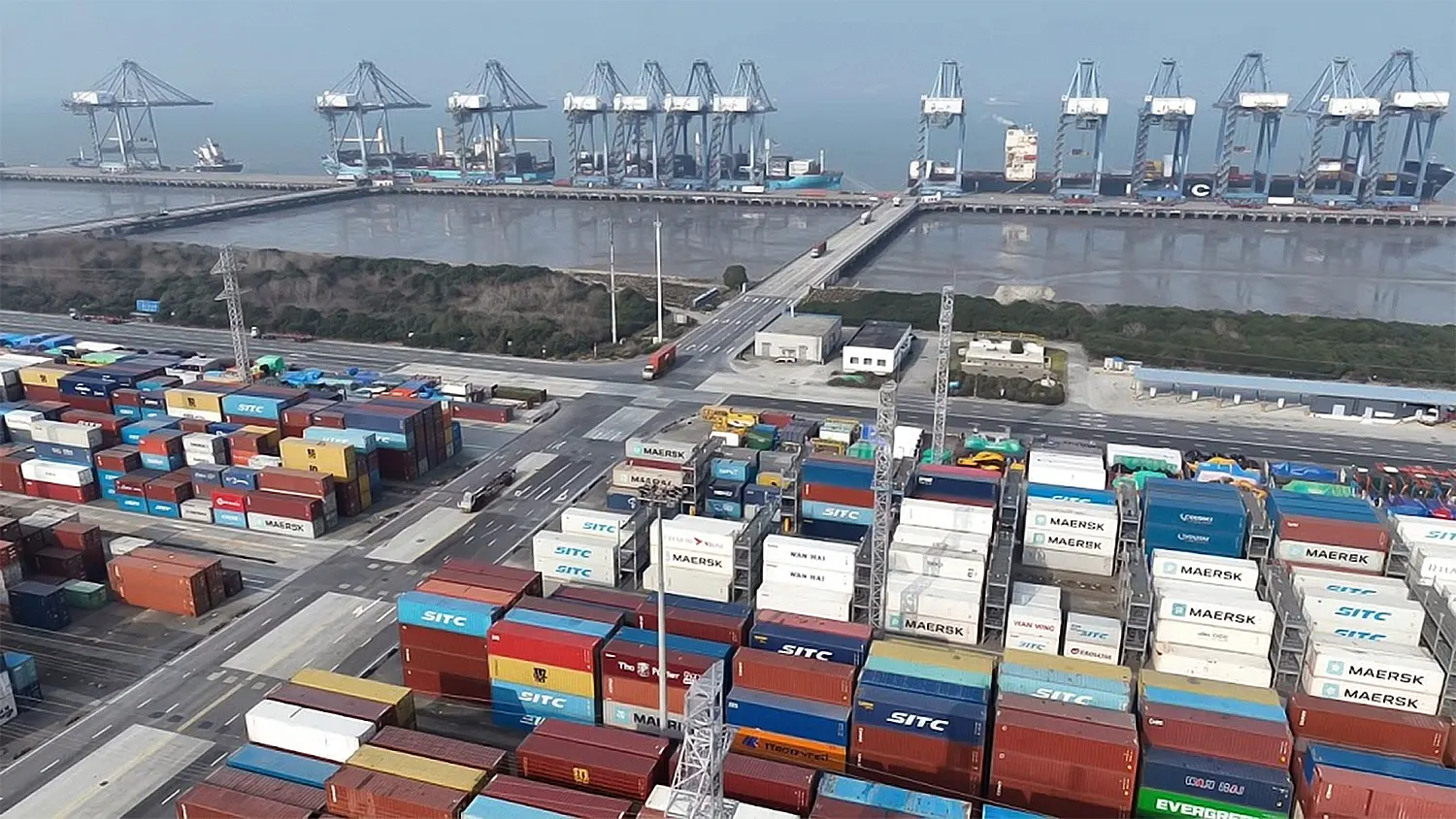
At midnight on May 1, a shipment of South African apples rolled through Shenzhen Bay Port. It was an ordinary delivery on the surface. But it marked an extraordinary shift: China now offers 100% zero tariff access to 53 African countries, the first major economy to do so unilaterally. For Beijing, the apples were more than fruit, they were a symbolic “first trade” under a sweeping new policy.
That symbolism quickly translated into numbers. For this single shipment, tariffs fell from 10% to zero, saving roughly 20,000 yuan ($2,929). It is a modest figure in isolation. But scaled across billions in trade, the implications are far larger. Tariffs that once ranged from 8% to 30% are now gone, and import costs are dropping immediately.
But the real shift came with the scope of the policy. Until late 2024, only 33 of Africa’s poorest nations enjoyed tariff-free access. Now, China has expanded that list to include 20 more economies among them South Africa, Egypt, Kenya, and Nigeria. These are not marginal players. They are some of Africa’s most diversified exporters, and their inclusion signals a broader ambition.
That raises a second question: who benefits first? In the short term, the answer is clear Chinese consumers.
Lower prices today but a deeper play beneath the surface
With tariffs removed, African goods are set to become more competitive across Chinese markets. Importers are already adjusting. Kenyan avocados and specialty coffee are expected to gain ground in major cities, while Egyptian citrus has begun moving in larger volumes. In one case, a 516-tonne shipment of Egyptian oranges cleared customs tariff-free, saving about 320,000 yuan ($44,200). The result is straightforward: retail prices could fall by 15% to 20% for some imported goods.
Yet the consumer story is only the first layer. Behind it lies a more strategic objective reshaping how Africa produces and exports. For decades, trade has followed a familiar pattern: Africa ships raw materials, and imports finished products. Beijing now appears intent on nudging that model in a different direction. The goal is to move African exports “up the value chain,” and shift from raw commodities to processed goods.
This is where incentives begin to align. By eliminating tariffs on finished or semi finished products, China is effectively rewarding industrialization. A processed chocolate bar from Ghana or a finished leather product from Ethiopia now enters China duty-free. That changes the economics of production. Manufacturing inside Africa becomes more attractive, and exporting higher value goods becomes viable.
What makes this even more consequential is the role of investment. Chinese firms, facing rising costs at home, may see Africa as a logical extension of their supply chains. Setting up production locally allows them to take advantage of zero tariffs while lowering labor costs. At the same time, technology transfer from food safety systems to “smart agriculture” practices begins to follow investment.
But policy alone is not enough. Logistics often determines whether trade flows succeed or stall.
Faster customs and “green lanes” aim to solve a hidden bottleneck
To address that, China has paired tariff cuts with procedural changes. Authorities have introduced “green lanes” for African agricultural goods, fast-tracking inspections and reducing delays. For perishable products fruit, vegetables, and flowers time is critical. A delay at port can wipe out margins entirely. Faster customs clearance is therefore as important as tariff elimination, and logistics efficiency becomes a competitive advantage.
These changes reflect a broader calculation. In 2025, China–Africa trade reached $348 billion. But it remained uneven. China exported $225 billion worth of goods, while Africa exported only $123 billion. The imbalance has long been a point of criticism. Now, Beijing is attempting to address it, not through aid, but through market access. The policy is designed to boost African exports, and narrow a persistent trade gap.
Still, the structure of those exports reveals how steep the challenge remains.
Africa’s export reality: dominated by minerals, not finished goods
Despite rapid growth in agriculture, Africa’s exports to China are still heavily concentrated. Roughly 70% to 75% comes from minerals and natural resources, including oil, cobalt, copper, and lithium. These are the inputs that power China’s industrial engine and its transition to green technologies. They generate large revenues but they are also volatile and capital intensive.
Agriculture, by contrast, accounts for only about 5% to 8% of exports. Yet it is expanding quickly. More importantly, it supports livelihoods. Over 60% of Africa’s workforce depends on agriculture, making it a critical sector for income distribution. Growth here has a different impact: it puts money directly into local economies, not just government accounts.
The smallest slice is manufacturing. Finished goods make up less than 5% of exports to China. Most industrial shipments are still semi processed refined metals, timber, or intermediate inputs. This is the gap Beijing’s policy is targeting. Encouraging “Made in Africa” exports is the long term objective, and industrial diversification is the underlying strategy.
That strategy is not purely economic. It is also geopolitical.
A trade policy that doubles as diplomacy
The timing is deliberate. This year marks 70 years of diplomatic relations between China and African nations. At the same time, global trade is fragmenting. The United States and the European Union have increasingly turned to tariffs and industrial protection. Against that backdrop, China is positioning itself differently. It is presenting itself as a defender of open markets, and using trade access as a tool of influence.
For African governments, the appeal is practical. Diversifying exports reduces dependence on volatile commodity prices. Creating local industry generates jobs. And access to a vast consumer market offers scale that few other partners can match. But risks remain. Building competitive manufacturing sectors requires infrastructure, skills, and stable policy environments factors that vary widely across the continent.
Even so, the direction is clear. China is betting that a more industrialized Africa will not only export more but also import more. As incomes rise, demand for higher end goods from electric vehicles to renewable energy systems is expected to follow. Today’s tariff cuts are therefore also an investment in tomorrow’s markets, and Africa’s growth becomes part of China’s long term economic strategy.
The apples that crossed Shenzhen Bay were a small shipment. But they signal something larger: a recalibration of trade, and a test of whether policy can reshape decades old patterns.