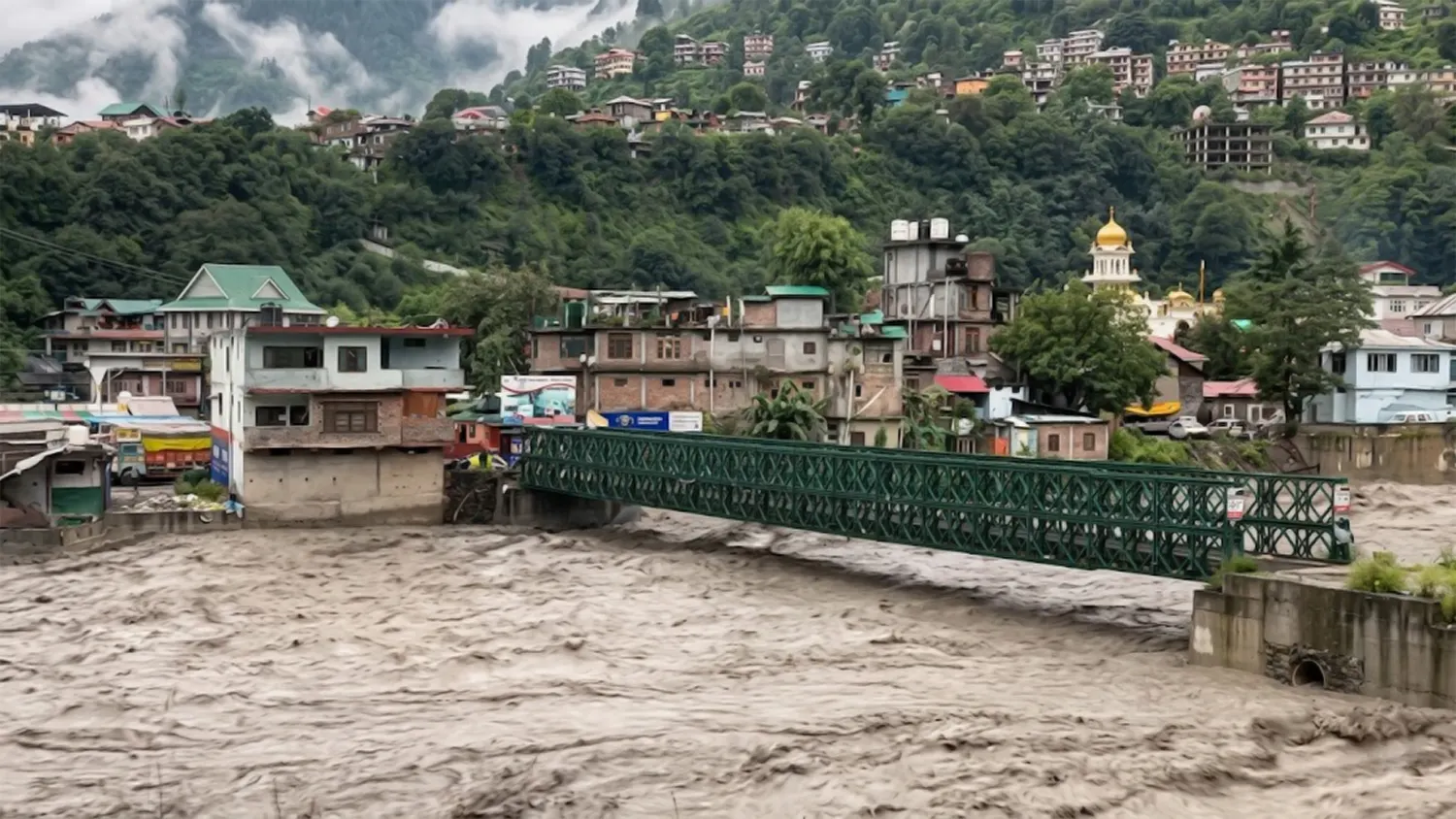
The numbers keep climbing. Across Himachal Pradesh, Punjab, Jammu & Kashmir, and Haryana, relentless monsoon rains have triggered flash floods and landslides that have now killed more than 500 people making this one of the deadliest monsoon seasons northern India has seen in years.
Himachal Pradesh has absorbed the worst of it. The state has recorded more than 300 deaths, with entire communities buried under landslides and hundreds of villages cut off from the outside world. In Punjab, at least 43 lives have been lost, and the scale of displacement is staggering. More rain is forecast. The crisis is not over.
Himachal Pradesh Is Being Buried Punjab Is Underwater
In Himachal Pradesh, landslides have not just damaged infrastructure, they have erased it. More than 1,100 roads, including critical national highways, have been blocked or destroyed, leaving remote communities completely inaccessible to rescue teams. Homes have collapsed, communities have been buried, and geological teams are now investigating alarming reports of land sinking and surface cracking in several villages signs that the ground itself is becoming unstable under the relentless rainfall.
Punjab is facing a different but equally devastating picture. The state is experiencing its worst flooding in nearly 40 years, prompting the government to officially declare it a disaster-affected area. More than 1,900 villages are affected, and 400,000 acres of farmland sit submerged under floodwaters, a blow that goes beyond the immediate humanitarian crisis and strikes at the livelihoods of farmers already living on tight margins.
Every Available Resource Has Been Deployed
The scale of the response reflects the scale of the disaster. The National Disaster Response Force, Indian Army, Indian Air Force, and Border Security Force are all actively involved in rescue and relief operations, working around the clock to reach stranded civilians.
Drones and helicopters are being used to access communities that road teams simply cannot reach. Thousands of residents have been evacuated from submerged areas, and relief camps offering shelter, food, and medical aid have been set up across affected districts. Schools and colleges across multiple districts in both Himachal Pradesh and Punjab remain closed as a safety precaution.
In one of the more remarkable footnotes to the crisis, Indian and Pakistani military units have temporarily coordinated rescue efforts in border regions, a rare moment of cross-border cooperation driven purely by the urgency of saving lives.
From the Prime Minister to the Supreme Court, Everyone Is Responding
The disaster has triggered responses at the highest levels of government. Prime Minister Narendra Modi personally contacted Punjab Chief Minister Bhagwant Mann to assure full central government support. Himachal Pradesh has been formally declared a disaster-affected zone, with compensation announced for families who have lost homes, livestock, or loved ones.
The Supreme Court of India has taken suo motu cognizance of the crisis, meaning it stepped in on its own initiative without waiting for a petition. The Court has issued notices to the central government, the National Highway Authority of India, and relevant state governments, and has ordered investigations into whether illegal tree felling and poor land management contributed to the severity of the destruction. It is a pointed question, and one that goes to the heart of how these disasters happen.
This Is What Climate Change Looks Like in Real Time
Climate experts are not mincing words. The intensity and scale of this monsoon season is consistent with what climate models have long predicted for South Asia more frequent extreme weather events, heavier rainfall concentrated into shorter periods, and landscapes increasingly unable to absorb the impact.
The India Meteorological Department has issued red and orange alerts for the coming days, forecasting continued torrential rainfall across already devastated areas. The risk of further landslides in Himachal Pradesh remains high, and the window for rescue operations is narrowing.
The crisis has also begun rippling through local economies in ways that will outlast the floodwaters. The closure of major highways and rail lines has disrupted the movement of goods across the region. In Himachal Pradesh, the damage is threatening the apple harvest, a crop that is not just commercially significant but the primary income source for tens of thousands of farming families in the state.
The Ground Is Telling India Something It Cannot Afford to Ignore
The floods in northern India are a humanitarian emergency today. But they are also something larger, a stress test of infrastructure, policy, and preparedness that the country is visibly struggling to pass.
When over 1,100 roads collapse, when the Supreme Court has to step in to ask whether illegal deforestation made a natural disaster worse, when farmland the size of a small country disappears underwater, these are not just the consequences of heavy rain. They are the consequences of decisions made over decades about how land is managed, how development is planned, and how seriously the warnings of climate scientists are taken.
Thousands of people are still waiting for rescue. More rain is coming. And when the waters finally recede, the harder questions will still be there waiting for answers that, this time, cannot be delayed any further.