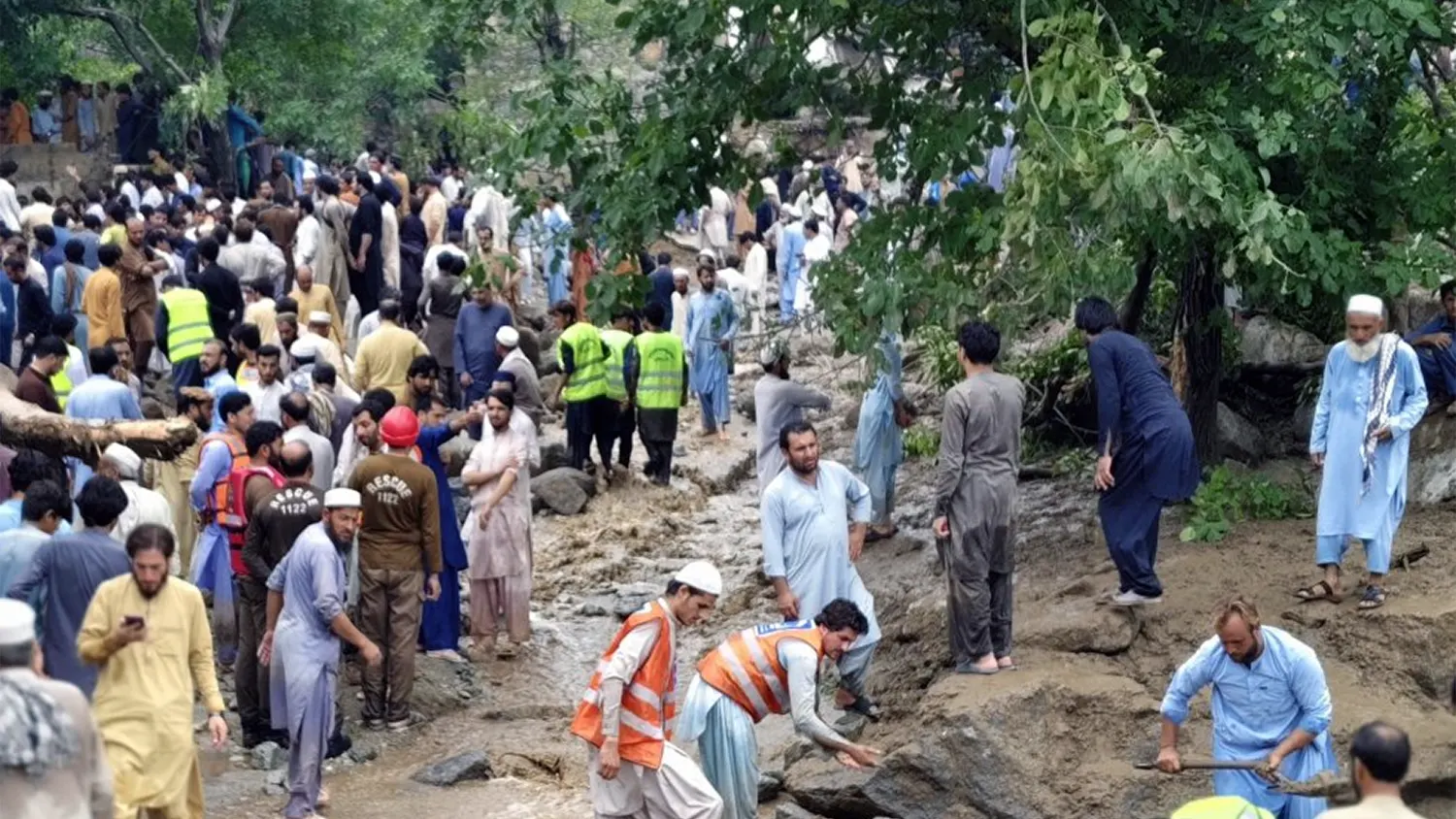
At least 49 people have died in Pakistan within 24 hours after flash floods and landslides swept through northern regions, as relentless monsoon rains continue to batter the country.
The disaster highlights a growing pattern of extreme weather events linked to climate change, with authorities warning that the situation could deteriorate further in the coming days.
Northern Regions Hit Hard by Sudden Flooding
The worst affected areas include Khyber Pakhtunkhwa and Gilgit Baltistan, where heavy rainfall caused rivers to overflow and hillsides to collapse.
Entire communities have been cut off as floodwaters surged through valleys and mountain roads. The combination of steep terrain and intense rainfall has made these regions especially vulnerable to sudden disasters.
As conditions worsen, local authorities are struggling to maintain access to remote areas, complicating rescue and relief efforts.
Rescue Efforts Intensify as Thousands Stranded
Emergency teams have launched large scale operations to evacuate those trapped by rising waters.
In one major effort, around 1,300 tourists were rescued from Siran Valley, where flooding cut off all exit routes. The operation underscores both the scale of the disaster and the urgency of response efforts.
Despite these successes, many communities remain isolated. Rescue teams face damaged roads and ongoing dangerous weather conditions, slowing their progress.
Nationwide Impact Signals a Deepening Crisis
This latest tragedy is part of a broader pattern. Since the monsoon season began in late June, more than 360 people have died nationwide, making it one of the deadliest periods in recent years.
Flooding has also triggered landslides that blocked key infrastructure, including the Karakoram Highway, a vital route for trade and travel.
These disruptions are not just local, they are affecting supply chains and mobility across the region, adding economic pressure to an already difficult situation.
Climate Change and New Threats Raise Alarm
Experts increasingly point to climate change as a key driver behind the intensifying monsoon patterns in Pakistan.
Warmer temperatures are contributing to heavier rainfall and raising the risk of glacial lake outburst floods (GLOFs) in northern areas. Authorities have issued warnings that these events could trigger sudden, large scale flooding.
This evolving threat means the crisis is not only immediate but also part of a longer-term shift in weather patterns that demands urgent attention.
A Growing Emergency with No Immediate End
Pakistan’s flood crisis shows how quickly extreme weather can escalate into a national emergency.
With rains continuing and risks increasing, the focus now is on saving lives and stabilizing affected communities. At the same time, the disaster underscores the urgent need for stronger infrastructure, better preparedness, and long term climate resilience.
As the monsoon season continues, the country remains on high alert facing the reality that the worst may not yet be over.