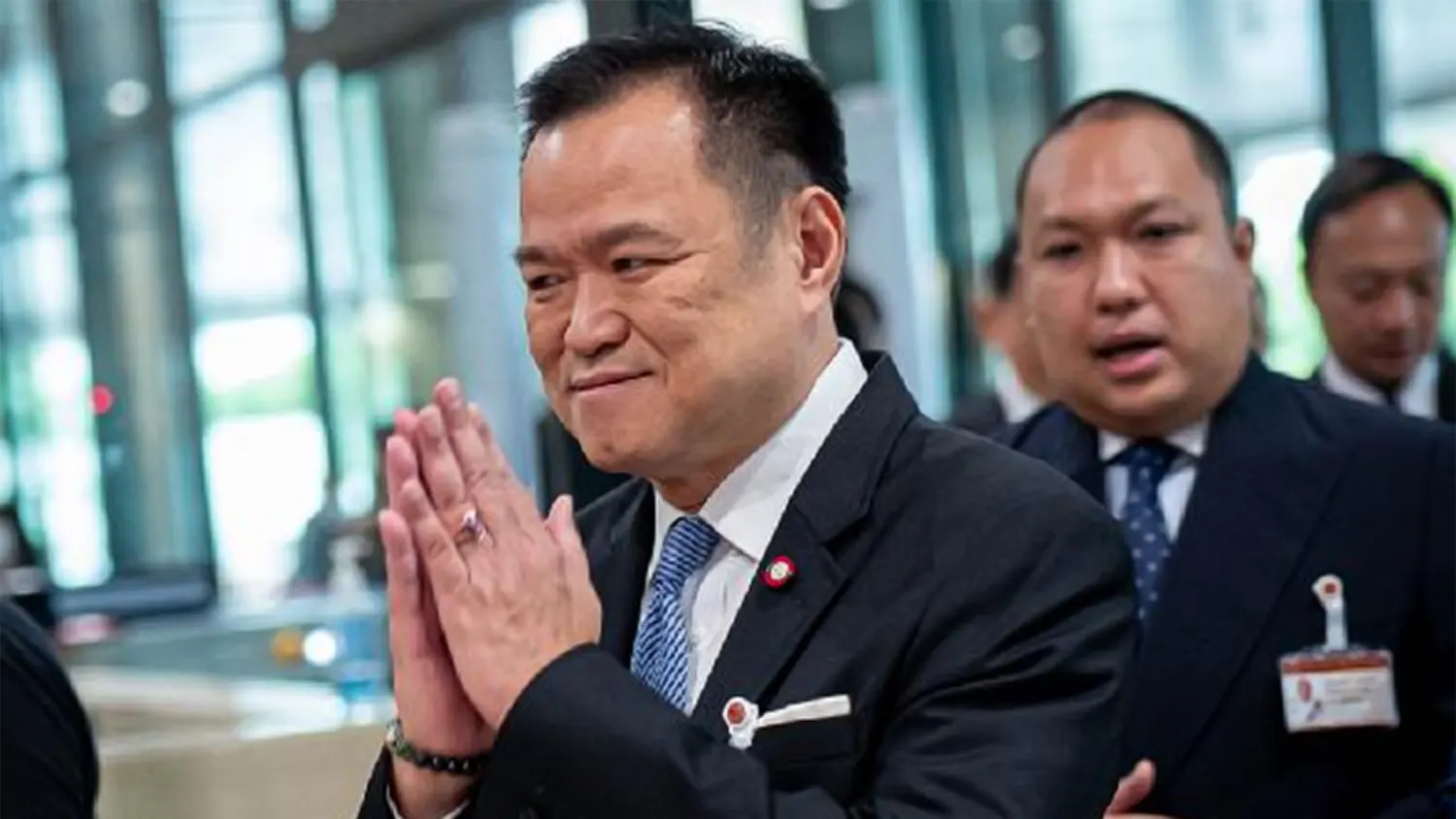
On Friday, September 5, 2025, the Thai parliament voted to install Anutin Charnvirakul as the country’s new prime minister. It sounds straightforward. It is anything but.
This is Thailand’s third prime minister in just two years, the latest chapter in a political saga that has seen court dismissals, coalition collapses, and a revolving door at the top of government that shows little sign of slowing down. Anutin won the parliamentary vote with 311 out of 492 active votes, comfortably clearing the 247 needed, defeating opposition candidate Chaikasem Nitisiri of the Pheu Thai Party.
But the more telling number may be this: four months. That is roughly how long his government is expected to last.
Who Is Anutin and Why Does He Matter?
At 58, Anutin Charnvirakul is far from a new face in Thai politics. He has spent more than two decades navigating the country’s notoriously complex political landscape as the long-serving leader of the conservative Bhumjaithai Party whose name translates to “Thai Pride”, a centrist force with strong roots in eastern Thailand and a platform built around economic development and infrastructure.
Before becoming prime minister, he held three significant government roles: Deputy Prime Minister, Minister of Interior, and Minister of Public Health. It was that last role that first brought him international attention, when he led Thailand’s public health response during the COVID-19 pandemic, pushing for efficient vaccine distribution at a time when many governments in the region were struggling.
He is also the politician most responsible for one of Southeast Asia’s most talked-about policy shifts: Thailand’s legalization of medical marijuana and the easing of restrictions on recreational use, making it the first country in the region to do so. Celebrated by some as progressive and condemned by conservative factions, the policy cemented Anutin’s reputation as a politician willing to take positions that others won’t.
Why He Is Prime Minister Now and What Triggered the Opening
Anutin’s path to the top job was cleared by the Constitutional Court’s dismissal of former Prime Minister Paetongtarn Shinawatra over an ethics violation, the latest blow to a political dynasty that has dominated Thai politics for more than two decades.
The Shinawatra family’s influence, once near-total, has been visibly eroding. The removal of two Shinawatra-affiliated prime ministers in quick succession has left a power vacuum that Thailand’s traditional conservative establishment parties like Bhumjaithai have moved swiftly to fill. Anutin’s election may signal something larger than just a change of leadership: it could represent a reassertion of Thailand’s older political elite after years of populist upheaval driven by Shinawatra-aligned movements.
A Prime Minister on a Timer
Here is the catch: Anutin’s mandate comes with an explicit expiration date. The People’s Party, a powerful opposition bloc whose support was essential to his election, backed his candidacy on one firm condition that he dissolve parliament and call a general election within four months.
That makes his government a transitional one by design, tasked less with long-term governance and more with steering Thailand toward constitutional reform and fresh elections without letting the political situation deteriorate further. It is a narrow, difficult brief and political analysts are already noting that it reflects just how fragile coalition-building in Thai politics has become.
Before he and his cabinet can officially assume power, Anutin’s appointment still requires formal endorsement by King Maha Vajiralongkorn, a procedural step, but a necessary one.
Leading a Country That Is Hard to Lead Right Now
The immediate challenge facing Anutin is not just political, it is structural. He must balance the competing demands of coalition partners, manage public expectations for reform, and prepare the ground for elections, all while running a functioning government in the interim.
Thailand has been here before. Instability is not new to a country that has experienced multiple coups, court-ordered leadership changes, and constitutional rewrites over the past two decades. But each cycle of disruption carries its own costs to governance, to public trust, and to Thailand’s standing as a destination for foreign investment and regional influence.
Anutin arrives with real experience, a clear political identity, and a parliamentary majority behind him. Whether that is enough to navigate one of the most delicate transitions in recent Thai political history while keeping the coalition together long enough to reach elections is the question that will define his time in office.
The clock, quite literally, is already running.