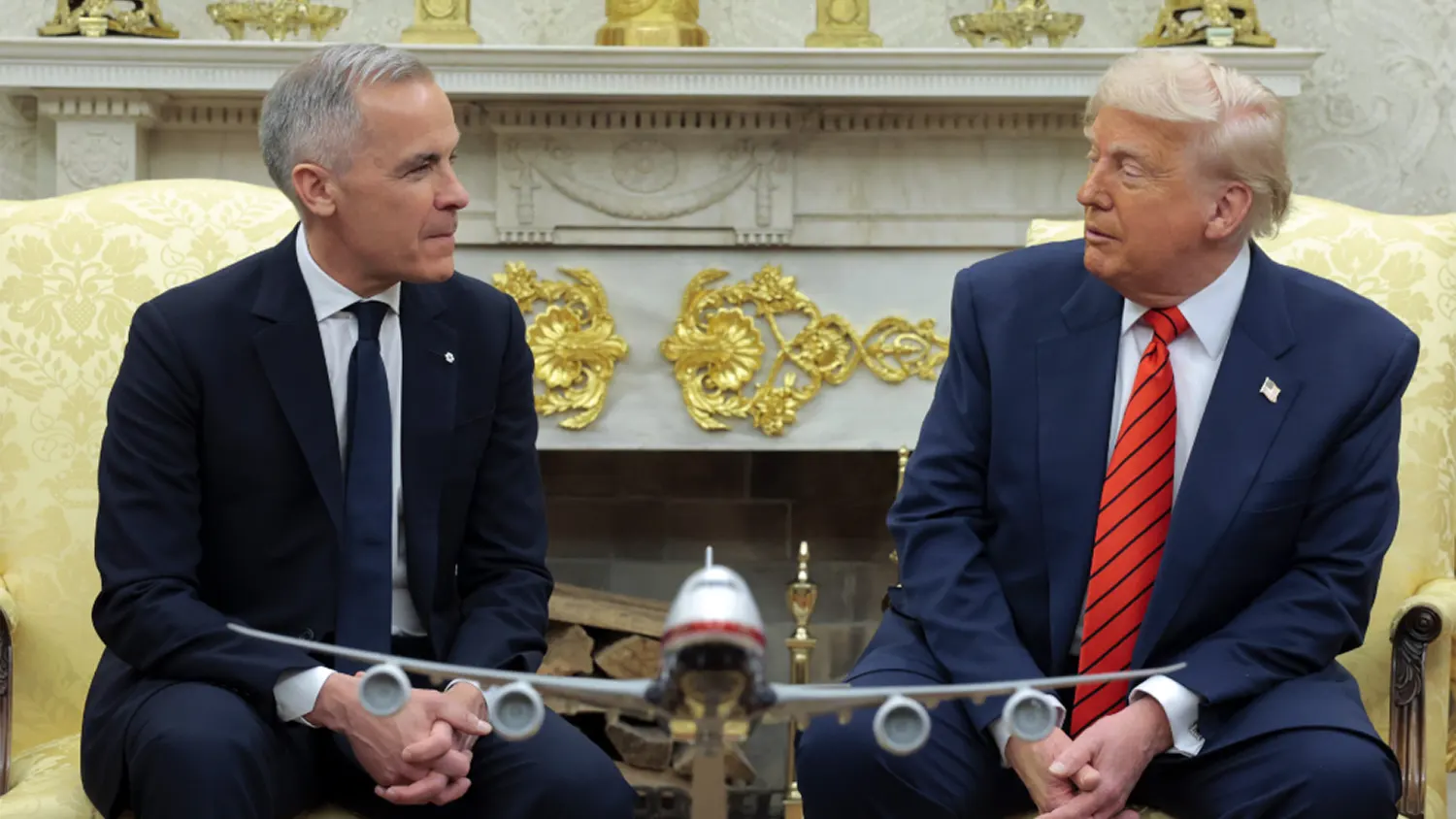
The Canadian government has announced it will remove the majority of its retaliatory tariffs on American goods, in a significant move to cool down the ongoing trade war between the two countries.
Prime Minister Mark Carney confirmed Friday that starting September 1, Canada will lift tariffs on all goods covered under the Canada-United States-Mexico Agreement (CUSMA) the trade deal that governs most commerce between the three North American countries.
How Did We Get Here?
The trade dispute started earlier this year when US President Donald Trump imposed a 25% tariff on most Canadian and Mexican imports. The stated reasons included concerns over a trade deficit, illegal immigration, and fentanyl trafficking.
Canada hit back with its own 25% retaliatory tariffs on a wide range of American consumer products things like oranges, clothing, and cosmetics goods that everyday Canadians buy regularly.
The standoff hurt businesses and consumers on both sides of the border.
The turning point came after a phone call between Carney and Trump, in which Trump expressed interest in a trade “reset.” Canada’s announcement is its direct response to that conversation.
What’s Actually Changing?
Here’s a simple breakdown of what the new policy means:
- ✅ Tariffs removed — on all US goods that qualify under CUSMA, effective September 1
- ❌ Tariffs staying — on American steel, aluminum, and autos
- 📋 Future talks — the steel, aluminum, and auto sectors will be the main focus of upcoming negotiations, especially with CUSMA up for a formal review in 2026
Carney framed the decision as matching a move already made by the US which had previously exempted CUSMA-compliant Canadian products from some of its tariffs.
“Canada and the United States have re-established free trade for the vast majority of our goods,” Carney told reporters, adding that more than 85% of bilateral trade between the two countries will now be tariff-free.
Why Did Canada Do This?
Carney defended the move as a pragmatic response to a changing global trade environment not a sign of weakness.
“Canada currently has the best trade deal with the United States,” he said, acknowledging that while the relationship looks different than before, it is still more favorable than what any other country has with the US.
He also signaled that the focus has now shifted from broad tariff battles to targeted negotiations on the strategic industries that still face duties.
For those familiar with Carney’s earlier “elbows up” hockey analogy, his way of saying Canada would fight back hard, he now says the game has simply moved to a different period, with a new strategy for the next phase.
Who Is Welcoming the Move?
The Canadian Federation of Independent Business (CFIB) came out in support of the decision, saying the retaliatory tariffs had been quietly hurting Canadian small businesses many of which rely on American supply chains and customers.
The CFIB said the change would “take some of the pressure off” business owners who had been caught in the middle of the two governments’ standoff.
Who Is Criticizing It?
Not everyone is satisfied.
Conservative Party Leader Pierre Poilievre called the announcement “another climb down” by the Carney government, arguing that Canada gave up its leverage without getting enough in return.
His core argument: Canada should not have removed its tariffs without first securing a matching concession from the US specifically, the removal of all punitive American duties on Canadian goods.
Other opposition voices echoed the concern, calling the move a “capitulation” that weakened Canada’s negotiating position heading into the 2026 CUSMA review.
What Happens Next?
The September 1 tariff removal is just the beginning. The bigger battles are still ahead particularly around steel, aluminum, and the auto industry, sectors that employ hundreds of thousands of Canadians.
The 2026 CUSMA review will be the real test of whether this reset leads to a more stable and fair trade relationship or whether Canada ends up making more concessions down the road.
For now, the Carney government is betting that lowering the temperature today creates better conditions for winning on the issues that matter most tomorrow.