A fragile ceasefire that had held since April is now in pieces. Iran’s Islamic Revolutionary Guard Corps launched a coordinated wave of drone and ballistic missile strikes across Kuwait and Bahrain hitting oil infrastructure, military installations, and a civilian airport terminal in one of the most significant escalations the Gulf region has seen in years.
This is no longer a conflict happening somewhere else. It arrived at the departure gates.
The Strike That Changed the Calculation
The attack on Kuwait International Airport’s Terminal 1 is the moment this escalation became impossible to frame as a distant military exchange.
One civilian was killed, an Indian national, confirmed by India’s Foreign Ministry, identified by airport sources as a traveler moving through the terminal. Kuwait’s Health Ministry deployed 25 ambulances to the scene. Of the 63 people treated, injuries included severe blast trauma, head wounds, and amputations sustained by travelers, airport staff, and nearby civilians alike.
Civil aviation was suspended entirely. Arriving flights were diverted to alternative regional airports. Kuwait Airways only managed to partially restore operations later that day.
Iran’s Foreign Ministry attempted to deflect claiming the terminal damage was caused by falling debris from American interceptor missiles, not a direct hit. Kuwait’s Ministry of Defence responded by releasing CCTV footage of the direct drone strike to the international community. The footage made Iran’s position difficult to maintain.
This strike marks the first major breach of the April ceasefire and the response from Kuwait was immediate.
What Iran Hit, and What They Were Aiming For
The IRGC claimed responsibility openly and named their targets without ambiguity: Ali Al Salem Air Base in Kuwait and the U.S. Navy’s Fifth Fleet headquarters in Bahrain both American military installations in countries that host U.S. forces under bilateral defense agreements.
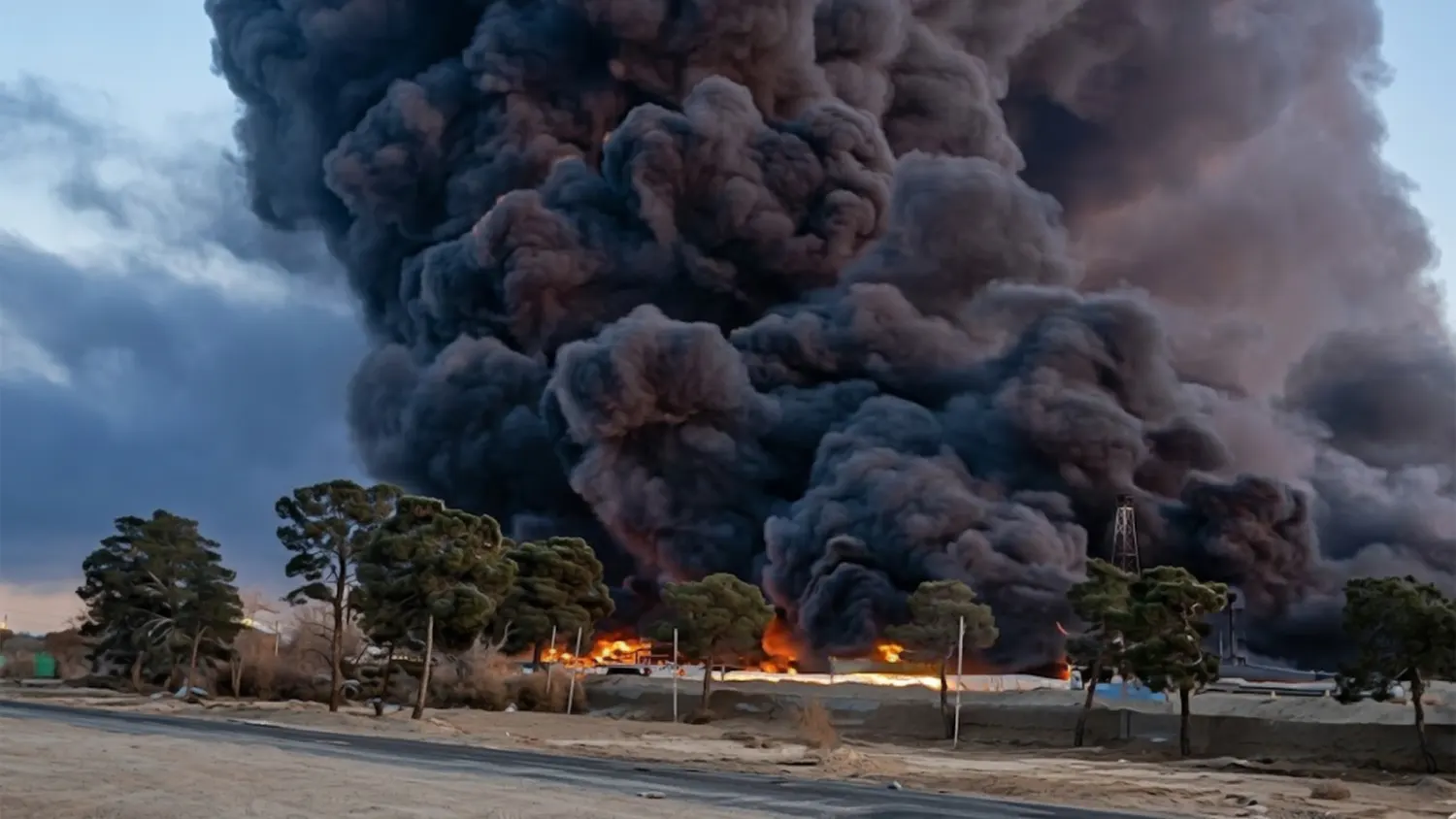
The strikes weren’t limited to military targets. A drone attack on a major Kuwaiti oil refinery sparked a severe fire, forcing authorities to shut down sections of the country’s largest refining operations while emergency crews battled the blaze. The economic ripple was immediate Gulf energy infrastructure, which underpins global supply chains, doesn’t absorb this kind of disruption quietly.
U.S. CENTCOM and local defense forces reported successfully intercepting a high volume of the incoming drones and missiles. But interception rates, however impressive, are not the same as zero impact. One intercepted conflict is still a war. The airport proved that.
The Diplomatic Break Sharp, Fast, and Deliberate
Within hours of the airport attack, Kuwait moved with a decisiveness that signaled this was not a moment for measured diplomatic language.
Kuwait’s Ministry of Foreign Affairs summoned the Iranian chargé d’affaires, Hamed Hamid Yaqoubi Far, and handed him an official protest note. The actions that followed were among the sharpest Kuwait has taken toward Tehran in the entire course of this conflict:
Two senior Iranian diplomatic staff were declared persona non grata, stripped of their status and given 24 hours to leave the country. Beyond the immediate expulsions, Kuwait mandated a permanent reduction in the total permitted staff at the Iranian Embassy in Kuwait City. And in the same meeting, Kuwait explicitly rejected Iran’s claim that Kuwaiti territory or airspace was being used by the U.S. military to launch offensive operations against Iran, a narrative Tehran had been pushing to justify the strikes.
This is the sharpest diplomatic rupture between Kuwait City and Tehran since the conflict began escalating and it came with documentation. The CCTV footage release wasn’t incidental. It was Kuwait telling the international community: we have the evidence, and we are not going to let this be reframed.
The Gulf Closed Ranks
Kuwait’s response triggered something that doesn’t happen easily or often: unified, rapid solidarity across the Gulf Cooperation Council (GCC).
Saudi Arabia, the UAE, Qatar, Bahrain, Jordan, and Egypt all released statements within a compressed window backing Kuwait’s sovereign right to defend its borders and condemning the targeting of civilian infrastructure. Qatar, notably, went further, stating publicly that Iran’s approach had severely damaged the regional trust required for any peaceful truce to hold.
The legal dimension adds another layer. The strikes directly violate United Nations Security Council Resolution 2817, which prohibits actions that disrupt international maritime navigation or threaten the Strait of Hormuz, one of the world’s most critical energy chokepoints. For Gulf nations whose economies depend on that strait remaining open, this isn’t an abstract legal violation. It’s an existential provocation.
What This Moment Actually Signals
The back-and-forth between Iran and the United States has been escalating for months. But strikes on Kuwait and Bahrain sovereign Gulf states with civilian populations, civilian airports, and civilian workers represent a geographic and moral expansion of the conflict that carries consequences beyond the military exchange itself.
Iran’s strategic logic appears to be one of pressure through proxy pain: by targeting the infrastructure and alliances of U.S. partner states, Tehran is attempting to raise the cost of American military presence in the region and fracture the Gulf’s willingness to host it. The logic is not irrational. But the airport attack complicated it.
Killing a traveler in a departure terminal is the kind of image that moves international opinion in ways that missile exchanges between military bases do not. India’s confirmation of the casualty from a country that has thus far maintained careful neutrality in this conflict adds a layer of diplomatic sensitivity that neither Iran nor the wider region can simply absorb and move past.
Kuwait released the footage. The GCC closed ranks. The ceasefire is gone.
The Gulf is no longer watching.