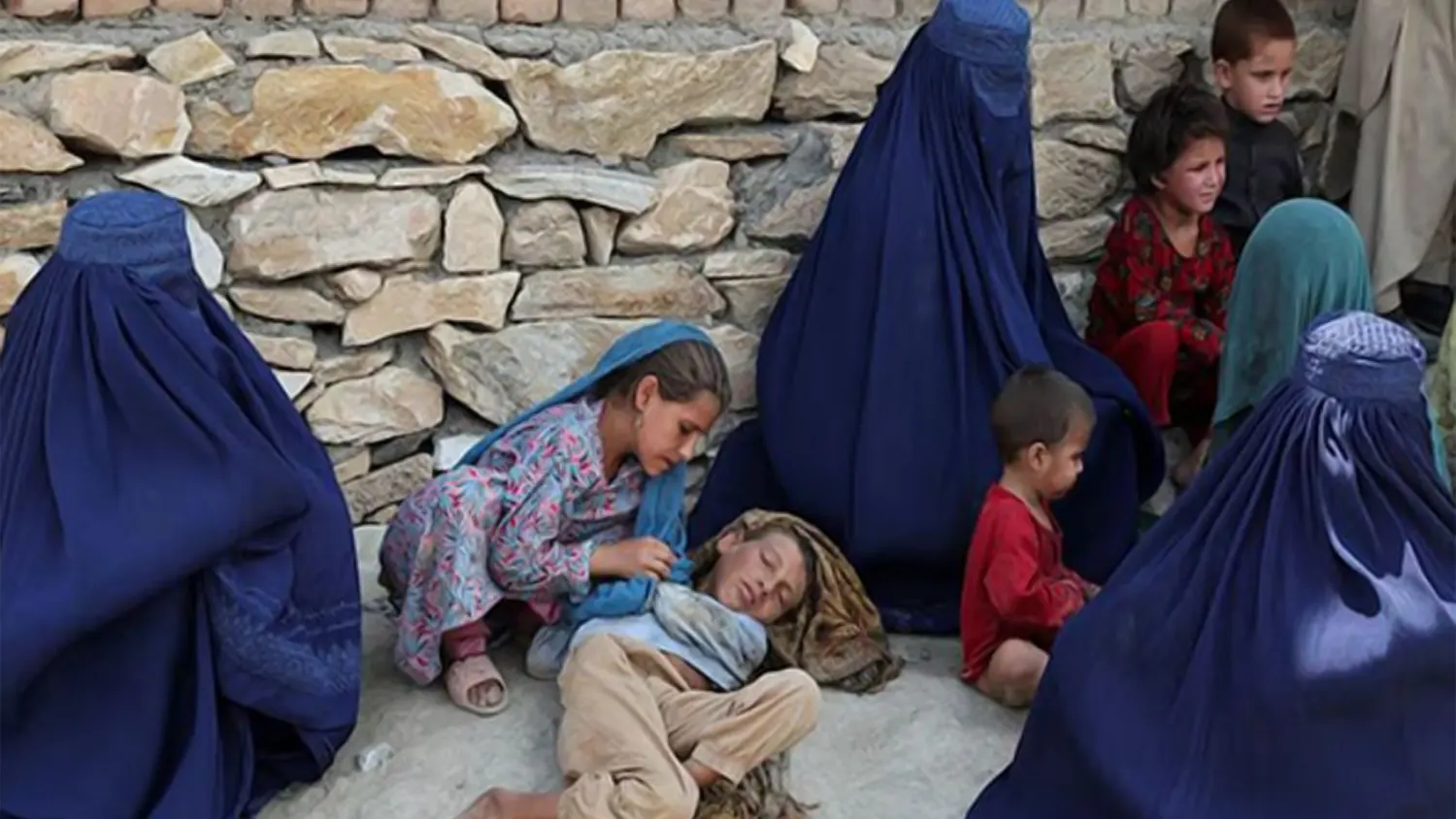
When the earthquake hit, rescuers moved fast. They pulled men from the wreckage, reached children buried under collapsed walls, worked through the dust and the dark to find anyone still alive. But when they heard a woman’s voice beneath the rubble, they stopped.
Not because they didn’t want to help. Not because they lacked the strength or the courage. They stopped because Taliban rules forbidding men from touching women who are not their relatives left them with no choice. And in the time it took to find a female rescuer in areas where female rescuers barely exist some of those women ran out of time.
The Moment Rescue Became Impossible
In the immediate chaos following the quake, the gap between who could be saved and who could not became starkly visible along a single line: gender.
Male rescuers described the anguish of working around a rule that turned proximity into powerlessness. “It felt like women were invisible,” one volunteer recounted. “We saved men and children first. The women were left waiting.”
In rural areas where the earthquake’s impact was often most severe and where trained female rescuers are virtually nonexistent that waiting stretched into hours, and then into days. Some women didn’t survive it. When their bodies were eventually recovered, witnesses reported that rescuers dragged them out by their clothing rather than risk violating the prohibition on physical contact.
It is the kind of detail that is difficult to sit with. It is also, in the context of Taliban controlled Afghanistan, not surprising which may be the most troubling part of all.
A Shortage That Didn’t Start With This Earthquake
The deadly bottleneck in rescue efforts didn’t emerge from nowhere. It is the direct consequence of years of Taliban restrictions systematically dismantling Afghanistan’s female workforce including the medical professionals the country now desperately needs.
The Taliban’s ban on women studying medicine has gutted the pipeline of female doctors and nurses. Rules requiring women to be accompanied by a male guardian at all times, a mahram have kept many from traveling to clinics, hospitals, or aid distribution points even when those facilities exist. The women who might have trained as emergency responders, paramedics, or field nurses were largely prevented from doing so long before this earthquake struck.
What this disaster has exposed is not a gap that appeared overnight. It is a gap that was constructed, policy by policy, over several years and it is now costing lives in the most direct way imaginable.
The result is what humanitarian organizations are describing as a form of gender apartheid embedded into disaster response itself: women are present in the affected areas, they are suffering, they are trapped and they are systematically being denied the help that men in the same situation receive as a matter of course.
The World Is Watching and Saying So
International condemnation has been swift. The United Nations has warned that women and girls are once again absorbing the heaviest share of this disaster’s human cost, a pattern that has repeated itself across every major crisis in Taliban-governed Afghanistan.
“Women and girls will again bear the brunt of this disaster,” said Susan Ferguson, UN Women’s Special Representative for Afghanistan. “We must ensure their needs are at the heart of the response.”
Humanitarian organizations working on the ground are pushing the same message not just as a moral argument, but as a practical one. Gender discrimination in disaster response is not an abstract injustice. It is a operational failure that determines, in real time, who receives care and who does not. When half a population cannot be reached, treated, or evacuated on equal terms, the entire humanitarian response is compromised.
Aid Alone Won’t Fix This
Food, tents, and medicine are reaching parts of Afghanistan. That matters but aid organizations are increasingly clear that physical supplies are not enough when the barriers preventing women from accessing that aid remain firmly in place.
A woman who cannot travel without a male guardian cannot reach a distribution point if no male relative survived the quake. A woman who cannot be examined by a male doctor and for whom no female doctor is available cannot receive medical care even when medical care exists nearby. The ideological walls are as deadly as the collapsed ones.
For the women of Afghanistan, survival after this earthquake has never been determined solely by the severity of the disaster itself. It has been determined by a set of rules that treat the act of helping them as a violation and that transform the window between life and death into something measured not in minutes, but in the distance between what rescuers are willing to do and what they are permitted to.
The international community faces a question that goes beyond this earthquake and beyond this moment: whether aid delivered into a system designed to render women invisible can ever truly reach them and whether the world is prepared to make that a condition of its continued help.