
The past week delivered a powerful reminder of how interconnected today’s global crises have become. From a rapidly escalating war in the Middle East to renewed military tensions in East Asia, events across multiple regions are shaping a volatile geopolitical landscape.
At the same time, technological breakthroughs, corporate upheaval, and environmental disasters underscore how global systems from energy markets to supply chains are under intense pressure. Taken together, the events of this week suggest a world entering a period of profound strategic realignment.
The Middle East War: Escalation and Economic Shock
The most consequential story of the week is the rapid escalation of conflict involving the United States, Israel, and Iran.
Following the assassination of Iran’s Supreme Leader, Ali Khamenei, the region has plunged into an increasingly unpredictable confrontation. Military activity has intensified across several fronts, with reports of strikes in Tehran and a growing buildup of naval forces in the Persian Gulf.
One of the most significant developments has been the deployment of the amphibious assault ship USS Tripoli to the region. The move highlights Washington’s effort to reinforce its military presence as tensions continue to rise.
Yet the war’s impact extends far beyond the battlefield. The Strait of Hormuz one of the world’s most critical energy chokepoints has become a focal point of global concern. Disruptions to Gulf shipping have triggered a sharp surge in oil prices, sparking what analysts are increasingly calling “Oil Shock 2026.”
The economic implications are enormous. Higher energy costs are already rippling through global markets, raising fears of inflation shocks and supply chain disruptions.
North Korea’s “Freedom Shield” Provocation
While global attention has been fixed on the Middle East, North Korea has seized the moment to reassert its military presence on the international stage.
During the annual Freedom Shield military exercises conducted by the United States and South Korea, Pyongyang launched a coordinated weapons test overseen by leader Kim Jong Un.
South Korean and Japanese authorities initially identified the launches as ballistic missiles. However, North Korean state media later described the systems as 600 millimeter multiple rocket launchers, which Pyongyang claims are capable of delivering tactical nuclear payloads.
The test serves as a strategic signal. By staging the launch during allied drills, North Korea is reminding Washington that it must manage security challenges in both the Pacific and the Middle East simultaneously.
For regional allies, the move reinforces concerns about stability on the Korean Peninsula.
Expansion of Conflict: The Pakistan–Afghanistan War
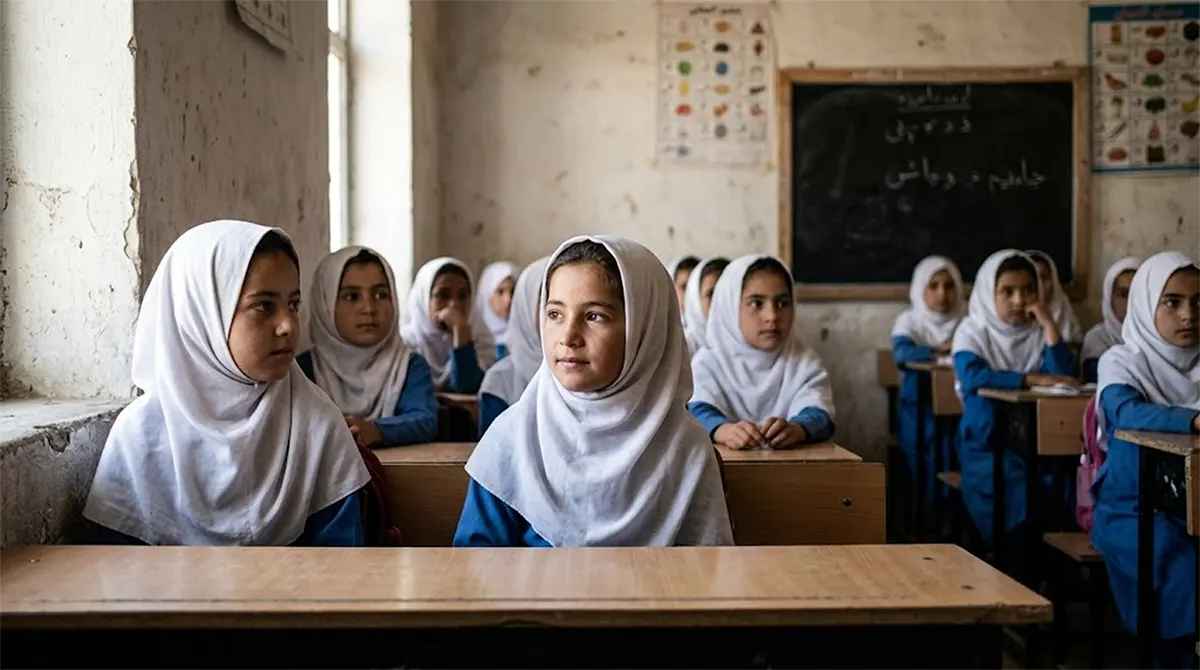
Another troubling development this week has been the intensification of fighting between Pakistan and Afghanistan.
What had previously been sporadic border clashes has escalated into a broader military confrontation. Reports indicate that airstrikes have struck major Afghan cities including Kabul and Kandahar, signaling a dangerous expansion of the conflict.
The situation adds a complex layer to regional instability across South and Central Asia. With multiple conflicts unfolding across neighboring regions, the risk of overlapping crises is increasing.
For policymakers and analysts alike, the escalation underscores how fragile security dynamics remain across the broader Asian region.
Technological Disruption and Corporate Shifts
Even as geopolitical tensions dominate the headlines, technological innovation and corporate restructuring continue to reshape the global economy.
One of the most notable developments this week is the emergence of the first commercially viable brain–computer interface (BCI) platform. The technology represents a major step forward in human machine integration, potentially transforming sectors ranging from medicine to communication.
At the same time, the automotive sector is facing its own challenges. Japanese automaker Honda reported a financial setback estimated at $15.7 billion, forcing the company to reassess its electric vehicle strategy.
The episode reflects a broader trend across global industry. Companies are rapidly adapting to economic uncertainty, shifting energy policies, and evolving consumer demand.
Humanitarian and Environmental Crises
Beyond geopolitics and economic turbulence, humanitarian emergencies continue to unfold around the world.
Severe coastal flooding in Peru driven by intensified El Niño conditions has caused widespread destruction and loss of life. Communities across several coastal regions have been displaced as authorities struggle to respond to the disaster.
These events serve as a stark reminder that climate driven crises are accelerating even as political tensions dominate international attention.
For vulnerable regions, environmental shocks often compound existing economic and social challenges.
The Bigger Picture: A World at a Turning Point
Taken together, this week’s events paint a striking picture of global transformation.
Multiple crises military, economic, technological, and environmental are unfolding simultaneously. Energy supply routes such as the Strait of Hormuz are under strain, corporate strategies are shifting under economic pressure, and major powers are navigating overlapping security challenges.
Some analysts describe this moment as the beginning of a “Great Uncoupling.”
In this emerging landscape:
- Global supply chains are being tested by geopolitical conflict
- Energy markets are reacting to instability in critical shipping lanes
- Security alliances are being stretched across multiple regions
The result is a world where strategic competition, economic disruption, and technological change are converging at the same time.
The Strategic Outlook
Looking ahead, several developments could shape the next phase of global events:
- Potential escalation in the Middle East conflict
- Further military demonstrations from North Korea
- Developments in the Pakistan–Afghanistan confrontation
- Continued volatility in global energy markets
Each of these stories will play a role in determining whether the coming weeks bring stabilization or deeper geopolitical turbulence.
This week show a world entering a period of overlapping crises and strategic uncertainty. As conflicts expand, economies react, and technologies evolve, global leaders face an increasingly complex landscape.
For now, the central question remains clear: how many simultaneous challenges can the international system manage at once ?