The conflict between the United States, Israel, and Iran is entering a more dangerous phase. As missile strikes and air raids continue across the region, Washington is quietly reinforcing its military presence in the Middle East.
New reports from March 13–14 confirm that the Pentagon has ordered the amphibious assault ship USS Tripoli and the 31st Marine Expeditionary Unit to the region at the request of U.S. Central Command.
The deployment comes as Operation Epic Fury, the U.S.-led military campaign launched on February 28, 2026 moves into its third week and tensions around the Strait of Hormuz continue to escalate.
While the move does not signal an immediate ground invasion of Iran, it represents a significant increase in American military capability near one of the most strategically sensitive waterways in the world.
The message from Washington appears clear: the United States is positioning itself to deter further escalation while maintaining the ability to act quickly if the conflict expands.
The Latest Military Deployment
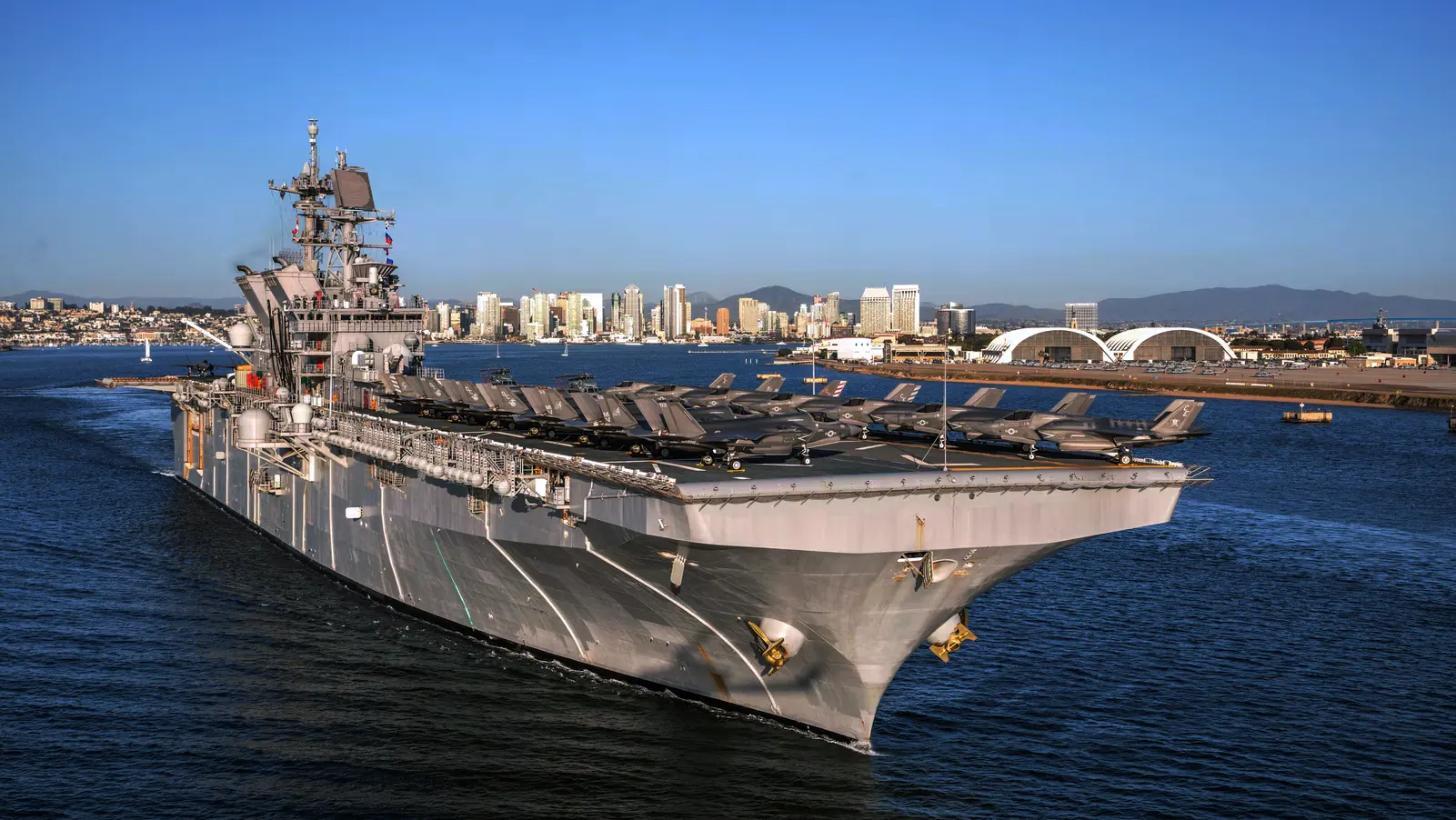
The United States Department of Defense has ordered the USS Tripoli (LHA-7), an America-class amphibious assault ship, to sail toward the Middle East alongside
the 31st Marine Expeditionary Unit.
The vessel had previously been operating in the Pacific near the Philippines before receiving orders to move toward the United States Central Command (CENTCOM)
area of responsibility.
Military planners estimate the force could arrive in the region within one to two weeks.
Although the Marine unit itself consists of roughly 2,200 to 2,500 Marines, the full deployment is often described in reports as involving around 5,000 personnel.
This figure includes both the Marines of the 31st MEU and the Sailors who crew the USS Tripoli and its accompanying ships in the Amphibious Ready Group.
Taken together, the deployment represents one of the most flexible expeditionary forces available to U.S. commanders.
Why the USS Tripoli Is a Powerful Asset
At first glance, the USS Tripoli resembles a small aircraft carrier and in many ways it functions like one.
The ship is frequently referred to as a “Lightning Carrier” because it can operate a squadron of F-35B Lightning II stealth fighter jets.
These aircraft provide advanced strike and reconnaissance capabilities, while the vessel can also deploy helicopters and tilt rotor aircraft such as the MV-22 Osprey.
This allows the ship to operate as a mobile airbase capable of launching combat operations, intelligence missions, or rapid troop deployments from international waters.
Unlike traditional land based air power, the ship can move quickly along the region’s coastline without relying on foreign bases.
The 31st Marine Expeditionary Unit: A “Swiss Army Knife” Force
The 31st Marine Expeditionary Unit (MEU) is specifically designed to provide maximum operational flexibility.
A standard MEU includes roughly 2,200 to 2,500 Marines, organized into four core operational elements that allow it to conduct a wide variety of missions.
The Four Pillars of the 31st MEU
Command Element
The operational brain of the force. It coordinates intelligence, communications, and mission planning across the entire unit.
Ground Combat Element
The primary fighting force. This includes a reinforced Marine infantry battalion equipped with artillery, amphibious vehicles, and reconnaissance teams.
Aviation Combat Element
The air component. It operates F-35B fighters, MV-22 Ospreys, and attack helicopters to provide air support and rapid troop movement.
Logistics Combat Element
The support network. It ensures the force remains self-sustaining by providing medical services, supply chains, maintenance, and equipment repair.
Together, these elements allow the MEU to conduct missions ranging from humanitarian relief operations to amphibious assaults and high-intensity combat.
Why the Deployment Matters Now
The timing of the deployment is closely linked to rising tensions around the Strait of Hormuz, the narrow waterway connecting the Persian Gulf to global shipping lanes.
Approximately 20 percent of the world’s oil supply passes through this corridor, making it one of the most strategically important maritime chokepoints on the planet.
Iran has threatened to disrupt shipping traffic as the conflict intensifies, raising fears of a major global energy shock.
Secretary of War Pete Hegseth recently stated that the United States “will not allow the Strait of Hormuz to remain contested.”
That statement underscores why Washington is reinforcing its naval presence in the region.
By deploying an amphibious assault group, U.S. commanders gain the ability to rapidly protect shipping lanes, escort commercial vessels, or respond to attacks on maritime infrastructure.
Does This Mean a Ground Invasion of Iran ?
Despite the scale of the deployment, there is currently no indication that the
United States is preparing a conventional ground invasion of Iran.
The Marines of the 31st MEU remain at sea aboard the USS Tripoli and its supporting ships.
However, the broader U.S. military presence in the Middle East remains significant.
Thousands of American service members are already stationed at major regional bases in countries such as:
- Qatar
- Bahrain
- Kuwait
- Iraq
These forces primarily support air operations, missile defense systems, and regional security missions.
While the newly deployed Marines are not currently tasked with ground combat operations, they provide rapid response capability for situations such as:
- protecting shipping routes
- reinforcing embassies
- evacuating civilians
- securing strategic facilities
At the same time, Donald Trump has notably refused to rule out the possibility of deploying ground troops in the future, leaving open the possibility of further escalation if the conflict worsens.
The Strategic Message Behind the Deployment
Beyond its immediate military capabilities, the deployment of the USS Tripoli sends a broader geopolitical signal.
It demonstrates that the United States can rapidly reposition powerful forces across the globe in response to emerging crises.
At the same time, keeping those forces offshore rather than on Iranian soil reflects a careful balancing act.
Washington appears to be attempting deterrence without triggering a full scale regional war.
What Happens Next
Several key developments could determine how the situation unfolds in the coming weeks.
Control of the Strait of Hormuz
Any attempt by Iran to block the waterway could trigger direct military intervention to protect global shipping.
Regional Missile Escalation
Continued missile attacks across Gulf states could draw additional countries deeper into the conflict.
Naval Confrontations
Further clashes between Iranian naval forces and U.S. or allied ships could rapidly escalate tensions.
Diplomatic Efforts
Behind the scenes, global powers may attempt to broker de escalation before the crisis spreads further.
The Strategic Stakes
The deployment of the USS Tripoli and the 31st Marine Expeditionary Unit represents
a major shift in the military balance surrounding the current Middle East crisis.
It does not signal an invasion but it dramatically increases the United States’ ability to respond to sudden escalation.
With energy markets watching the Strait of Hormuz and regional tensions continuing to rise, the arrival of this powerful amphibious force highlights a critical reality:
Operation Epic Fury is evolving into a broader strategic confrontation that could reshape the balance of power across the Middle East.