The global energy system is not reacting to rhetoric. It is reacting to force.
As of March 1, 2026, the Strait of Hormuz has not been formally closed through international maritime law. No NAVAREA warning has been filed with the International Maritime Organization.
But in practical terms, the waterway has been effectively shuttered via military edict and VHF radio warnings broadcast by Iran’s Islamic Revolutionary Guard Corps (IRGC), instructing vessels that transit is “banned.”
For energy markets, the distinction between legal closure and enforced blockade is irrelevant.
What matters is this: ships are not moving.
A Market Pricing in Shock
With roughly 20% of global seaborne oil and LNG flows passing through Hormuz, traders are repricing supply risk in real time.
Because exchanges were closed over the weekend, much of the adjustment occurred in over the counter markets. When full trading resumes, analysts expect significant upward gaps.
- Brent crude projected reopen: $90–$100
- Escalation risk scenario: $120+
- Severe infrastructure hit scenario: $140–$150
Energy strategist Helima Croft of RBC warned today that if Saudi Arabia’s Abqaiq or Khurais facilities are struck in a potential “second wave,” markets could briefly spike toward $150 at Monday’s open.
This is not routine volatility. It is structural repricing.
The Political Shockwave: Khamenei’s Death
The confirmed death of Iran’s Supreme Leader, reported by state media and international outlets earlier today, has added a powerful war premium to energy pricing.
Leadership transitions in Tehran are inherently destabilizing. In the immediate aftermath, markets are pricing in:
- Escalation risk from hardline factions
- Reduced internal coordination
- Higher probability of retaliatory actions
Energy traders do not wait for clarity. They price uncertainty immediately.
OPEC+ Responds But Can’t Deliver
OPEC+ convened an emergency meeting of the so called
“Voluntary Eight” (V8), announcing a 206,000 barrels per day increase.
On paper, it exceeded expectations.
In practice, it is widely viewed as symbolic.
The problem is not production capacity. It is transport.
Most spare capacity roughly 3.5 million barrels per day sits inside
the Gulf. Without safe transit through Hormuz, additional barrels remain stranded.
The Bypass Reality
- Saudi East–West pipeline
- UAE Habshan–Fujairah pipeline
Combined capacity: ~2.6 million barrels per day
Normal Hormuz flows: ~20 million barrels per day
The arithmetic is unforgiving.
Logistics now outweigh quotas.
LNG: The Hidden Flashpoint
Oil commands headlines. Liquefied natural gas may trigger the deeper shock.
Qatar accounts for roughly 20% of global seaborne LNG exports and every cargo must transit Hormuz.
Current situation:
- At least 15 Qatari LNG vessels stalled or rerouting
- Major shipping companies suspending Gulf transits
- No viable pipeline alternative
Asia’s Immediate Risk
Japan and South Korea rely heavily on Qatari LNG. A blockade lasting more than a week risks:
- Power rationing
- Emergency fuel switching
- Record spikes in the JKM benchmark
Europe’s Secondary Shock
The Dutch TTF gas benchmark is expected to surge above €90/MWh, triggering renewed bidding wars between Europe and Asia for U.S. cargoes.
Unlike oil, there is no meaningful spare LNG capacity globally to compensate for an extended disruption.
A Supply Chain “Heart Attack”
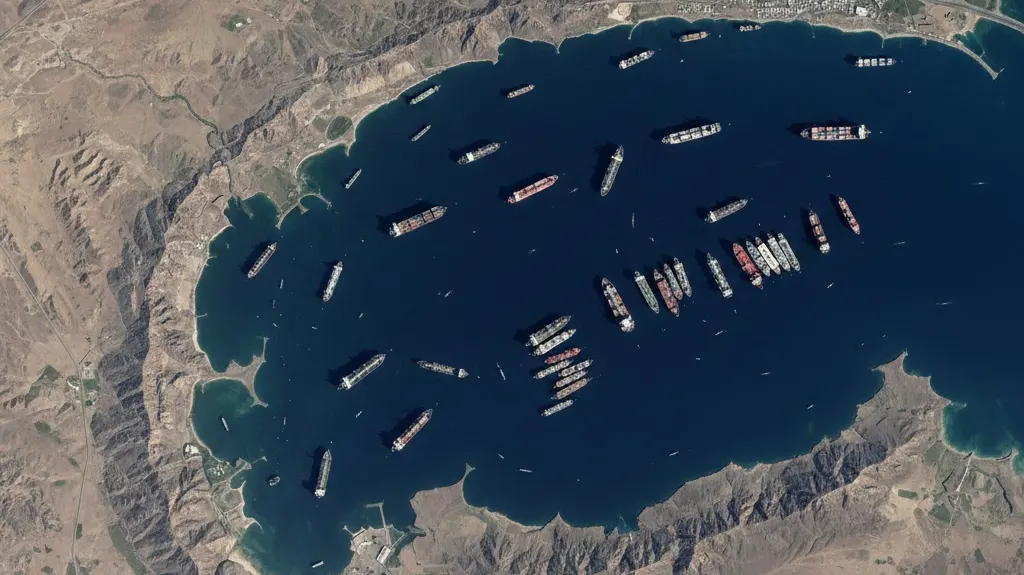
An estimated 170 container ships and dozens of tankers remain inside the Gulf.
That represents roughly 1.4% of the entire global container fleet currently sitting idle an extraordinary statistic in a just in time global economy.
Insurance markets have compounded the crisis:
- War risk coverage withdrawn by major marine insurers
- Premiums up 50–60% overnight
- Some voyages economically impossible
Even vessels technically able to sail may not have financial clearance to do so.
This is both a physical blockade and a financial one.
What Happens to U.S. Gas Prices ?
Even if no American flagged vessels transit Hormuz, U.S. drivers will feel it.
Oil is globally priced.
When 20% of supply is constrained, global bidding intensifies.
Projected impact:
| Metric | Friday | Midweek Estimate |
|---|---|---|
| WTI Crude | $67 | $90–$100 |
| National Gas Average | $2.80 | $3.30–$3.50 |
| NY & CA Impact | — | +$0.50–$0.75 per gallon |
Some analysts warn state attorneys general may issue price gouging advisories as early as tomorrow if regional spikes accelerate.
Washington’s Options Limited and Tactical
There are no active export bans under consideration.
Instead, the administration has favored targeted economic measures, including tariff threats such as the recent 25% warning against Chinese purchases of Iranian crude rather than restricting U.S. oil exports domestically.
Strategic Petroleum Reserve (SPR)
An emergency release is likely under review, but:
- Reserve levels remain below historical norms
- Markets treat releases as temporary
- SPR barrels do not reopen Hormuz
Export Restrictions ?
Reinstating a crude export ban would require congressional action or aggressive emergency powers that would face legal challenges.
For now, policy tools are reactive, not structural.
The Real Risk: A Reset, Not a Spike
If the de facto blockade persists beyond several days, markets may not simply spike they may reset.
- Brent stabilizing above $120
- LNG benchmarks entering sustained crisis territory
- Renewed inflationary pressure globally
The energy shock of 2022 was driven by sanctions and gradual supply reallocation.
This crisis is driven by chokepoint paralysis.
When Transit Stops, Markets Reprice
The Strait of Hormuz has not been formally closed on paper.
But when ships halt, insurers withdraw, and tankers idle, the practical outcome is the same.
The global energy system depends not only on production but on movement.
Right now, movement has stopped.
And until it resumes, markets will continue pricing the possibility
that $140 per barrel is not an extreme outcome.
It is a baseline risk.