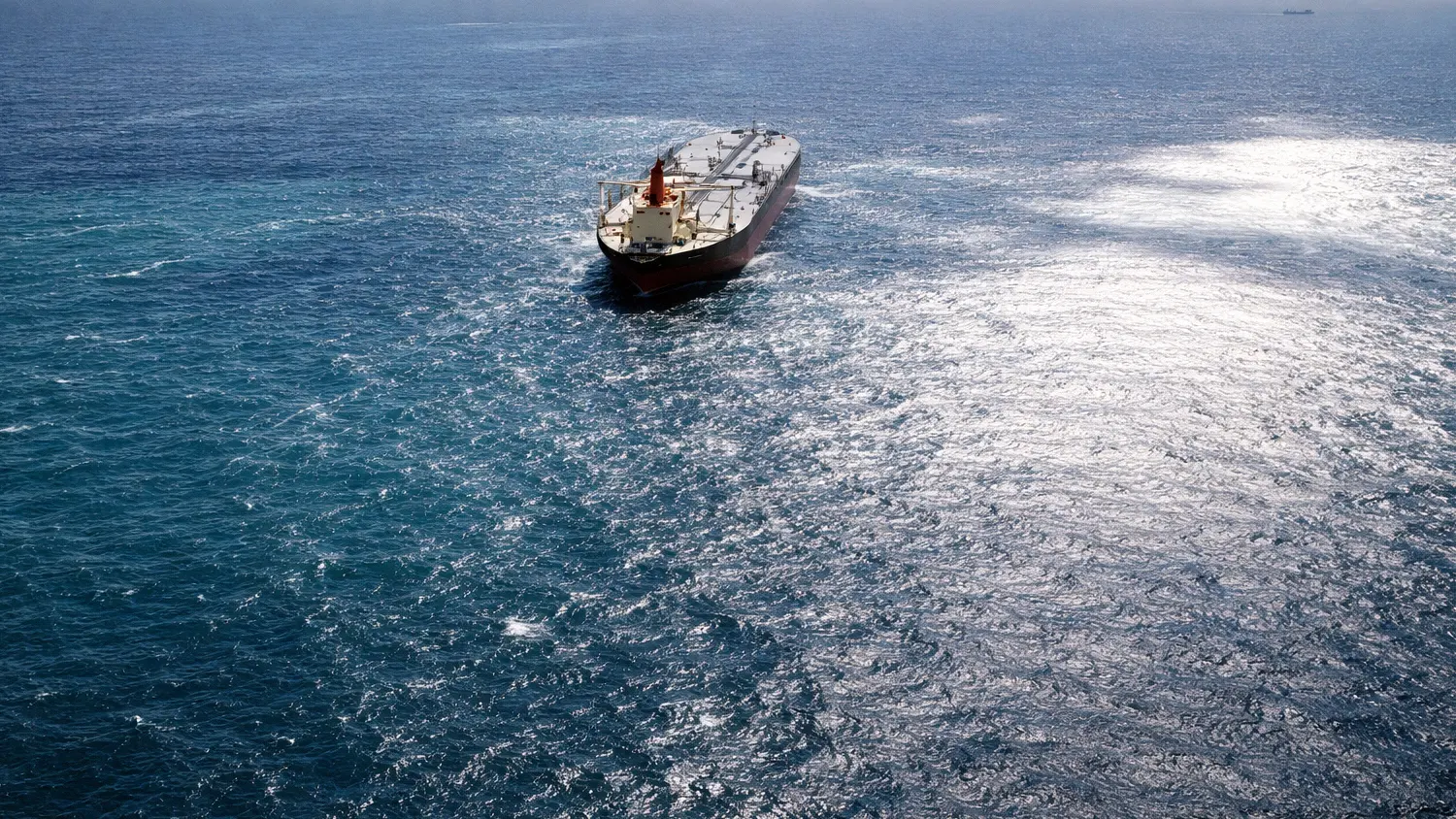
Global oil markets are once again on edge. Rising tensions around the Strait of Hormuz and Iran’s key export hub, Kharg Island, have pushed oil prices above $100 per barrel.
Although the waterway has not been formally closed, the risks surrounding it have effectively slowed tanker traffic to a crawl. Because of this disruption, the International Energy Agency (IEA) has announced the largest emergency oil release in its history
400 million barrels.
Yet even that massive intervention has not fully reassured markets.
Oil traders are reacting not only to supply disruptions, but also to the fear that the crisis could escalate further.
The Strait of Hormuz: A Global Energy Chokepoint Under Pressure
The Strait of Hormuz is one of the most important shipping routes in the global economy. Around 20 million barrels of oil pass through it every day roughly one fifth of the world’s supply.
Right now, the waterway has not been legally blockaded. However, Iran has declared it closed to “enemies” and their allies. That statement alone has dramatically increased the perceived risk for commercial shipping.
Because of this:
- Many tanker operators are refusing to enter the area
- Insurance costs have skyrocketed
- Maritime traffic has dropped sharply
Some ships are still passing through under coordinated arrangements, but the lack of guaranteed safety means the route is effectively functioning under severe restrictions.
For global energy markets, uncertainty alone can drive prices higher.
Kharg Island: The Oil Facility Markets Are Watching Closely
Another major concern for traders is Kharg Island, Iran’s primary oil export terminal.
The facility is critical because about 90% of Iran’s crude exports are processed and loaded there.
Recent U.S. strikes occurred near the island. However, reports indicate that the attacks targeted military installations rather than the oil infrastructure itself.
That distinction is important. The export facilities remain intact.
Still, markets remain extremely sensitive to any news involving Kharg Island.
The facility represents a single point of failure for a large portion of Iran’s oil exports.
Even the possibility of damage to such a critical hub has pushed Brent crude prices into the $104–$106 per barrel range.
The “Risk Premium” Driving Oil Prices Higher
Oil prices are not rising only because of disrupted supply.
Markets are also pricing in fear.
In financial terms, this is known as a “risk premium.”
Simply put, traders are paying extra for oil today because they fear the situation could worsen tomorrow.
Even though key infrastructure remains operational, investors are preparing for scenarios such as:
- A prolonged shipping disruption
- Damage to export facilities
- A broader regional escalation
In other words, the market is pricing the possibility of future supply shocks even if they haven’t happened yet.
The IEA’s Historic 400 Million Barrel Oil Release
To ease market pressure, the International Energy Agency has announced a coordinated release of roughly 400 million barrels from strategic reserves.
This is a historic move.
- It is the sixth coordinated emergency release in IEA history
- It is more than double the size of the reserve release following the 2022 Ukraine crisis
The goal is straightforward: increase available supply and prevent prices from spiraling higher.
However, markets have reacted cautiously.
Why the Massive Oil Release Isn’t a Long Term Fix
At first glance, 400 million barrels sounds enormous.
But in the context of global demand, the numbers tell a different story.
The world consumes around 100 million barrels of oil per day.
This means the entire reserve release represents only about four days of global consumption.
Because of this, analysts view the intervention as a temporary buffer rather than a permanent solution.
The fundamental issue remains the same: tanker traffic through the Strait of Hormuz has not returned to normal.
Why Asia Is Receiving Oil First
The release of reserves is also being rolled out gradually.
Asia and Oceania are receiving priority shipments, while Europe and the Americas are expected to begin receiving supplies later in March.
This approach reflects several factors.
First, many Asian economies rely heavily on oil shipments that pass directly through
the Strait of Hormuz.
Because of this dependence, the region experienced the most immediate supply stress.
Second, the logistics of releasing hundreds of millions of barrels are complex.
Much of the oil is stored in underground caverns and large tank farms, which require time to ramp up extraction and transport.
The Coalition Problem Adding to Market Anxiety
Another factor contributing to market uncertainty is geopolitics.
President Donald Trump has called for an international maritime coalition to secure tanker routes through the Strait of Hormuz.
However, the response from key allies including Japan and the United Kingdom has so
far been cautious and limited.
Because the coalition effort has not yet fully materialized, traders remain uncertain about how quickly tanker traffic can safely return.
This lack of a clear international security plan is one reason the oil market remains nervous.
The Bigger Financial Picture
Ultimately, the current strategy is best described as a bridge strategy.
The 400 million barrel release buys time for diplomatic negotiations or security efforts that could reopen the Strait of Hormuz.
But the scale of the disruption highlights the challenge.
If roughly 20 million barrels per day are affected, even massive reserve releases cannot replace that supply indefinitely.
Until tanker traffic normalizes, oil markets will likely remain sensitive to every headline coming out of the region.
And as long as the Strait of Hormuz remains unstable, energy markets will continue to react to every new development.