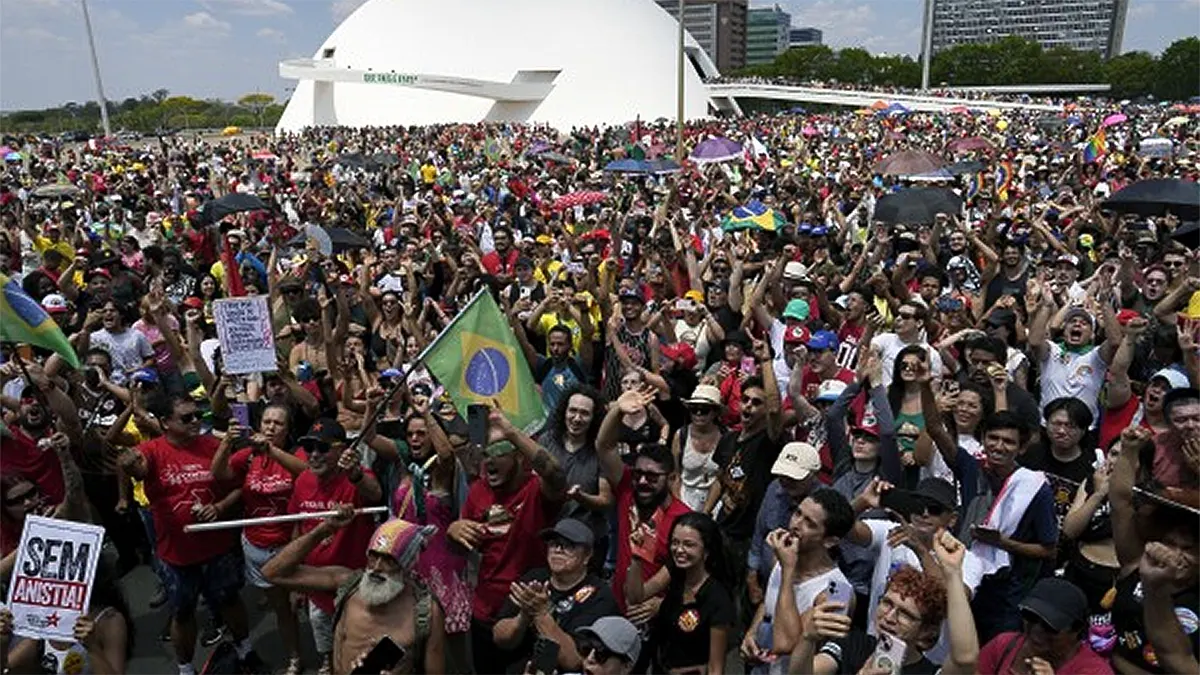
Tens of thousands of people filled the streets across Brazil on Sunday, September 21, 2025, to protest against a controversial proposal that could grant amnesty to former President Jair Bolsonaro and his allies. Demonstrations erupted in major cities including São Paulo and Rio de Janeiro, with crowds demanding accountability for those involved in the January 8, 2023 attempted coup.
The protests quickly became one of the largest pro-democracy mobilizations since President Luiz Inácio Lula da Silva returned to office in 2022. Protesters waved banners reading “No Amnesty” while chanting against what many described as an attempt to protect political elites from justice.
Why Brazilians Are Protesting
At the center of the controversy is a proposed amnesty bill currently moving through Brazil’s Congress. The bill would pardon individuals convicted for participating in the January 8 attacks on government institutions in Brasília, when Bolsonaro supporters stormed key buildings after Lula’s election victory.
Critics fear the proposal could also benefit Bolsonaro himself. Earlier this year, Brazil’s Supreme Court sentenced the former president to more than 27 years in prison for his role in allegedly plotting the coup attempt.
For many protesters, the issue goes beyond politics. They believe granting amnesty would send a dangerous message that attacks on democracy can go unpunished.
Another Bill Sparks More Concern
Public anger has also intensified over another proposal known as the “Shielding Bill” (PEC da Blindagem). The constitutional amendment would require a secret vote in Congress before lawmakers could face criminal charges or arrests.
Opponents argue the measure would create a layer of political protection for members of Congress and weaken accountability. Some lawmakers who supported the bill later claimed they were pressured into voting in favor of it.
Together, the two proposals have fueled accusations that Brazil’s political system is trying to shield powerful figures from legal consequences.
Artists and Activists Join the Movement
The demonstrations attracted a broad coalition of political groups, labor unions, students, and cultural figures. Legendary Brazilian musicians Caetano Veloso, Chico Buarque, and Gilberto Gil joined the rallies, turning the protests into a symbolic defense of democracy.
The artists performed songs associated with resistance during Brazil’s military dictatorship, drawing comparisons between the country’s authoritarian past and the current political tensions.
In São Paulo, demonstrators unfurled a massive Brazilian flag carrying the message “No Amnesty.” Many saw it as a direct response to recent pro-Bolsonaro gatherings where supporters displayed large American flags.
A Nation Deeply Divided
The protests also highlighted Brazil’s growing political polarization. According to recent polling, around half of Brazilians believe Bolsonaro should serve his prison sentence, while a large minority opposes severe punishment.
Despite the divisions, protesters say the demonstrations are about defending democratic institutions rather than supporting a political party.
Many fear that approving amnesty for those involved in the coup attempt could weaken trust in Brazil’s judicial system and encourage future attacks on democracy.
Global Attention on Brazil
The international community is closely watching the developments in Brazil. The January 8 attacks were widely condemned by world leaders, and the latest legislative battle is being viewed as another major test for the country’s democratic institutions.
Although the amnesty bill has advanced in the lower house of Congress, it still faces resistance in the Senate. President Lula has already promised to veto the proposal if it reaches his desk.
For now, the massive street demonstrations show that many Brazilians are unwilling to stay silent as the political battle over accountability continues.