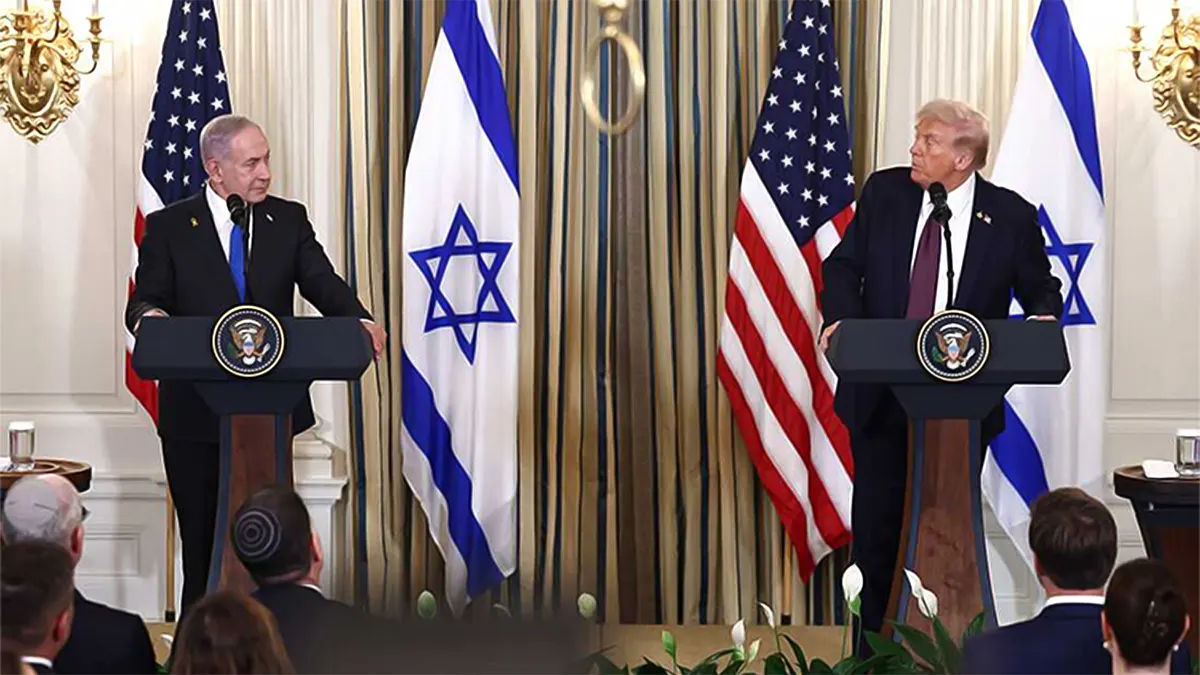
U.S. President Donald Trump and Israeli Prime Minister Benjamin Netanyahu have introduced a sweeping 20-point proposal designed to bring an end to the ongoing war in Gaza.
The plan, released by the White House on September 30, outlines an immediate ceasefire, the release of all remaining Israeli hostages, the disarmament of Hamas, and the creation of a temporary governing body for Gaza under international supervision.
The proposal is being presented as one of the most ambitious diplomatic efforts since the conflict began and has already received support from several Western and Middle Eastern nations.
Hostage Release at the Center of the Agreement
A key requirement of the plan is the return of all Israeli hostages currently being held in Gaza.
Under the proposal, Hamas would have 72 hours to release all surviving hostages and return the remains of those who have died after Israel publicly accepts the agreement.
U.S. and Israeli officials describe the hostage issue as a critical first step toward implementing a broader ceasefire and reconstruction process.
Large Prisoner Exchange Included in the Proposal
In exchange for the hostages, Israel would carry out a significant prisoner release.
The framework calls for the release of 250 Palestinian prisoners serving life sentences as well as 1,700 detainees arrested after the October 7, 2023 attacks, including all women and minors.
The proposal also includes the return of Palestinian remains. For every deceased Israeli hostage returned, Israel would transfer the remains of 15 Palestinians to their families.
Supporters of the plan argue that these measures could help build confidence between both sides during the initial stages of implementation.
Hamas Required to Disarm
One of the most controversial elements of the proposal is the demand for the complete demilitarization of Gaza.
Under the framework, Hamas would no longer be allowed to participate in governing the territory. Members who voluntarily surrender their weapons would be offered amnesty, while those wishing to leave Gaza could do so through internationally supervised arrangements.
Israeli leaders have repeatedly stated that removing Hamas’s military capabilities remains one of their primary objectives.
New Transitional Government Proposed for Gaza
The plan envisions a temporary governing body that would oversee Gaza after the conflict ends.
According to the proposal, administration of the territory would be transferred to an apolitical Palestinian committee operating under the supervision of an international “Board of Peace.”
The board would reportedly be chaired by Trump and include prominent international figures, including former British Prime Minister Tony Blair.
Its responsibilities would include managing reconstruction efforts, restoring essential services, and preparing Gaza for a future transfer of authority to the Palestinian Authority once internal reforms are completed.
Israeli Withdrawal Tied to Security Conditions
The proposal also outlines a phased withdrawal of Israeli forces from Gaza.
The Israel Defense Forces (IDF) would gradually pull back as demilitarization benchmarks are met and an International Stabilization Force (ISF) is deployed throughout the territory.
However, Israel would maintain a temporary security perimeter until international monitors determine that security conditions are stable.
The framework specifically states that Israel would not annex Gaza as part of the agreement.
International Support Builds Around the Proposal
The announcement has generated reactions from governments and political groups across the region and beyond.
Hamas Reviewing the Plan
Hamas has not issued a formal response. However, a senior official said the proposal would be reviewed alongside other Palestinian factions and discussed with mediators from Egypt and Qatar.
Palestinian Authority Welcomes Diplomacy
The Palestinian Authority expressed support for international mediation efforts while emphasizing that any long-term agreement should contribute to a future two-state solution.
Netanyahu Signals Continued Pressure
Netanyahu reiterated that Israel remains committed to achieving its military objectives regardless of Hamas’s decision.
He also stated that Israel would maintain a long-term security role in Gaza if necessary to prevent future attacks.
Western and Regional Leaders Show Support
Leaders from the United Kingdom and France called on Hamas to accept the proposal, while European Union officials indicated they were prepared to assist with implementation.
Meanwhile, foreign ministers from Saudi Arabia, Egypt, Jordan, and Qatar welcomed the initiative and described it as a potentially important step toward regional stability.
What Happens Next?
The future of the proposal now largely depends on Hamas’s response.
If accepted, the agreement could pave the way for a ceasefire, the release of hostages, a large-scale prisoner exchange, and the beginning of Gaza’s reconstruction.
If rejected, officials have warned that military operations could continue or even intensify with continued support from Washington.
For now, international attention remains focused on whether the proposal can transform months of conflict into a viable path toward peace.