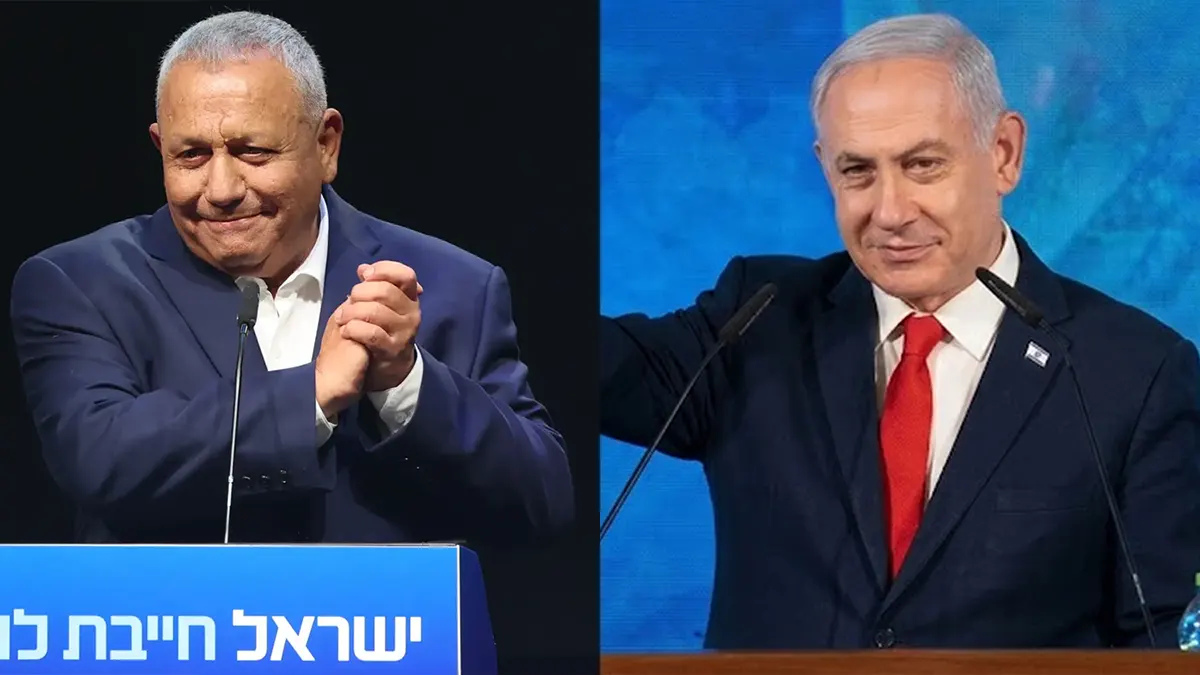
Israel’s October 27, 2026 election has produced no clear winner. Neither Prime Minister Benjamin Netanyahu’s bloc nor challenger Gadi Eisenkot’s bloc has reached the 61 seats needed to govern in the 120-seat Knesset. Turnout was around 77.7%, the highest in 27 years. That makes this a vote the public clearly cared about, even if it settled very little.
Likud Leads Alone, but Netanyahu’s Bloc Still Falls Short
Likud is the largest single party, with roughly 26 to 27 seats. Eisenkot’s new Yashar party follows with about 21.
The bigger picture is tighter. Netanyahu’s allies, made up of Likud, ultra-Orthodox parties and the far right, hold roughly 52 to 53 seats. That is well short of the 68 his coalition held in the outgoing Knesset. Eisenkot’s side of the Jewish opposition sits closer to 49 to 51.
Netanyahu’s bloc is disciplined and moves as one. He would need only 8 or 9 more seats to cross the line. The problem is finding them. Almost every other party ran on a firm “Never Netanyahu” promise.
Why Eisenkot’s Bigger Tent Is Harder to Hold Together
Eisenkot, a former army chief, leads a wide opposition. It includes centrists, secular nationalists like Avigdor Liberman, and progressives like Yair Golan. Everyone wants Netanyahu out, but few agree on much else.
His math gets harder still. To reach 61, he would likely need the Arab-led parties, which are projected to win around 18 to 19 seats. But some partners inside his own alliance refuse to sit in a coalition with them. That leaves him with a problem that has no easy fix: he has the numbers on paper, but not the unity to use them.
The Arab Parties Could Decide Everything
With neither side able to reach 61 alone, power shifts to the smaller players.
- Arab-led parties (Joint List and Ra’am): With their combined seats, they could back an Eisenkot-led minority government from the outside. Political taboos on both sides make that hard to arrange.
- Right-leaning and centrist figures: Leaders like Naftali Bennett or Liberman could tip the balance, either by joining a unity government or by backing Eisenkot.
Analysts see a stalemate as the most likely result. Netanyahu would probably stay on as caretaker prime minister in the meantime.
How Netanyahu’s Trials Shape the Whole Race
Netanyahu has been on trial for years in three cases:
- Case 1000: He is accused of accepting luxury gifts, like cigars and champagne, worth nearly 700,000 shekels (about $190,000) in exchange for political help.
- Case 2000: He is accused of seeking friendly coverage from a major newspaper in return for legislation that would hurt its rival.
- Case 4000: This is the most serious charge. He is accused of giving a telecom company regulatory benefits worth hundreds of millions in exchange for positive news coverage.
He also faces an International Criminal Court warrant tied to the war in Gaza.
The cases have split voters into two camps of roughly equal size. His critics see proof of corruption and damage to democratic norms, and many refuse to serve with him. His supporters call the trials a “witch hunt” and still see him as the strongman who can keep Israel safe. That loyal base is why Likud stays on top, and the other camp’s refusal to work with him is why he can’t reach 61.
A Record-Setting Prime Minister
Netanyahu is Israel’s longest-serving prime minister, with nearly 19 years in office across three stints:
- 1996 to 1999: He became the youngest prime minister in Israeli history.
- 2009 to 2021: He passed founding father David Ben-Gurion, who served about 13.5 years, to become the longest-serving leader.
- December 2022 to now: He returned at the head of a right-wing and religious coalition.
Two Very Different Visions of Security
On the basics, the two men agree. Both reject Palestinian statehood, and both want Hamas and Hezbollah neutralized. Their methods differ.
- Core approach: Netanyahu favors continuous preemptive action and buffer zones along Israel’s borders. Eisenkot wants a structured national security plan with clear, achievable goals instead of open-ended conflict.
- Iran: Netanyahu pushes maximum pressure and confrontation. Eisenkot supports deterrence paired with intelligence sharing and diplomacy, especially with the U.S.
- Gaza: Netanyahu stresses “total victory” over Hamas first. Eisenkot says a clear “day after” plan is needed, and he wants hostage releases treated as the top priority.
- Allies: Netanyahu is willing to clash openly with Washington. Eisenkot sees close ties with the U.S. and regional partners as essential to Israel’s defense.
What Happens in the Weeks Ahead
The next steps are fairly clear, even if the outcome is not:
- Final results: The Central Elections Committee is expected to publish official numbers by November 4, 2026.
- Mandate: President Isaac Herzog will consult party leaders. He will then give one candidate 28 days to build a coalition.
- Possible repeat vote: If both sides try and fail to reach 61, the Knesset dissolves and Israel heads back to the polls.
For now, Netanyahu has a slight edge because his bloc is closer to 61 and more united. But a path to power is not the same as the power itself, and neither man has found one yet.