The United States, Denmark and Greenland have signed a new security agreement that dramatically expands the American military role in Greenland while leaving the island’s sovereignty unchanged.
Signed in New York on September 22, 2026, on the sidelines of the United Nations General Assembly, the agreement amends and supplements the long-standing 1951 U.S.-Denmark defense agreement covering Greenland. It gives Washington broader military access, allows the creation of two additional U.S. Defense Areas and establishes new restrictions on the military and economic presence of non-NATO states.
The deal follows months of tension over President Donald Trump’s earlier calls for the United States to acquire Greenland. Instead of changing ownership of the Arctic territory, the agreement creates a framework in which U.S. military access becomes substantially broader while Greenland remains part of the Kingdom of Denmark.
A larger U.S. military footprint in Greenland
The most immediate change is military.
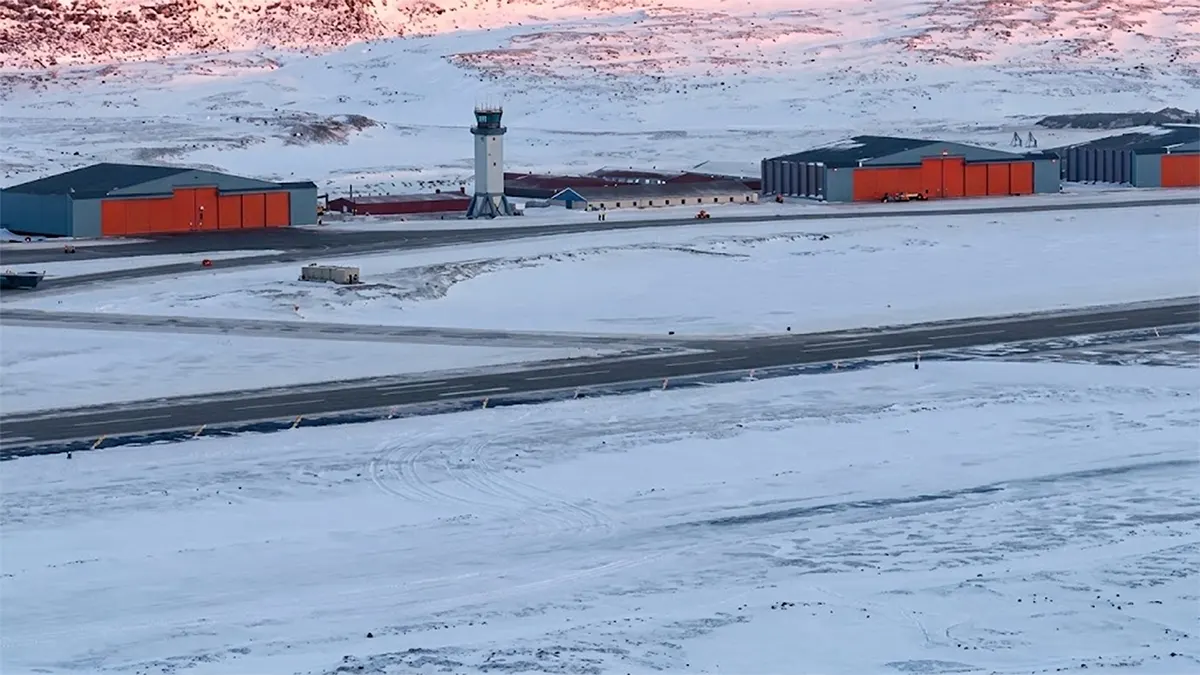
The agreement allows the United States to modernize and expand its activities at Pituffik Space Base, the existing U.S. installation in northwestern Greenland. It also provides for additional Defense Areas at Narsarsuaq in southern Greenland and Mestersvig in eastern Greenland. The precise technical arrangements for those sites are still to be agreed by the parties.
The agreement goes further than simply identifying new bases. It permits the United States to establish additional Defense Areas in Greenland through a consultation process if the parties determine that they are needed for the defense of Greenland, the wider NATO area or North America.
The text also gives U.S. forces extensive access to Greenland outside the designated Defense Areas. U.S. military aircraft may fly over and land in Greenland, while U.S. public vessels can obtain undersea access and movement within Greenland’s territorial waters, subject to the terms set out in the agreement.
That makes the agreement strategically significant well beyond the physical footprint of the bases.
Greenland sits between North America and Europe and is central to surveillance and military planning across the North Atlantic and Arctic. The agreement specifically calls for stronger NATO engagement in the region, including planning, exercises, military presence and intelligence gathering.
Greenland remains Danish territory
Despite the expanded American military role, the agreement does not transfer ownership of Greenland to the United States.
Its preamble explicitly reaffirms the sovereignty and territorial integrity of the Kingdom of Denmark while recognizing that the people of Greenland have a right to self-determination under international law.
That distinction is important because the agreement emerged after months of political tension over Trump’s previous interest in acquiring Greenland.
The final arrangement therefore represents a very different outcome from a purchase, annexation or territorial transfer. Washington receives expanded defense access, while Copenhagen and Nuuk retain their existing constitutional positions.
The agreement also attempts to give Greenland a more direct role in the security arrangement. It was signed by the leaders of all three parties, making Greenland a formal participant in the updated defense framework rather than simply the territory covered by a bilateral U.S.-Danish agreement.
Non-NATO military forces face a direct prohibition
One of the strongest provisions concerns third-country military activity.
Article IX states that states that are not members of NATO cannot establish manned or unmanned military installations in Greenland or maintain a persistent military presence there, unless the parties agree otherwise.
The provision is particularly relevant to the strategic competition involving China and Russia, although the treaty itself uses the broader category of non-NATO states rather than naming either country individually.
The agreement also contains measures aimed at espionage. The United States, Denmark and Greenland agree to cooperate against espionage activity, with Danish authorities maintaining close contact with U.S. authorities and other partners where necessary.
Together, these provisions establish a much clearer security boundary around Greenland than existed under the previous arrangements.
Foreign investment is also subject to tighter security scrutiny
The agreement does not simply address military bases. It also targets strategic foreign investment.
Article X states that investors from states that are not NATO members, NATO partners or EU member states cannot obtain control, significant influence or access to certain non-public information in particularly sensitive sectors or activities when that could threaten national security or public order. Exceptions can be made where the parties determine that the activity does not present such a threat.
Importantly, the treaty’s mechanism is more nuanced than a blanket U.S. veto over all foreign investment.
Greenland is responsible for applying its current or future investment-screening laws, working closely with Danish authorities. Danish authorities are then expected to consult closely with their U.S. counterparts and other partners.
In practical terms, however, the provision creates a much stronger Western security filter around strategically sensitive investment in Greenland.
That matters because Greenland possesses resources and infrastructure that have attracted international attention, including rare earth elements, airports, ports and communications infrastructure.
China’s earlier interest provides important context
The new investment restrictions did not emerge in a vacuum.
China has previously pursued commercial opportunities in Greenland, including infrastructure and mineral projects, prompting security concerns in Denmark, Greenland and the United States.
In 2016, Chinese company General Nice Group showed interest in acquiring the former Danish naval facility at Grønnedal in southern Greenland. Danish authorities subsequently moved to restore a defense presence at the site. Contemporary reporting linked the decision to concerns about Chinese strategic influence, although the Danish government did not publicly describe the Chinese interest as the formal reason for the move.
China also became involved in Greenland’s airport infrastructure debate.
China Communications Construction Company was among the companies prequalified for Greenland’s airport projects in 2018. In 2019, CCCC withdrew its bid after Denmark had agreed to finance the projects. Reuters reported at the time that the projects had become strategically important to both Washington and Beijing.
The third major example is Greenland’s Kvanefjeld rare-earth and uranium project.
Chinese rare-earth company Shenghe Resources acquired a 12.5% stake in Greenland Minerals and Energy in 2016 and subsequently became involved in arrangements concerning the project’s potential output.
These cases illustrate why critical infrastructure and mineral resources have become part of the broader security debate surrounding Greenland.
The Arctic competition is about more than military bases
Greenland’s strategic importance comes from its geography as much as its natural resources.
Its position in the North Atlantic gives it importance for early-warning systems, air and maritime surveillance, communications and the monitoring of military movements between the Arctic and the North Atlantic.
The agreement’s emphasis on NATO planning, intelligence gathering and expanded U.S. access reflects that wider strategic picture. The treaty also specifically recognizes the need for U.S. access to support defense of Greenland, the NATO area and the American continent, including through the proposed Golden Dome defense system.
For Washington, the agreement therefore provides a long-term framework for operating from a strategically important Arctic location without acquiring the territory itself.
For Denmark and Greenland, it provides a formal structure for that expanded American presence while keeping the territory within the existing constitutional framework.
The agreement has no expiration date
Perhaps the most consequential provision is Article XI.
The agreement does not have an end date. It can only be amended by mutual consent under the procedures contained in the underlying 1951 defense agreement.
That makes the arrangement considerably more durable than a temporary basing agreement.
Its implications become even more significant if Greenland eventually becomes independent.
What happens if Greenland becomes independent?
The treaty directly addresses that possibility.
If Greenland exercises its right to self-determination and becomes an independent state, Denmark and Greenland are required to ensure that the new Greenlandic government agrees to remain in NATO and affirmatively assumes the rights and obligations that Denmark currently holds under the defense agreement.
Those obligations include the broader defense arrangements and subsequent implementation agreements.
This does not eliminate Greenland’s legal right to pursue independence. Instead, it establishes conditions for how the existing security relationship would continue after independence.
That makes Article XI one of the agreement’s most consequential long-term provisions. Greenland’s constitutional status could change, but the defense framework is designed to survive that change.
For an independent Greenland, that would mean inheriting an existing security relationship rather than starting from scratch.
A compromise after months of confrontation
The agreement also changes the political trajectory of the Greenland dispute.
Trump had previously argued that Greenland was strategically important to U.S. national security and had publicly discussed acquiring the territory. Those proposals created significant concern in Denmark and Greenland and strained relations within the NATO alliance.
The agreement provides a different path.
The United States gets expanded military access without obtaining Greenland. Denmark retains sovereignty, while Greenland retains its right to self-determination.
That does not mean every disagreement has disappeared. The implementation of the new Defense Areas, investment screening and military access will require continuing cooperation between Washington, Copenhagen and Nuuk.
The treaty also requires parliamentary procedures in Denmark and Greenland before it enters into force. The September 22 signing therefore represents the conclusion of negotiations, but not the final domestic legal step.
What the agreement changes and what it does not
The simplest way to understand the deal is to separate security control from territorial sovereignty.
The United States gains significantly greater military access. Pituffik can be expanded, new Defense Areas can be established at Narsarsuaq and Mestersvig, and American aircraft and vessels receive broad access provisions.
Non-NATO states face restrictions on military installations and persistent military presence. Strategic investments by investors from certain non-NATO and non-EU states face tighter scrutiny under Greenlandic investment-screening laws, with close Danish-U.S. consultation.
But Greenland is not transferred to the United States.
Its sovereignty remains within the Kingdom of Denmark, while the agreement recognizes Greenland’s right to self-determination. If independence eventually occurs, the treaty is designed to carry the defense relationship forward rather than allowing it to expire.
The result is therefore less a change in who owns Greenland than a fundamental change in how Greenland’s security environment is organized.
The agreement places Greenland at the center of a more integrated North American and NATO Arctic defense structure, while limiting the ability of outside powers to establish military or strategic footholds.
For Washington, that means long-term access.
For Denmark, it means retaining sovereignty while strengthening the territory’s defense framework.
For Greenland, it means greater international involvement in its security affairs while preserving its constitutional path toward possible independence.
And for the wider Arctic, the agreement marks a significant shift toward a more formalized Western security presence at a time when competition over the region’s geography, infrastructure and resources is intensifying.