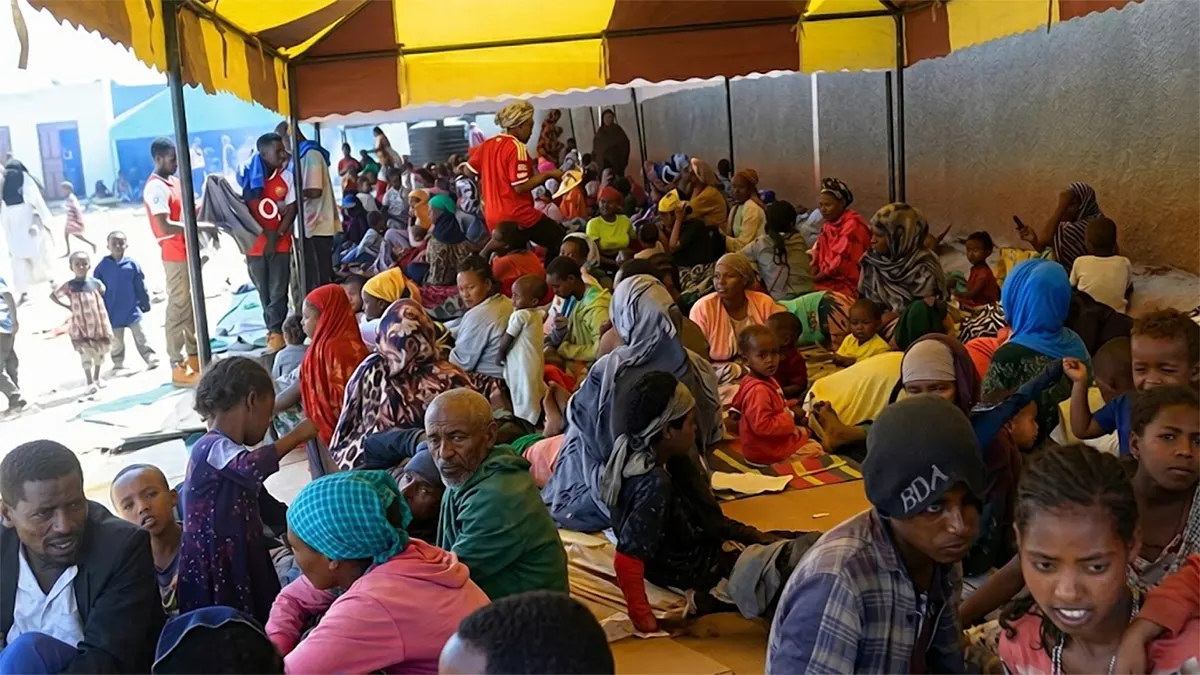
Nearly 40,000 people have reportedly fled violence in Ethiopia and sought refuge in northern Kenya, prompting urgent calls for humanitarian assistance as shortages of food, clean water, shelter and medical services threaten to worsen conditions in the border town of Moyale.
The Kenya National Commission on Human Rights (KNCHR) raised the alarm on October 27, 2026, warning that the growing influx is placing severe pressure on local communities and essential services in Moyale, Marsabit County. The displaced people fled clashes involving security forces and armed civilians linked to Ethiopia’s Oromia and Somali regional states.
The crisis has developed rapidly. Initial reports on October 22 described hundreds of people crossing into Kenya. By October 25, Kenyan authorities reported that approximately 35,000 Ethiopians had sought refuge across the border. The KNCHR subsequently cited an estimated 40,000 people.
Thousands Seek Shelter in Churches, Schools and Local Homes
According to the KNCHR, more than 15,000 displaced people are staying in eight temporary shelters, while over 20,000 others are living with relatives, friends and host families.
Reported accommodation sites include St. Mary’s Catholic Church, Harhosha Secondary School, Manyatta Burji and Lanzi Mosque Hospital, alongside other locations in and around Moyale. People have crossed through entry points including Sessi, Kore, Biashara and Foundation.
Women, children and other vulnerable people make up a significant proportion of those fleeing the violence. Many families have arrived with few belongings, leaving them dependent on emergency assistance and the generosity of local residents.
The large number of people staying with host families has created additional pressure on households already facing limited access to food, water and other essential supplies. Humanitarian assistance must therefore reach both people in temporary shelters and those accommodated within local communities.
Rain and Poor Sanitation Raise Health Concerns
The growing displacement has intensified concerns about public health, particularly as rainfall across the Moyale area increases the risk of exposure and complicates sanitation efforts.
Overcrowded shelters and inadequate toilet facilities could create conditions for waterborne and other communicable diseases to spread. Limited access to clean water, hygiene products and medical services adds to the risks facing displaced families.
The KNCHR has called for urgent medical assistance, including emergency treatment, reproductive healthcare, safe delivery services and postnatal support. Its statement also highlighted reports of four births involving women at the Manyatta Burji and Bitiye sites, underlining the need for maternal and newborn care.
Children, older people, people with disabilities and pregnant women require particular attention. Timely medical assessments, vaccination services and appropriate shelter will be important in reducing preventable illness and protecting those at greatest risk.
Kenya Red Cross and County Authorities Mobilize Emergency Aid
Kenyan authorities and humanitarian responders have begun providing emergency assistance to families arriving from Ethiopia.
The Marsabit County Government has distributed food supplies, including rice and beans, while the Kenya Red Cross Society has been coordinating relief efforts, including food distribution and shelter assistance. The Kenya News Agency reported that the Red Cross began distributing shelter kits targeting 1,000 households and providing cereals and porridge for children under five.
Local health officials are also responding to the needs of displaced families. Moyale Sub-County Hospital has remained available for emergency treatment, while health workers have monitored conditions in temporary shelters. County officials have reported suspected measles cases that were isolated pending laboratory confirmation, highlighting the importance of disease surveillance during the emergency.
Despite these efforts, tents, blankets, mosquito nets, hygiene supplies, medicines and adequate sanitation facilities remain urgent priorities. Cold nights and wet conditions are particularly concerning for children and families sleeping in crowded or makeshift accommodation.
The Kenya National Commission on Human Rights has urged national authorities and international partners to scale up assistance and ensure that the response respects the rights and dignity of everyone seeking safety.
Why Fighting Between Ethiopia’s Oromia and Somali Regions Escalated
The refugee influx is linked to violence in Ethiopia’s southern border areas, particularly around Moyale, a town divided by the international boundary between Ethiopia and Kenya.
The wider tensions reflect longstanding disputes over territorial administration and the relationship between the Oromo and Somali communities living in parts of Ethiopia’s borderlands. However, reports on the latest outbreak point to a more immediate trigger involving a dispute over the raising of the Somali regional flag and the opening of an administrative office in an area claimed by Oromia authorities. The reported killing of a 13 year old girl on October 18 also heightened tensions before the fighting escalated.
Ethiopia’s system of ethnic federalism, introduced in the early 1990s, organizes much of the country into regional states associated with different ethnic and linguistic communities. Disagreements over administrative boundaries and local authority have contributed to recurring tensions in some border areas.
Competition over land, grazing areas and water can further intensify disputes in the semi-arid region, where pastoralist communities depend on livestock and seasonal access to natural resources. Control over administrative centres and trade routes can also carry economic and political significance.
These longstanding issues help explain the wider context, but they should not obscure the immediate circumstances of the latest violence. The precise responsibilities of the parties involved and the full sequence of events require further confirmation.
Border Insecurity Disrupts Trade and Raises Safety Concerns
The violence has affected more than the people forced to flee. Moyale is an important commercial crossing between Ethiopia and Kenya, linking communities and trade networks across the two countries.
Reports from Kenyan authorities indicate that cross-border business and transport have been disrupted, with some shops near the border closing amid fears of stray gunfire. The insecurity has also raised concerns about the safety of residents on the Kenyan side. Reuters reported that a woman in Kenya was struck in the neck by a stray bullet during the fighting and was in stable condition after receiving treatment.
Kenyan security agencies have strengthened patrols around Moyale to protect residents and maintain border security. Authorities face the challenge of preventing armed violence from spilling into Kenya while ensuring that civilians fleeing the conflict can access humanitarian assistance.
The disruption to trade could also place further pressure on local markets and household budgets, particularly if the movement of goods remains restricted.
Human Rights Groups Call for Safe Refuge and Urgent Protection
The KNCHR has urged the Kenyan government, refugee authorities and humanitarian partners to coordinate the reception and protection of people arriving from Ethiopia.
A central concern is non-refoulement, the principle that people must not be returned to a place where they face persecution or serious threats to their life or safety. The commission has called for humane registration and screening procedures, protection for vulnerable people and continued access to essential services.
The response also requires coordination with Ethiopian authorities to address the circumstances driving people from their homes and to support a peaceful resolution of the conflict.
International humanitarian agencies and regional organizations can play an important role in needs assessments, protection services, medical support and diplomatic engagement. However, assistance must be based on confirmed operational needs and coordinated with the agencies and authorities working on the ground.
Kenya’s host communities also need support. Residents who have opened their homes to displaced families are sharing food, water and limited household resources, making it essential that aid reaches local families as well as new arrivals.
A Humanitarian Response Must Keep Pace With the Growing Influx
The reported arrival of nearly 40,000 Ethiopians in northern Kenya represents a major humanitarian challenge for Moyale. The immediate priorities are clear: safe shelter, clean water, food, sanitation, healthcare and protection for vulnerable people.
Emergency relief will need to expand as authorities establish more accurate registration figures, identify families requiring urgent assistance and assess the capacity of temporary shelters. Sustained support will also be necessary to prevent the crisis from overwhelming local services and host communities.
Ultimately, humanitarian aid can reduce immediate suffering, but it cannot resolve the conflict driving people across the border. A lasting solution will require efforts to reduce tensions between Ethiopia’s regional authorities and affected communities, address disputed administrative arrangements and protect civilians from further violence.
For the families arriving in Kenya, the most urgent need is safety. Whether they are staying in temporary shelters or with local residents, their access to essential services and protection must remain central to the response.