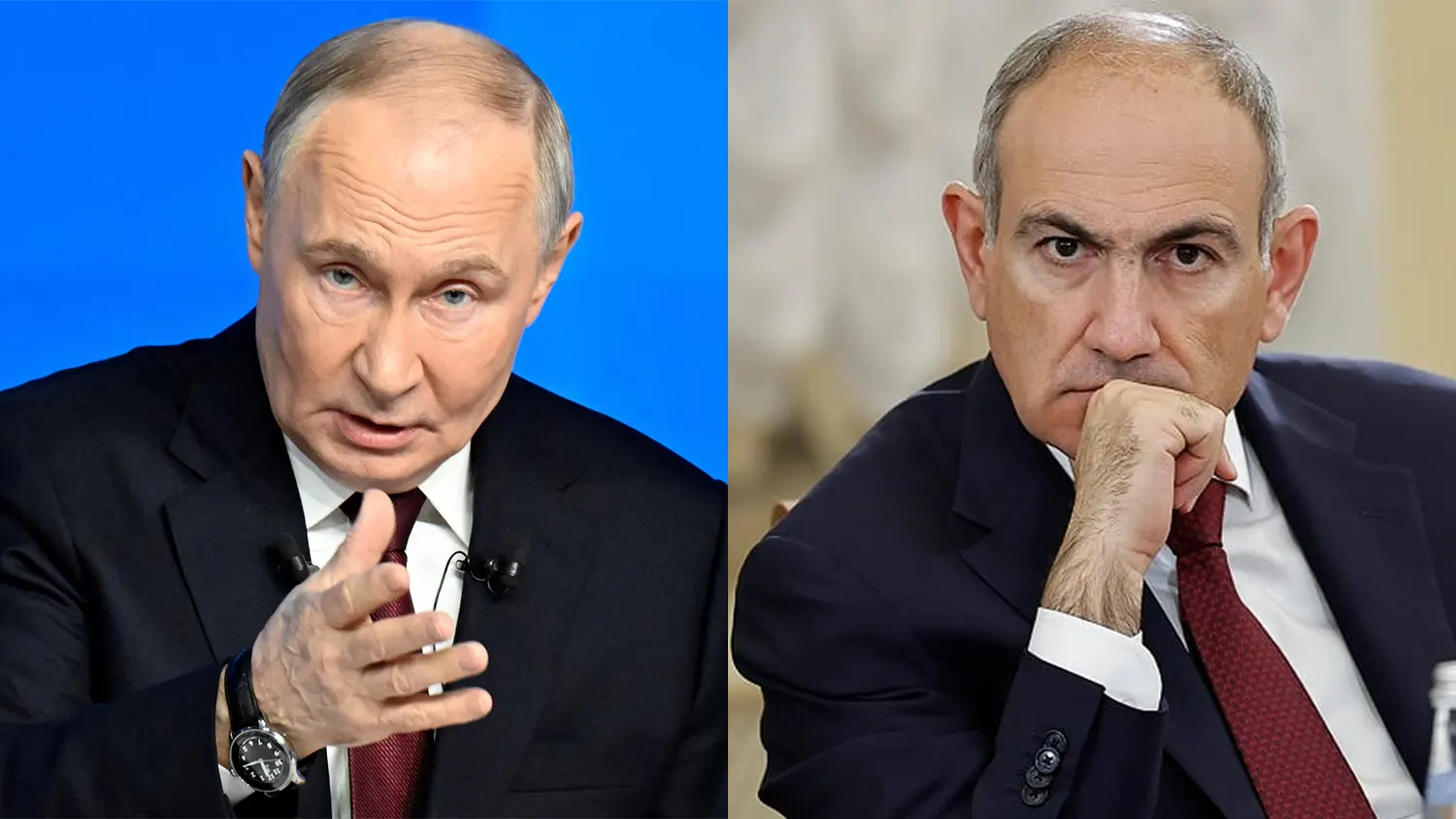
A gas cutoff threat. Food bans. Border slowdowns. In the days before Armenia’s June 7 parliamentary elections, Moscow pulled out nearly every tool in its coercion playbook. The Armenian people voted anyway and they voted West.
What unfolded was one of the most dramatic geopolitical standoffs in post-Soviet history, and the aftershocks are still rippling across the South Caucasus.
Thirty Years of Loyalty, Then a Betrayal That Changed Everything
To understand why Russia and Armenia are now on a collision course, you have to understand just how close they used to be.
For nearly three decades after the Soviet Union collapsed in 1991, Armenia was arguably Moscow’s most reliable ally in the region. The relationship ran deep built on shared Orthodox Christian heritage, geography, and a web of military and economic dependencies that made Armenia almost entirely reliant on Russia for its survival.
That alliance rested on three pillars.
The first was military. Armenia was a founding member of the Collective Security Treaty Organization (CSTO) essentially Russia’s answer to NATO. Russia operated a massive long-term military base in Gyumri. Russian border guards physically patrolled Armenia’s sensitive frontiers with Turkey and Iran. And Armenia bought almost all of its heavy weapons from Moscow at heavily discounted ally prices.
The second was economic. Rather than pursuing closer ties with the EU, Armenia joined Russia’s Eurasian Economic Union (EAEU), locking itself into Moscow’s economic orbit. Russia became Armenia’s largest trading partner, buying up to 40% of its exports Armenian brandy, fruits, fish while supplying nearly all of its natural gas and petroleum.
The third was security against its neighbors. The core of the relationship was Nagorno-Karabakh, a breakaway region populated by ethnic Armenians but internationally recognized as part of Azerbaijan. Surrounded by Azerbaijan and its powerful ally Turkey, Armenia saw Russia as its only realistic shield against being overwhelmed militarily.
Then came the moment that shattered all of it.
The Betrayal Armenia Will Never Forget
When Azerbaijan launched military offensives to retake Nagorno-Karabakh, Armenia invoked the CSTO’s mutual defense clauses and pleaded for Russian intervention. What it got instead was silence.
Moscow stood aside entirely. Distracted by its war in Ukraine and unwilling to damage its business relationships with Azerbaijan, Russia’s so-called peacekeepers on the ground did not intervene. Azerbaijan took full control of the territory. More than 100,000 ethnic Armenians fled their homes.
For Prime Minister Nikol Pashinyan and the Armenian public, the conclusion was inescapable: Russia’s security guarantees were worthless.
The pivot that followed was swift and deliberate. Armenia froze its participation in the CSTO, expelled Russian border guards from Yerevan’s airport, began buying weapons from France and India, and set its sights firmly on the European Union. The relationship that had defined Armenian foreign policy for a generation was over.
Russia’s Pre-Election Ultimatum
Moscow did not take this quietly. In the days leading up to Armenia’s June 7 parliamentary elections, Russia’s Foreign Ministry confirmed it had sent an official warning to Yerevan: fall back in line, or face consequences.
The threat was specific. Russia warned it would unilaterally tear up a critical 2013 bilateral agreement that allows Armenia to import natural gas, petroleum, and rough diamonds free of export duties. The leverage behind that threat is staggering, Russia supplies roughly 85% of Armenia’s natural gas and over 60% of its petroleum products. Losing those preferential terms would send energy costs skyrocketing and threaten to destabilize the entire economy overnight.
Vladimir Putin went further, explicitly invoking Ukraine as a warning pointing to Kyiv’s original push toward EU integration as the spark that led to conflict, and cautioning Armenia against entering what he called the EU’s “anti-Russian orbit.”
International observers from the OSCE noted that Armenians cast their ballots under unprecedented foreign interference, a combination of trade restrictions, disinformation campaigns, and direct energy threats.
Russia’s Full Coercion Playbook Beyond the Gas Threat
The energy ultimatum was only the most visible pressure point. In the lead-up to the vote, Moscow deployed a much broader campaign of economic punishment.
The food and drink bans came first. Russia’s agricultural watchdog, Rosselkhoznadzor, has a well-established reputation as a geopolitical weapon whenever a country angers the Kremlin, Russian inspectors conveniently “discover” dangerous pests or bacteria in that country’s exports. Right around the June election, a wave of sudden bans hit Armenian goods: fresh tomatoes, cucumbers, peppers, eggplants, potatoes, and strawberries were blocked from entering Russia. Veterinary certificates for Armenia’s lucrative trout-breeding industry were suspended. Popular Armenian wines, cognacs, and Jermuk mineral water disappeared from Russian retail shelves.
Migrant worker remittances represent another pressure point. Hundreds of thousands of Armenian workers live in Russia, and the money they send home accounts for a significant share of Armenia’s GDP. Moscow can freeze wire transfers, restrict work visas, or launch mass deportations at will cutting off that income stream would push thousands of Armenian families into immediate hardship.
The Upper Lars chokepoint is perhaps the most surgical tool of all. Armenia is landlocked, with its borders to Turkey and Azerbaijan both closed. The only land route for Armenian trucks heading to Russia or parts of Europe runs through Georgia and through a single mountain crossing called Upper Lars. By simply slowing customs inspections there, Russia can create miles-long traffic jams. Perishable produce rots by the roadside before it ever crosses the border.
Finally, EAEU membership itself has become a weapon. Russian officials have explicitly warned that Armenia cannot enjoy duty-free trade within the Eurasian Economic Union while simultaneously pursuing EU membership. Strip those privileges, and sudden heavy tariffs would apply to everything Armenia tries to sell northward.
Armenia Voted Anyway
None of it worked.
Despite the pressure, Prime Minister Pashinyan’s Civil Contract party won 49.8% of the vote, a decisive result. The primary pro-Russian opposition bloc, Strong Armenia, led by billionaire Samvel Karapetyan, finished a distant second with just 23.3%.
Pashinyan declared a “historic victory” and reaffirmed Armenia’s commitment to European integration, while carefully signaling a willingness to maintain stable if fundamentally changed relations with Moscow.
His underlying argument is a calculated long-term bet: that the economic benefits of EU alignment and new trade corridors through Turkey will eventually generate far more than Russia’s preferential energy terms ever did, comfortably absorbing whatever retaliation Moscow throws at his country.
Armenia’s Race to Build New Lifelines
Pashinyan’s government isn’t waiting for Moscow to make the next move. Recognizing that Russia is actively weaponizing trade, Armenia is already rolling out export subsidies to help farmers and businesses absorb the immediate losses. It is working urgently with the EU to redirect trade routes toward Europe, and pushing hard to reopen its long-closed border with Turkey, a move that would create an entirely new trade lifeline that bypasses Russia altogether.
The election result has handed Pashinyan a fresh democratic mandate to press forward. But the hard part is just beginning.
Moscow now faces its own decision: follow through on cutting off cheap gas and risk pushing Armenia even further into Western arms, or look for subtler ways to slow Armenia’s drift without triggering a complete and irreversible break.
For a country that spent 30 years as Russia’s most loyal ally, Armenia has come a very long way very fast. Whether it can complete the journey and at what cost is the question that will define the South Caucasus for years to come.