On April 25, 2026, gunfire erupted outside the White House Correspondents’ Association dinner at the Washington Hilton, prompting the rapid evacuation of President Donald Trump and senior officials after a suspected attacker breached a security checkpoint.
The incident matters because it exposed potential gaps in elite event security and raised urgent questions about how a heavily armed suspect reached a restricted perimeter at one of Washington’s most tightly controlled gatherings.
As the evening unfolded, what began as a high profile social event quickly turned into a security crisis. At approximately 8:36 p.m., law enforcement says 31 year old Cole Tomas Allen of California approached a side entrance reserved for officials. Armed with multiple weapons, including a shotgun and handgun, he allegedly bypassed outer screening and advanced toward a Secret Service checkpoint.
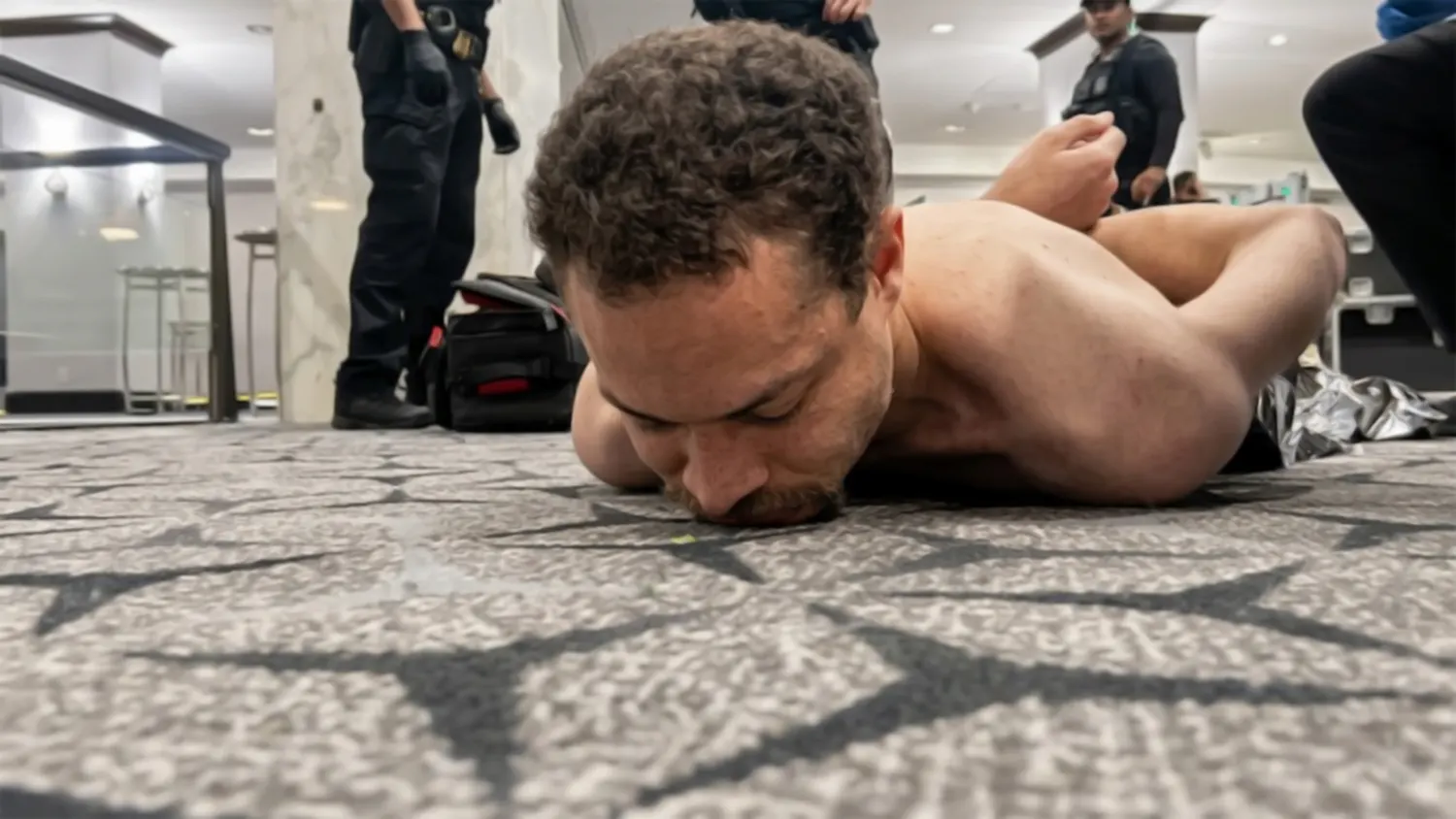
But the situation escalated within seconds. According to officials, Allen brandished a firearm, triggering an immediate response from the Secret Service Uniformed Division. During the exchange, one agent was shot at close range, though a ballistic vest prevented serious injury. Agents then subdued and arrested the suspect on site.
Inside the ballroom, confusion spread rapidly. As shots rang out, hundreds of attendees took cover under tables, while security personnel moved to evacuate the president and other dignitaries. Some in the crowd began chanting patriotic slogans as the president was rushed from the stage.
A breach at the most secure layer raises new alarms
What makes the incident more striking is where it occurred. Authorities say the breach happened at a final security perimeter typically considered highly secure, not at the outer layers where threats are more commonly intercepted.
Investigators now believe Allen gained access to the building because he was a registered hotel guest, allowing him to bypass earlier restrictions. Compounding concerns, the attempted breach came as some magnetometers were being dismantled after the president had already arrived.
That timing has drawn scrutiny. Security experts note that procedural transitions when defenses are scaled back can create vulnerabilities, even in otherwise robust systems. In this case, the suspect appears to have exploited precisely that moment.
Yet the response itself has been widely praised. Within moments of the confrontation, agents neutralized the threat without further casualties. Officials confirmed that no senior government figures were harmed, and the suspect was taken into custody alive.
A suspect with no clear warning signs
As investigators dig deeper, attention has turned to the suspect’s background. Allen is described as a highly educated professional with no prior criminal record, a detail that complicates efforts to identify warning signals.
He earned a mechanical engineering degree from Caltech and later completed a master’s in computer science in 2025. He worked as a tutor at a college admissions center and had been recognized for his teaching performance.
But the real challenge lies in motive. Authorities, including the FBI, have labeled him a “lone wolf” suspect, and so far, no clear ideological or organizational ties have been confirmed. A small political donation in 2024 has been noted but not linked to the attack.
That ambiguity underscores a broader trend. Experts warn that individual actors with limited or unclear affiliations are increasingly difficult to detect using traditional intelligence methods, which often rely on networks and communications.
Charges filed as investigators widen the search
As the investigation moves forward, prosecutors have filed serious federal charges. Allen now faces assault on a federal officer and firearms-related offenses, with additional counts under review as evidence is processed.
He remains in federal custody after undergoing medical and psychiatric evaluation, and is scheduled for arraignment on April 27 in Washington, D.C. Authorities are also coordinating with California agencies to search his residence for clues.
Meanwhile, President Trump addressed the nation hours after the incident, praising the “quick and brave” response of law enforcement. Despite initial suggestions that the event might continue, officials shut down the venue by 9:40 p.m. to secure the scene.
The White House Correspondents’ Association has since announced plans to reschedule the dinner within 30 days, signaling an effort to restore normalcy after an unprecedented disruption.
Yet the broader implications remain unresolved. The episode has triggered an immediate review of security protocols for presidential appearances, particularly at large public events where layered defenses must adapt in real time.
And that leaves a lingering question. If a single individual could come this close under such scrutiny, what adjustments are needed to prevent the next breach before it reaches the final line of defense?