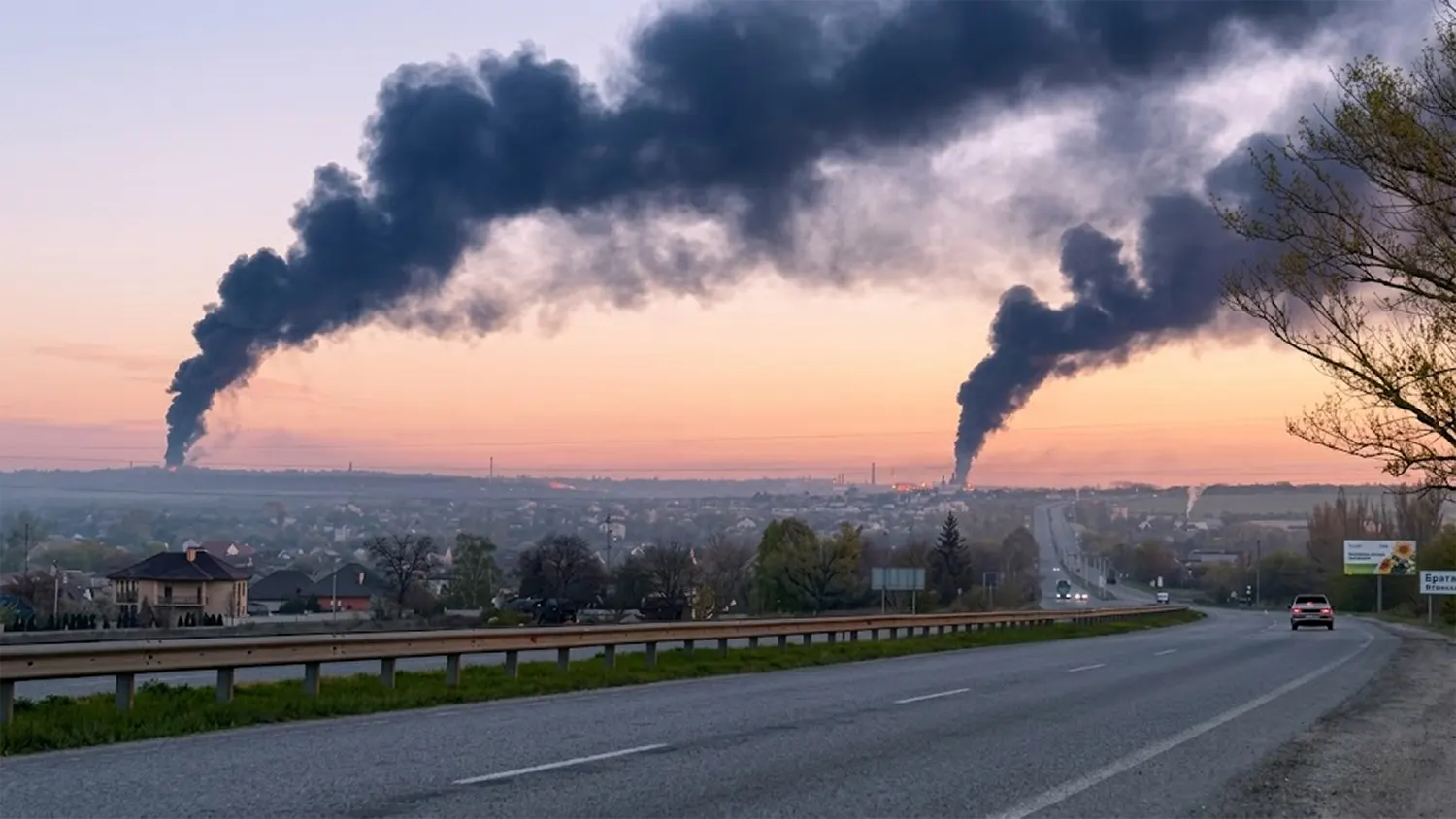
Russian forces launched a massive overnight assault on April 25, 2026, striking Dnipro and other Ukrainian cities with missiles and drones, killing at least seven people and injuring dozens in one of the heaviest attacks in weeks.
This matters because the scale and tactics of the attack signal a shift toward sustained pressure on civilian areas, while Ukraine’s air defenses though effective are being stretched by sheer volume. The pattern suggests the war is entering a more intense and unpredictable phase.
But the real impact becomes clear when looking at what unfolded on the ground in Dnipro.
In Dnipro, the night turned deadly. At least seven people were killed and more than 57 injured, including children and critically wounded civilians.
Rescue teams worked through the rubble. Bodies were recovered from a partially destroyed apartment building, while hospitals treated victims from strikes that lasted “practically all night.”
The human toll is still rising. A second strike later the same day hit the same neighborhood, adding to casualties and deepening fear among residents.
And that second strike points to a tactic that is drawing particular concern.
A tactic designed to strike twice and hit those who respond
Local officials confirmed the use of a “double tap” strike, where the same location is hit again after emergency crews arrive.
According to Mayor Borys Filatov, the second attack targeted responders and city officials, who had rushed to assist victims of the first blast.
Several narrowly survived. Deputy Mayor Yurii Yandulskyi and emergency teams were nearly killed, highlighting the risks faced even after the initial attack.
This tactic has a clear effect. It not only increases casualties but also disrupts rescue efforts, turning recovery itself into a target.
And beyond tactics, the scale of the assault reveals a broader strategy.
The Ukrainian Air Force described the barrage as one of the largest this year. Russia launched 47 missiles and more than 600 drones, creating a multi-layered attack designed to overwhelm defenses.
Ukraine’s response was significant. Air defenses intercepted around 580 drones and 30 missiles, limiting what could have been far greater destruction.
Yet volume made the difference. Dozens of projectiles still struck targets, particularly high speed ballistic missiles that are harder to stop.
That raises a second question: where else was hit?
A nationwide assault stretching defenses across multiple regions
While Dnipro was the epicenter, the attack extended far beyond one city. Strikes hit Kharkiv, Odesa, Chernihiv, and other regions, causing casualties and infrastructure damage across Ukraine.
In Chernihiv’s city of Nizhyn, two civilians were killed in combined strikes, while in Kharkiv, injuries included a young child.
The geographic spread is significant. Simultaneous attacks across regions force Ukraine to divide its defenses, increasing the likelihood that some strikes will get through.
And in at least one case, the attack had international implications.
In Odesa, a Panama flagged civilian vessel was struck by a drone while leaving port, triggering a fire onboard.
The crew managed to contain it. The ship continued its voyage, but port infrastructure was damaged, underscoring risks to global shipping routes.
This expands the impact beyond Ukraine. Attacks near ports raise concerns about trade and maritime security, particularly in the Black Sea.
But the most severe damage still centered on Dnipro.
Why ballistic missiles remain the most dangerous threat
Despite high interception rates, ballistic missiles caused the most severe destruction in Dnipro, according to Ukrainian officials.
These weapons are harder to stop. They travel at high speeds and require advanced systems like Patriot or SAMP/T, which are limited in number.
As a result, even a small number of successful strikes can cause disproportionate damage, especially in urban areas.
This imbalance highlights a key reality. Defense systems can reduce damage, but not eliminate it, particularly during large scale attacks.
And that dynamic is shaping how both sides are escalating.
The strikes came just after a prisoner exchange involving 193 soldiers from each side, mediated by international partners.
Yet diplomacy had little immediate effect. President Volodymyr Zelenskyy said attacks continue to target civilian infrastructure, suggesting military pressure remains the priority.
At the same time, Ukraine is expanding its own reach. Long-range drones reportedly struck targets deep inside Russia, including sites over 1,800 kilometers from the border.
This signals a widening battlefield. Both sides are increasing range and intensity, pushing the conflict into new territory.
The events of April 25 show a war defined by scale, speed, and persistence. Large coordinated attacks are testing defenses, while civilian areas remain at the center of the impact.
For now, Dnipro stands as the clearest example. A city hit through the night, struck again during rescue, and left to recover under the threat of more to come an echo of how this phase of the war is unfolding.