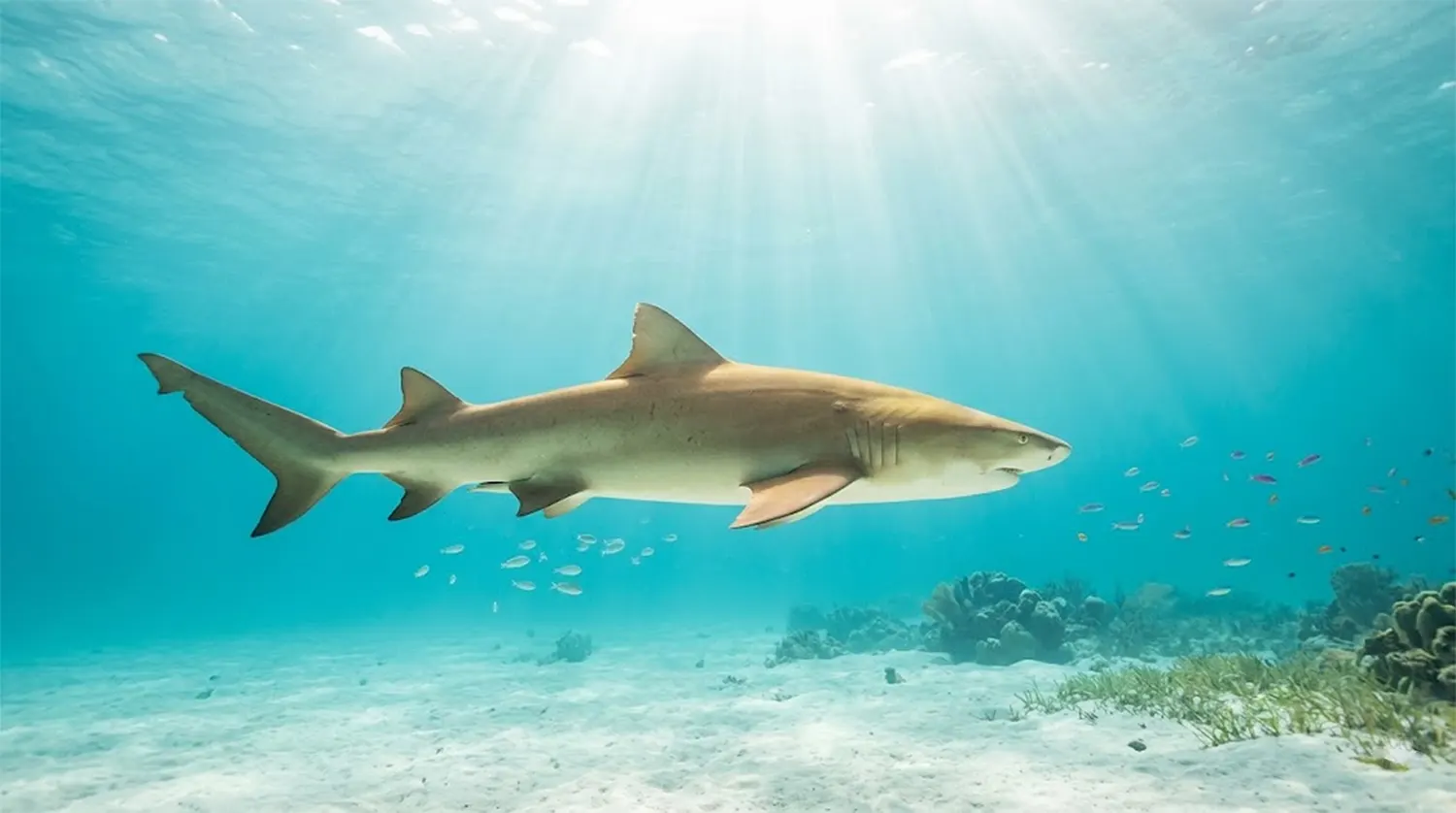
When “Pristine” Oceans Aren’t So Pristine Anymore
Imagine diving into crystal clear blue water, miles away from any city, believing you’re in one of the last untouched places on Earth.
Now imagine that same water quietly carrying traces of coffee, painkillers and even cocaine.
That’s exactly what scientists have just discovered inside wild sharks.
In a 2026 study published in Environmental Pollution, researchers found that a surprising number of sharks living near Eleuthera Island in the Bahamas an area often described as “pristine” are carrying human drugs in their bloodstream. And while the headlines may sound sensational, the science behind them reveals something far more unsettling.
The Surprising Discovery Inside Sharks
The research team, led by Natascha Wosnick from the Federal University of Paraná, analyzed blood samples from 85 sharks across five species.
What they found was unexpected.
Nearly one in three sharks tested positive for human-made chemicals.
These included:
- Caffeine (the most common and the first time it’s ever been found in sharks)
- Cocaine
- Painkillers like acetaminophen (Tylenol) and diclofenac
This wasn’t a one off anomaly. It was a pattern, one that suggests these chemicals are now part of the marine environment.
And that raises an obvious question: how did they get there?
How Human Habits Are Reaching the Ocean
The answer isn’t a single dramatic event. It’s something far more ordinary.
Everyday human behavior is slowly leaking into the ocean.
In coastal and tourist heavy areas, wastewater often isn’t fully treated. Substances from our daily lives like caffeine from coffee or medication from our bodies pass through sewage systems and flow into the sea.
Cruise ships, vacation homes, and small island infrastructure can make this worse, especially where advanced filtration systems aren’t in place.
Then there’s a more unusual pathway.
Sharks are naturally curious animals. When they encounter unfamiliar objects in the water, they often take what scientists call an “investigatory bite”, a quick test to figure out what something is.
If that object happens to be a floating package of drugs, a single bite can introduce a concentrated dose directly into the shark’s system.
It sounds improbable. But in regions where drug trafficking routes cross the ocean, it’s a real possibility.
And once those chemicals enter a shark’s body, they don’t just disappear.
What These Chemicals Are Doing Inside Sharks
At first glance, trace amounts might not seem like a big deal. But the study suggests otherwise.
The sharks showed clear signs of physical stress at a biological level.
Researchers found changes in key blood markers:
- Elevated lactate and urea (signs of metabolic strain)
- Altered triglycerides (which affect how energy is stored and used)
In simple terms, the sharks’ bodies appear to be working harder just to cope with these foreign substances.
Think of it like your body constantly processing caffeine or medication without a break. Over time, that “background stress” adds up.
Scientists call this allostatic load, the wear and tear caused by ongoing stress.
And it doesn’t just affect the body. It may also affect behavior.
Could Drugs Change How Sharks Behave?
This is where things get especially interesting and uncertain.
We’re not talking about aggressive, movie style “cocaine sharks.” There’s no evidence of that.
But even small amounts of stimulants can influence how animals behave.
In other fish species, caffeine has been shown to:
- Make animals more reckless
- Disrupt their sense of danger
- Alter movement patterns
For sharks, this could mean changes in:
- Hunting rhythms
- Migration routes
- Energy use
Sharks are highly efficient predators. They rely on carefully balanced cycles of rest and activity.
If that balance is disrupted, even slightly, it could ripple through the entire ecosystem.
Because when apex predators change, everything below them is affected.
The “Pristine” Illusion Is Breaking Down
Perhaps the most alarming part of this study isn’t what was found but where it was found.
Eleuthera Island is often marketed as untouched, remote, and ecologically pure.
Yet even here, sharks are carrying clear signs of human pollution.
This reveals a hard truth: there are no truly isolated ecosystems anymore.
Pollution doesn’t stay put. It travels through water currents, through human activity, and through global systems we barely notice.
And unlike visible pollution, like plastic or oil spills, this kind is invisible.
You can’t see caffeine in the water. You can’t spot dissolved pharmaceuticals.
But they’re there and now, they’re inside marine life.
Why This Matters Beyond Sharks
It’s easy to see this as a strange, isolated story. But it’s much bigger than that.
This research shows that our everyday choices are quietly reshaping the natural world.
Drinking coffee. Taking a painkiller. Flushing a toilet.
Individually, these actions seem harmless. But collectively, they create a constant stream of chemical exposure in the environment.
And if apex predators like sharks are being affected, it raises deeper questions:
- What’s happening to smaller marine species?
- How are food chains being altered?
- What does this mean for ocean health long term?
These are questions scientists are only beginning to explore.
What Scientists Still Don’t Know
Despite its impact, the study also has clear limits.
We don’t yet know the long term effects of these chemicals on sharks.
Key unknowns include:
- Whether these substances accumulate over time
- How they affect reproduction
- Whether behavioral changes persist or fade
The study provides a snapshot not the full story.
But even that snapshot is enough to raise concern.
A New Way to Think About Pollution
For years, pollution has been associated with visible damage oil slicks, trash filled
beaches, dying coral reefs.
This study suggests a different reality.
Pollution can be subtle, invisible, and deeply personal.
It’s not just what factories release. It’s what we all contribute, every day.
And as this research shows, even the most remote corners of the ocean are not immune.
The Ocean Is Reflecting Us Back
In the end, the story of “cocaine sharks” isn’t really about sharks.
It’s about us.
The ocean is becoming a mirror of human life chemically, biologically, and invisibly.
What we consume, discard, and overlook doesn’t disappear. It flows outward, into ecosystems we depend on but rarely think about.
And now, it’s showing up in the bloodstream of one of the ocean’s most powerful predators.
The question is no longer whether human activity reaches these places.
It’s how much further it will go and what happens when it does.
References: Wosnick, N., et al. (2026). “Drugs in paradise: caffeine, cocaine, and painkillers detected in sharks from The Bahamas.” Environmental Pollution, Vol. 396. doi.org/10.1016/j.envpol.2025.127818