It was supposed to be a cultural reset. Instead, it became one of the most damaging seasons in Real Madrid’s modern history, a campaign defined not by its moments, but by the complete absence of them.
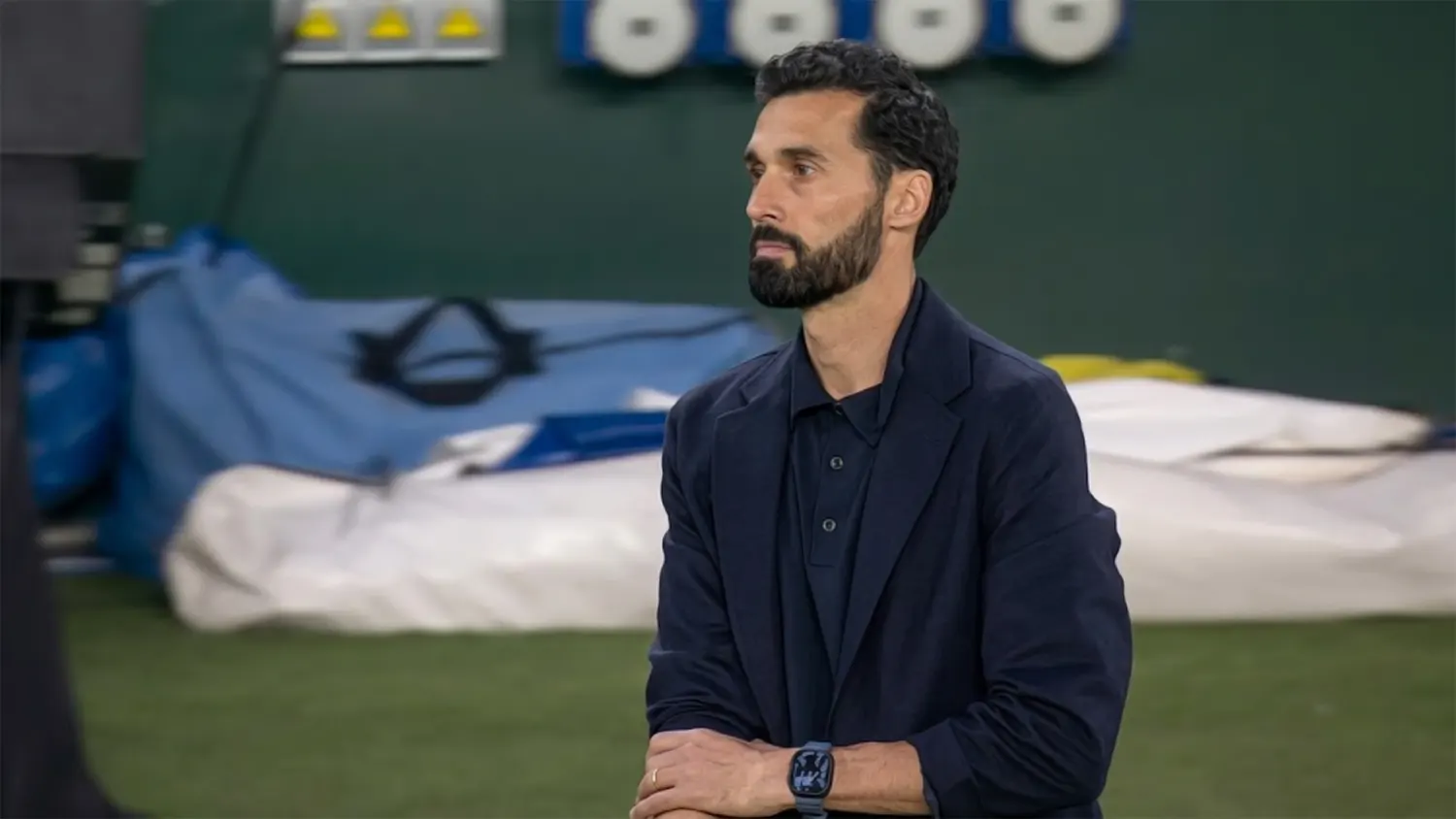
From the moment Álvaro Arbeloa stepped into the dugout in January, the narrative seemed to write itself. A former defender who bled “Madridismo,” a man who understood the club’s DNA from the inside. But football doesn’t run on symbolism. And at the Santiago Bernabéu, results are the only currency that matters.
What unfolded over the following months was a multi layered collapse tactical, psychological, and structural that has left one of the world’s greatest clubs staring down a blank trophy cabinet and a summer of radical reconstruction.
A Season Without Silverware, The Worst Kind of Failure at Madrid
At most clubs, finishing second is disappointing. At Real Madrid, it’s a crisis. And this season hasn’t even delivered that.
The 2025–26 campaign has unraveled across every single competition:
- La Liga — 11 points behind Barcelona with five matches remaining. Mathematically, it’s over
- UEFA Champions League — Eliminated in the quarter-finals, losing 6–4 on aggregate to Bayern Munich
- Copa del Rey — A stunning 3–2 shock defeat to Albacete, a second-tier side, in the Round of 16
- Supercopa de España — Runners-up, beaten 3–2 by Barcelona
- FIFA Club World Cup (2025) — Humiliated 4–0 by PSG in the semi finals
In Madrid’s world, this is what they call a “temporada en blanco” a blank season. Those two words carry enormous weight inside the Bernabéu. They also carry consequences.
Arbeloa’s Tactical Gamble And Why It Backfired
When Xabi Alonso left in January, Arbeloa’s appointment was framed as more than just a managerial change. It was a statement of identity “DNA Madridista” restored through discipline, structure, and collective responsibility.
But good intentions don’t win football matches. And Arbeloa’s defining tactical choice a shift toward defensive conservatism proved to be the decision that undermined everything.
The Low Block That Strangled Madrid
Against elite opponents, Madrid repeatedly retreated into a low defensive block. The idea was pragmatic protect a fragile backline, stay compact, grind out results.
In practice, it had the opposite effect:
- Against Bayern Munich, Madrid ceded territory and surrendered the initiative entirely
- In La Liga, they struggled endlessly to break down compact, well organized defenses
- The team became reactive and predictable abandoning the high tempo, attacking identity that has defined the club for generations
The result was football that offered control without creativity, structure without incision. For a club built on spectacular attacking play, it was deeply uncomfortable to watch.
The Mbappé Paradox Wasting Your Greatest Weapon
Here’s where the tactical contradiction becomes almost impossible to ignore.
Kylian Mbappé has been statistically outstanding this season:
- 24 La Liga goals
- 41 goals across all competitions
Those are elite numbers by any measure. And yet, watching Madrid play, Mbappé has rarely felt like the game changing, match defining force he’s capable of being.
Why? Because Arbeloa’s system works against everything that makes Mbappé dangerous.
He’s been pushed into deeper or wider roles. He’s received fewer opportunities in transition, the phase of play where he’s most lethal. He’s been asked to operate in slower, more congested attacking phases that neutralize his explosiveness.
The result is a painful paradox: elite production, diminished impact. Madrid’s most dangerous weapon has been blunted by the very system designed to make the team stronger.
When the Cracks Go Deeper Than Tactics
Tactical problems are fixable. Cultural breakdowns are not at least not quickly.
And behind the scenes at Madrid this season, the cracks have spread well beyond the training pitch.
The most high profile flashpoints:
- Dani Ceballos — Reportedly excluded from the squad following a heated confrontation over playing time
- Eduardo Camavinga — Publicly criticized by Arbeloa, then sent off in a decisive European tie
- Dani Carvajal — Among the senior figures reportedly questioning the new tactical direction
These aren’t isolated incidents. Together, they signal something far more serious a breakdown in alignment between the coach and his squad.
Arbeloa’s management style, which worked brilliantly at youth level, has proven far harder to scale up to a dressing room full of global superstars. The authority that once inspired compliance in academy football now risks alienating the very players Madrid needs most.
Imposing rigid discipline on a squad of Galácticos is not the same as managing teenagers with something to prove. That transition from academy structure to elite man management has been the central challenge Arbeloa has failed to navigate.
Defensive Instability, The Cruel Irony
Perhaps the most damaging irony of Arbeloa’s tenure is this: a coach brought in specifically to restore defensive solidity has overseen some of Madrid’s most fragile defensive performances in years.
Constant reshuffling alongside Antonio Rüdiger. A 5–2 derby defeat to Atlético Madrid. Injuries to Éder Militão repeatedly disrupting any chance of building defensive continuity.
The structure Arbeloa promised never fully materialized. Instead, Madrid have looked like a team caught between two identities neither compact enough to defend properly, nor expansive enough to attack dangerously.
April 2026, The Month That Ended Everything
If there’s one period that sealed Madrid’s fate, it was April.
- April 4 — A 2–1 defeat to Mallorca effectively ended their La Liga title hopes
- April 8 & 16 — Back to back losses to Bayern Munich confirmed their Champions League exit
- April 25 — A 1–1 draw with Betis made the La Liga race mathematically impossible
In elite football, momentum defines seasons. Madrid’s collapsed at the worst possible moment across multiple competitions, in the space of just a few weeks.
In Madrid’s media circles, the phrase doing the rounds is blunt and unsparing: “dead man walking.”
What Comes Next, The Summer Reset
At Real Madrid, failure doesn’t trigger reflection. It triggers reconstruction.
Arbeloa’s exit looks inevitable. His tenure, which began as a short term solution, will almost certainly end as exactly that a brief, instructive chapter that exposed deeper problems rather than solving them.
The question now is who comes next. Several names are circulating with serious intent:
- Jürgen Klopp — Reportedly close to a verbal agreement, though demanding a nine-player squad overhaul
- Zinedine Zidane — The ever present fallback option, eternally linked with a return
- José Mourinho — The “unfinished business” narrative making a comeback
- Mauricio Pochettino — Long admired internally at the club
Madrid aren’t simply looking for a new coach. They’re searching for a figure capable of reasserting institutional authority, someone who can walk into a fractured dressing room, command the respect of world class players, and rebuild a team that looks and feels like Real Madrid again.
A major squad overhaul is also expected, with the final fixtures of this season now serving a different purpose entirely not chasing trophies, but evaluating which players are part of the future.
More Than a Lost Season
Álvaro Arbeloa’s time at Real Madrid will ultimately be remembered not for what it achieved, but for what it revealed.
It revealed that coaching this club is not simply an extension of playing for it. That identity without adaptation is not enough. That managing superstar egos requires a completely different skillset than managing promising youth players. And that at the highest level of football, credibility is built on results not sentiment, not history, not symbolism.
The 2025–26 campaign will go down as one of Real Madrid’s most forgettable in recent memory. A team loaded with world class talent, operating at the most demanding club in football, that drifted into irrelevance at every decisive moment of the season.
The warning signs were all there tactical dissonance, dressing room unrest, strategic misalignment. At the Bernabéu, that combination leads to only one outcome.
Change. Swift, ruthless, and absolute.